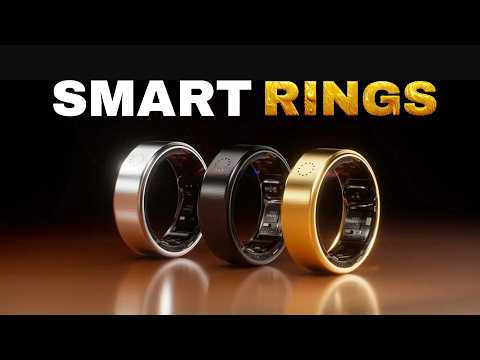
2026 stands out as the first year where smart rings move from niche gadgets to mainstream health platforms, combining miniaturized sensors, AI-driven insights, and growing clinical credibility in a rapidly expanding market. This shift is powered by explosive shipment growth, new predictive health features, early regulatory clearances, and deeper integration between consumer wearables and healthcare systems.
1. Market Breakout: From Niche to Mainstream
Industry data shows that smart ring shipments surged by about 49% in 2025, far outpacing smartwatch growth of around 6%, setting up 2026 as their breakout year. Analysts expect the North American AI smart ring market to grow from USD 158 million in 2025 to USD 355 million by 2034, driven by AI analytics, health-conscious professionals, and demand for discreet wearables.
Smart rings now sit alongside watches and bands as a major wearable category, especially for sleep, recovery, and 24/7 health tracking.
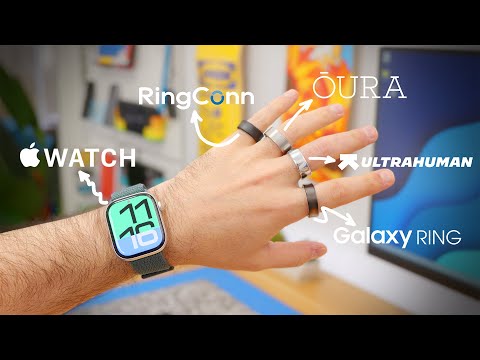
Market growth is driven by companies like Oura and Samsung, but also by newer players such as Circular, Luna, RingConn, and Helio.
Positive:
More competition and volume reduce prices, increase feature diversity, and spur innovation.
Negative:
Rapid growth can mean immature products, inconsistent quality, and fragmented ecosystems that confuse consumers.
2. Hardware Miniaturization and Design Breakthroughs
2026 marks a new level of miniaturization and design sophistication, making rings smaller, more comfortable, and more stylish without sacrificing sensors.
Oura Ring 5 (shipping June 2026) is about 40% smaller than its predecessor while maintaining the same sensing precision.
High-end devices like Luna Ring 2 use fighter-jet-grade titanium and diamond-like coatings, while others introduce ceramic finishes that blend seamlessly as jewelry.
Rings like RingConn Gen 2 Air and Acer FreeSense focus on being ultra-thin and light while still offering multi-day battery life.
Positive:
Better comfort and design increase adherence—people actually keep wearing the ring, improving data quality.
Negative:
Exotic materials and tiny batteries can be harder to repair or recycle, raising e‑waste and sustainability concerns.
3. Advanced Sensors and Predictive Health Features
The biggest technological leap is that many 2026 rings go beyond passive tracking into predictive, preventive health.
Oura’s Health Radar and Cardiovascular Focus
Oura’s newer features (rolled out alongside Oura Ring 5 but also available on older models) include Health Radar, which monitors temperature, respiratory rate, heart rate, and other biometrics for significant deviations from baseline.
New capabilities include tracking blood pressure patterns during sleep and nighttime breathing disturbances, which Oura says can flag early cardiovascular risk.
Tools like GLP‑1 insights help users on weight-loss medications track dosing, weight change, and ring-based biometrics together.
Medical-Grade Signals in Rings
Devices such as Circular Ring 2 add ECG and Afib detection, bringing elements of medical-grade cardiology monitoring into a ring form factor.
Some “perpetual” smart rings highlighted at industry events integrate ECG, blood pressure, body composition, and environmental sensors (light, noise, UV) plus haptics in a single device.
Positive:
Predictive features can act as early warning systems, prompting timely medical consultations and lifestyle changes.
Negative:
Without clear guardrails, users may misinterpret AI warnings as diagnoses or ignore symptoms if the ring shows “normal,” leading to false reassurance or panic.
4. AI Platforms, Personalized Coaching, and Clinical Bridges
AI is the main reason 2026 is a breakthrough: smart rings now offer contextual coaching and predictive risk analysis, not just raw metrics.
AI smart rings use algorithms to provide real-time analytics and early warning notifications, making care more proactive.
Market reports highlight a shift toward predictive and personalized healthcare, positioning rings as long-term digital health companions instead of short-lived gadgets.
Oura: Lab Integration and Telehealth Partnerships
Oura introduces Health Panels that combine lab blood markers (via partners like Quest Diagnostics) with ring data and AI interpretation.
Integration with providers like Counsel Health allows users to ask health questions and connect with clinicians in many U.S. states, effectively turning the ring’s data into a front door to care.
Circular, Luna, and Others: AI Coaching
Circular Ring 2 uses AI assistant Kira for proactive, personalized wellness coaching and combines it with ECG readings.
Luna Ring Gen 2 focuses on AI-based workout and nutrition coaching, turning metrics into structured programs.
Positive:
AI coaching scales basic health guidance to millions who cannot access or afford continuous human coaching.
Clinician integration and lab links start to align consumer wearables with regulated healthcare paths.
Negative:
AI coaching quality varies; poor or biased recommendations could misguide users.
Clinical integration is often limited to certain geographies (e.g., U.S.), raising equity and access issues.
5. Regulatory and Clinical Momentum
2026 continues a trend where smart rings gain more formal health credentials, even if most still are not full medical devices.
Guides emphasize that some rings have FDA-cleared metrics—for example, specific ECG or Afib detection features in devices like Circular or medical-focused rings.
There is also growing discussion that Oura could evolve into a more fully validated medical device in future scenarios, with both FDA and EMA involvement highlighted in think pieces.
Positive:
Regulatory oversight pushes companies to improve accuracy, safety, and transparency about what metrics can and cannot do.
Clinical partnerships encourage more robust validation studies, strengthening trust among clinicians and serious users.
Negative:
Partial clearances can confuse consumers—people may assume the entire ring is a certified medical device, when only specific metrics are cleared.
Regulatory processes are expensive and time-consuming, which may favor well-funded players and squeeze smaller innovators.
6. Better Battery Life and Continuous Tracking
By 2026, many smart rings deliver 5–12 days of battery life, enabling continuous tracking with fewer gaps.
RingConn Gen 2 Air is frequently cited as offering 10–12 days per charge, making it a leader for endurance.
Oura Ring 4 typically reaches 5–8 days, depending on features like SpO2 and activity HR settings.
Longer life versus smartwatches (often 1–2 days) is one reason reviewers say rings are particularly strong for sleep + recovery.
Positive:
Longer runtime means fewer missed nights and more reliable trend analysis, especially for sleep and recovery.
Negative:
Battery degradation after 16–18 months is common, and sealed designs mean entire rings may need replacement, raising cost and e‑waste issues.
7. Use Cases Across Work and Daily Life
For Workers and Professionals
Smart rings give knowledge workers and shift workers real-time insight into sleep debt, stress, and recovery, helping them adjust schedules and workloads.
Enterprises experiment (sometimes controversially) with using aggregated, anonymized ring data for wellness programs and burnout prevention.
For Athletes and Fitness Enthusiasts
Rings like Oura, Ultrahuman, RingConn, and Helio deliver HRV-based readiness and training load guidance, letting athletes modulate intensity and recovery.
Some rings integrate with coaching platforms or AI trainers, making performance analytics more accessible.
For Healthcare and Public Health
AI smart rings supply longitudinal data that can augment telehealth, support remote monitoring, and feed de-identified datasets for research.
In scenarios involving cardiovascular and metabolic risk, predictive features could help clinicians identify at-risk individuals earlier.
Positive:
Enhanced self-awareness and data-driven decisions can improve sleep, stress management, and long-term health.
Sectors like transportation, healthcare, and high-stress industries can benefit from tools that reduce fatigue-related errors.
Negative:
If employers or insurers gain access to granular ring data, it could be misused for productivity surveillance or risk scoring, raising ethical alarms.
Not everyone has equal access to these tools, so benefits may disproportionately accrue to higher-income and tech-savvy groups.
8. Why 2026, Specifically?
Several converging trends make 2026 uniquely pivotal for smart rings:
Explosive Growth and Mainstream Awareness
Shipment growth near 50% year-over-year has brought smart rings out of niche status, aligning them with mainstream wearables.
Second and Third Generations Maturing
Companies like Oura, Samsung, Ultrahuman, and RingConn are now on multiple generations, with refined hardware, better algorithms, and richer apps.
AI and Predictive Health Readiness
AI models have matured enough to provide predictive risk signals, personalized coaching, and integrated lab/clinical features, moving beyond simple trend graphs.
Regulatory and Clinical Engagement
First waves of ECG/Afib clearances and clinical validations establish smart rings as legitimate tools in some health contexts, even if most remain wellness devices.
Ecosystem Integration
Rings now tie into smartphones, watches, smart homes, and enterprise platforms, enabling use cases from home automation to workplace wellness.
Together, these factors make 2026 the year when smart rings truly become advanced health technology platforms, not just accessories.
How to Think Critically About This Breakthrough
When evaluating this “breakthrough year,” it helps to keep both sides in view:
Positively:
Smart rings in 2026 provide unprecedented, continuous insight into sleep, stress, and cardiovascular status, with AI tools that can support better daily decisions and long-term prevention.
Critically:
They also deepen datafication of the body, centralize sensitive information in corporate and cloud systems, and risk widening gaps between those with advanced digital health tools and those without.
Used wisely—paired with medical judgment, strong privacy practices, and equitable access policies—these 2026 smart rings can become powerful allies in health and performance rather than just fashionable surveillance devices.