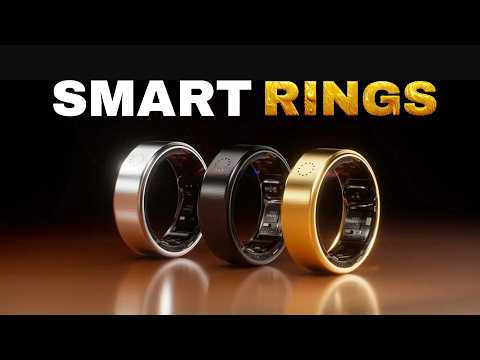
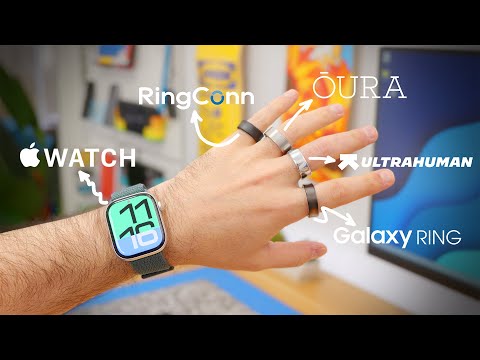
In 2026, the most stylish and technological smart rings are those that disappear as jewelry but work like full health computers, led by designs such as Oura’s ceramic and titanium rings, Samsung’s concave Galaxy Ring, Ultrahuman Ring Air, Luna Ring 2.0, and RingConn Gen 2 Air. They show how fashion designers, material engineers, sensor specialists, and AI teams have turned a once‑niche wearable into a mainstream category that lives at the intersection of style, comfort, and advanced health monitoring.
How Fashion and Technology Converge in Smart Rings
Smart rings in 2026 are defined by two overlapping trends:
Minimalist, jewelry-first design:
Slim titanium bands, ceramic finishes, and diamond-like coatings that look like regular rings, with sensors hidden inside.
Neutral colors (black, silver, gold, white) and subtle shapes to fit both casual and formal outfits.
High-tech internals:
Optical, temperature, and motion sensors feeding AI algorithms for sleep, stress, recovery, and activity tracking.
Some models add ECG, blood pressure, body composition, and even environmental sensors (light, noise, UV) inside a ring-sized shell.
Market research notes that demand is driven by health-conscious professionals who want discreet wearables that integrate with AI health platforms and smart ecosystems, not bulky devices on their wrists.
Oura Ring 4 (Including Ceramic) – Discreet Luxury Wellness
Oura Ring 4 remains one of the most stylish smart rings, especially in its ceramic edition, which reviewers describe as designed to “better pass for regular jewelry.”
Style and Materials
Offered in brushed titanium and ceramic finishes, with smooth profiles that resemble premium fashion rings.
Bloomberg’s reporters note that Oura’s ceramic ring blends so well that people often don’t realize it’s a fitness tracker, making it effectively unisex jewelry with hidden tech.
Technology
Provides 24/7 tracking of sleep, fitness, and stress, with validated AI algorithms and deep health insights.
Backed by Oura’s internal engineering teams and external health researchers, who helped refine sleep staging, readiness, and stress metrics.
Positive Aspects
Balances simplicity and depth: dashboards are intuitive for casual users but allow deeper trend analysis for advanced users.
Designed to feel like a true fashion accessory, particularly in ceramic form, appealing strongly to style-conscious users.
Critiques
Brushed finishes (especially brushed silver) can scratch easily, which some reviewers mention as a downside for a premium object.
Requires a subscription for full insights, which can undermine the “timeless luxury” feeling by adding ongoing costs.
Samsung Galaxy Ring – Concave Design and Ecosystem Style
Samsung’s Galaxy Ring approaches style from the lens of industrial design and ecosystem coherence, and comparison articles consistently praise its concave profile.
Style and Comfort
The concave design makes the ring feel smaller than it is, improving comfort and making it visually unobtrusive.
Available in multiple metallic colors aligned with Galaxy devices, it functions as a coordinated fashion object across phone, watch, and ring.
Technology
Tracks sleep, heart rate, stress, and recovery, tightly integrated with Samsung Health and Galaxy AI for contextual coaching.
Uses high-accuracy HR sensors and AI analytics to deliver stress and readiness insights, especially after a learning period of about a week.
Positive Aspects
The ring is praised for being extremely comfortable, and reviewers call the concave design a win for both style and wearability.
Samsung’s portable charging case is described as a “game changer” – stylish, informative (shows charge levels), and easy to carry, enhancing the luxury tech feel.
Critiques
Some reviews highlight data inconsistencies and early battery issues, requiring firmware updates to stabilize performance.
No open API yet, which limits integration for power users compared to brands like Oura and Ultrahuman.
Ultrahuman Ring Air – Lightweight Performance Fashion
Ultrahuman Ring Air is often singled out for its lightness and performance-focused aesthetics, appealing to users who see fitness as part of their lifestyle identity.
Style and Feel
Weighs roughly 2.4–3.6 g, making it one of the lightest rings on the market, which reviewers note helps it live up to the “Air” name.
Comes in matte and metallic finishes, with recent updates improving scratch resistance after earlier matte black versions were prone to visible marks.
The inner sensor area is coated with hypoallergenic epoxy resin, described as velvety smooth against the skin.
Technology
Focuses on HRV, metabolic health, and recovery, with granular dashboards for sleep debt, strain, and nervous system status.
Offers APIs for data integration, giving advanced users and developers more flexibility in connecting their data with other platforms.
Positive Aspects
Stylistically, it hits a sport-luxury aesthetic—more performance instrument than jewelry, but still sleek and minimal.
Lightweight design makes it easier to wear 24/7, which supports more consistent tracking and reduces “device fatigue.”
Critiques
Some users and reviewers mention sleep tracking accuracy issues, which can undermine confidence in its data despite the stylish hardware.
Sensors are more pronounced, and people can feel them more than with Oura or Samsung, which slightly detracts from the invisible-luxury goal.
Luna Ring 2.0 and Perpetual Smart Rings – High Fashion Meets Medical Tech
Industry coverage from major tech events highlights devices like Luna Ring 2.0 and an FDA-cleared “perpetual smart ring” as examples of fashion-forward medical-grade wearables:
Luna Ring 2.0:
Built from fighter-jet-grade titanium with a diamond-like coating, marketed as both highly durable and visually striking.
Tracks sleep, activity, and readiness with precision, making it a “stunner” from both style and performance perspectives.
Perpetual smart ring (FDA-cleared):
Described as the world’s first “perpetual smart ring,” offering ECG, clinical-grade blood pressure, body temperature, HRV, SpO₂, body composition, and environmental sensors (light, noise, UV) plus haptic feedback in a ring.
Its design aims to blend medical-grade functionality with a premium look, reflecting collaboration between device manufacturers, clinicians, and UX designers.
These show how some companies push the boundary where fashion jewelry and regulated medical devices intersect.
RingConn Gen 2 Air – Thin, Understated Tech
Journalistic reviews mention RingConn Gen 2 Air as the thinnest ring in comparison groups, making it particularly appealing for users who want technology that visually disappears.
All four leading rings (Oura, Ultrahuman, RingConn, Samsung) “could pass for a regular ring,” but RingConn is noted as the thinnest of the group.
It offers a stylish, low-profile look with long battery life and no subscription, prioritizing subtlety and practicality over flashy branding.
Market and Societal Impact: Fashion Tech Goes Mainstream
Market research projects that the global smart ring market will grow from around USD 518.9 million in 2026 to over USD 3.7 billion by 2034, with a compound annual growth rate around 29%. Regional analyses show similar rapid growth in North and South America, driven by health-conscious professionals and tech innovators.
Positive Contributions
Discreet health awareness: Stylish designs make health tracking acceptable in corporate, formal, and social settings, encouraging broader adoption beyond fitness enthusiasts.
Cross-sector integration: Smart rings link consumer fashion with healthcare, workplace wellness programs, and smart home ecosystems, making AI health data more pervasive and actionable.
Innovation spillover: Design and miniaturization breakthroughs in rings can influence future medical devices, payment wearables, and gesture controllers, as companies explore more AI-on-the-finger use cases.
Critical Concerns
Data privacy: As rings become fashionable and widely adopted, they also become constant health and behavior sensors, raising questions about data governance, consent, and potential misuse.
Inequality and cost: High-end models (like Oura’s ceramic edition) can cost USD 400–500, often plus subscriptions, which restricts access to elite-style analytics to wealthier users.
Commodification of wellness: There is a risk that wellness becomes a status symbol expressed via expensive rings, instead of focusing on broader, equitable public health measures.
How to Choose a Stylish, High-Tech Smart Ring in 2026
For someone who cares about both fashion and cutting-edge features:
If you want jewelry-first elegance:
Oura Ring 4 (especially ceramic) offers the best blend of discreet luxury and advanced health insight, with a strong scientific and design pedigree.
If you live in the Galaxy world:
Samsung Galaxy Ring gives you a coordination of devices and aesthetics, with concave design, comfortable wear, and Galaxy AI integration.
If you want performance fashion:
Ultrahuman Ring Air brings a sport-lux style, extremely light weight, and deep HRV/metabolic metrics—ideal if your “fashion” is training and performance.
If you want minimal thickness and discretion:
RingConn Gen 2 Air excels in thinness and subtlety, with long battery life and no subscription, making it almost invisible tech.
Ultimately, the Most Stylish and Technological Smart Rings of 2026 show that wearable tech has matured into a category where aesthetics, comfort, and serious AI capabilities are no longer mutually exclusive. They contribute positively by making health tracking more socially acceptable and embedding AI gently into everyday life, while also challenging designers, policymakers, and users to ensure this fusion of fashion and data respects privacy, inclusivity, and genuine well-being rather than just amplifying status and surveillance.