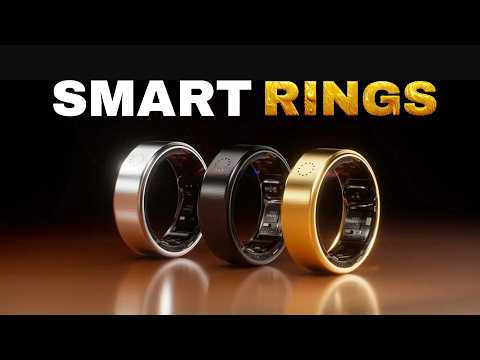
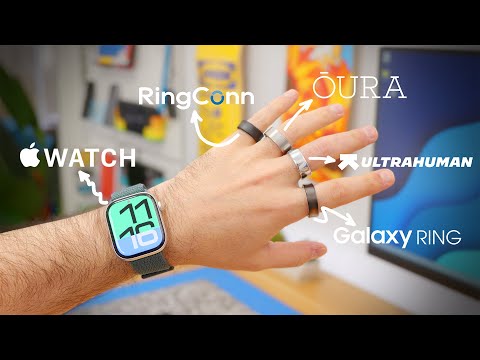
In 2026, the most intelligent AI smart rings turn continuous biometrics—heart rate, HRV, sleep, temperature, and breathing—into predictive health alerts and personalized coaching, instead of just raw charts. Devices like Oura Ring 4 (with Oura’s Health Radar and AI coach), Circular Ring 2 (with proactive AI coaching and ECG), Samsung Galaxy Ring, Ultrahuman Ring Air, and Luna Ring 2 are treated by reviewers as the leading “AI-first” rings for long-term digital health companionship.
What “Most Intelligent” Means in AI Smart Rings
Intelligence in 2026 smart rings is less about having the most sensors and more about how well the AI interprets long-term patterns and delivers timely, understandable advice.
Key capabilities:
Predictive health insights:
Detect trends in blood pressure patterns, temperature, breathing, HRV, and resting heart rate that can flag early cardiovascular or stress-related issues.
Personalized coaching:
AI agents and chat-like coaches that explain trends, suggest habits, and adapt recommendations over time based on your data and feedback.
Context-aware alerts:
Systems that distinguish between normal variation and concerning changes, reducing false alarms while highlighting meaningful deviations.
Analysts describe this shift as moving smart rings from tracking tools to long-term digital health companions, with AI as the core differentiator.
Oura Ring 4 (and Platform) – Health Radar and AI Health Coach
Oura has evolved its platform around predictive and preventive care, expanding beyond sleep into cardiovascular and metabolic risk monitoring.
Predictive Health Features
Health Radar:
A proactive system that monitors body temperature, respiratory rate, heart rate, and other biometrics, issuing alerts when it detects significant deviations from your baseline.
Recent updates extend Health Radar to identify blood pressure patterns during sleep, which Oura says can flag early cardiovascular risk signals.
Nighttime breathing and disturbances:
Tracks breathing patterns and disruptions during sleep, helping identify issues like irregular breathing or potential sleep-related breathing problems.
GLP‑1 Insights:
A dedicated tool for users on GLP‑1 weight-loss medications, helping track dosing schedules, weight changes, body composition, and ring-collected biometrics.
Personalized Coaching and Care
OuraAdvisor / AI health coach:
An AI assistant embedded in the app that interprets Health Panels, trends, and lab markers, offering tailored advice and explanations in conversational form.
Care integration with Counsel Health:
Collaboration with on-demand healthcare provider Counsel Health: users can ask health questions, get AI-informed guidance, and connect with human clinicians in 43 U.S. states.
Positive Impact
Transforms the ring into an early warning system for cardiovascular and respiratory risk patterns, not just a sleep tracker.
Bridges consumer wearables and healthcare by linking ring data with lab results and telehealth, potentially improving prevention and follow-up.
Critical Risks
Predictive alerts can create false reassurance or unnecessary anxiety if users treat AI suggestions as diagnosis or ignore professional care.
The combination of biometric patterns and lab data is highly sensitive; misuse or poor governance could have serious privacy and discrimination implications.
Access to the most advanced features often requires subscriptions and U.S.-centric services, limiting availability and equity.
Circular Wellness Ring 2 – Proactive AI Coaching and ECG
Circular positions itself as an AI-first ring with a strong emphasis on proactive coaching and medical-grade signals.
Intelligent Features
AI Coach (Kira):
Kira is an AI wellness assistant that analyzes your metrics and offers personalized insights and recommendations based on habits, trends, and goals.
It proactively surfaces advice (e.g., sleep routine tweaks, stress management suggestions) instead of waiting for you to dig into charts.
ECG and Afib detection:
Circular Ring 2 includes an ECG sensor with atrial fibrillation detection, giving it a more medical-grade angle than most consumer rings.
Combines PPG, ECG, and other metrics to deliver in-depth heart wellness insights.
Positive Impact
Offers high-level AI coaching without mandatory subscriptions, making advanced guidance more accessible for some users.
ECG and Afib detection add real clinical relevance, potentially prompting timely medical evaluation.
Critical Risks
Even with ECG, smart rings are not replacements for full clinical evaluation; misinterpretation is a risk if users self-diagnose.
As with other AI coaches, quality of advice depends on model training and guardrails; poor prompts or edge cases could produce misleading recommendations.
Luna Ring Gen 2 – AI Workout and Nutrition Coaching
Luna Ring 2 (highlighted in 2026 device roundups) emphasizes AI-assisted fitness and lifestyle coaching.
Intelligent Coaching Features
AI Coach for workouts and nutrition:
Generates tailored workout plans and nutrition suggestions based on your metrics, goals, and progress.
Targets athletes and health enthusiasts who want more than passive tracking.
Positive Impact
Helps users transition from raw data to structured training and diet plans, which many people struggle to create on their own.
Gives smaller teams and independent athletes access to AI-assisted coaching without needing full-time human trainers.
Critical Risks
Quality of training and nutrition advice depends heavily on model design and embedded assumptions; generic plans may not fit medical constraints or individual context.
Without human oversight, there’s risk of overtraining, under-fueling, or ignoring contraindications (e.g., injuries, chronic conditions).
Samsung Galaxy Ring – AI Stress and Readiness Coaching
Galaxy Ring brings AI intelligence into the Samsung Health and Galaxy AI ecosystem, with a focus on stress and readiness.
AI Insights
Uses HR, HRV, and sleep metrics to produce stress scores, recovery assessments, and sleep quality insights, which Galaxy AI uses to deliver guidance and notifications.
After about a week, the system starts delivering more personalized messages, learning your baseline and reaction patterns.
Positive Impact
Makes AI health coaching mainstream for Android users, embedded directly in Samsung’s devices rather than a separate, niche app.
Integrates with Galaxy Watch and phone data, potentially improving accuracy and context.
Critical Risks
Reviewers have raised concerns about data consistency and battery issues, which can undermine trust in AI-driven advice.
Integration across multiple Samsung services raises cross-context privacy questions, especially if health data intersects with other apps or ad infrastructure.
Ultrahuman Ring Air – Metabolic and Nervous System Intelligence
Ultrahuman Ring Air’s AI focus is on metabolic health and nervous system recovery, giving it a distinctive role among “most intelligent” rings.
Intelligent Features
Tracks HRV, temperature, sleep, and activity to produce metrics like stress load, sleep debt, and metabolic readiness.
Integrated with Ultrahuman’s app, which offers preventive health guidance, habit coaching, and integration with blood markers or CGM data.
Positive Impact
Particularly powerful for biohackers and athletes who want to understand how stress, sleep, and training impact metabolic resilience.
No mandatory subscription makes its AI guidance more financially accessible over long-term use.
Critical Risks
Independent testing has flagged sleep tracking accuracy issues, which can weaken the foundation of its AI intelligence.
As with other performance-focused wearables, there is a risk of overemphasis on numbers at the expense of subjective well-being.
Market and Societal Context: AI Rings as Long-Term Health Companions
Research on the AI smart ring market shows strong growth driven by health-conscious professionals and tech innovators, with leading manufacturers like Oura, Samsung, Movano, and Ultrahuman shaping premium biometric capabilities.
A 2026 industry analysis highlights:
AI smart rings integrate sensors, AI algorithms, payments, gesture control, and notifications into compact hardware, with a strong emphasis on health metrics.
Trends include predictive and personalized healthcare, positioning rings as long-term companions rather than short-term gadgets.
Top trends for 2026 emphasize proactive risk detection, integrated coaching, regulatory-compliant features, and ecosystem integration with smart homes and enterprise health platforms.
Positive Societal Contributions
Early detection and prevention: continuous monitoring and predictive algorithms can flag cardiovascular or stress issues earlier, supporting preventive care.
Scalable coaching: AI coaches democratize access to basic lifestyle guidance, especially for people who cannot afford personal trainers or continuous health coaching.
Workforce wellness: Organizations can (if done ethically) use aggregated data to design better wellness programs and workload policies, improving productivity and reducing burnout.
Critical Societal Concerns
Privacy and surveillance: rings produce highly sensitive data streams; without strong regulation and transparency, they could enable health-based profiling by insurers, employers, or platforms.
Algorithmic bias and opacity: AI models trained on limited populations may misinterpret signals for underrepresented groups, or mis-prioritize risks.
Inequality of access: many “most intelligent” features require expensive hardware and subscriptions, risking a divide where advanced preventive tools are mainly available to wealthier users.
How to Evaluate “Intelligence” When Choosing a Smart Ring
Given the 2026 landscape:
Look beyond buzzwords:
Check if the ring offers concrete predictive features (e.g., blood pressure patterns, health alerts, AI coaching) or just rebrands standard metrics as “AI.”
Assess your use case:
If you want cardio and preventive focus, Oura’s Health Radar and Clinical integrations may be strongest.
For AI coaching without subscriptions, Circular Ring 2 and some Luna/Ultrahuman setups are compelling.
If you’re deep in Samsung or specific ecosystems, integration may matter more than marginal differences in AI models.
Check data rights and export:
Ensure you can export and delete your data, and understand how long it is retained and with whom it can be shared.
Treat AI as an assistant, not a doctor:
Use AI insights as early signals and coaching, but confirm important decisions with medical professionals, especially when alerts involve cardiovascular or respiratory risk.
In 2026, the Most Intelligent AI Smart Rings are less about flashy features and more about how reliably, ethically, and helpfully they turn continuous biometric data into predictive health insights and personalized coaching. If chosen and used wisely, they can support better sleep, stress management, and long-term wellness—while reminding us that true intelligence comes not just from algorithms, but from how we integrate them into human judgment and care.