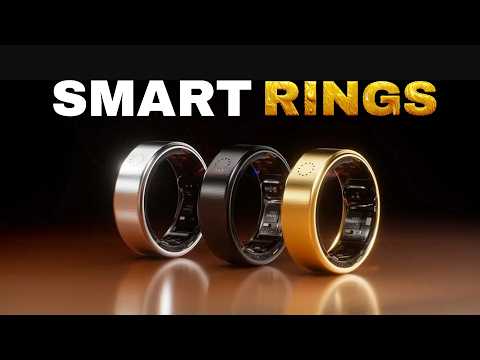
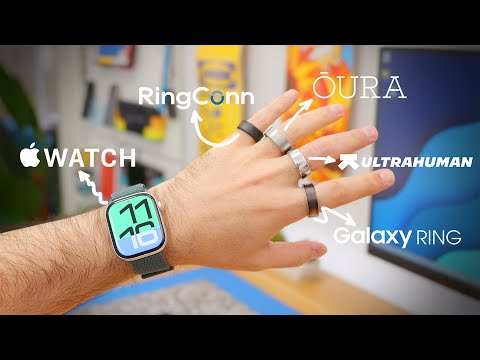
In 2026, you can get serious health, sleep, and fitness tracking in a smart ring without paying flagship prices or mandatory subscriptions. Based on recent buyer’s guides and expert reviews, the best options under 400 USD include RingConn Gen 2 / Gen 2 Air, Amazfit Helio Ring, Ultrahuman Ring Air (on promo), Luna Ring Gen 2, Circular Ring 2, Samsung Galaxy Ring deals, and several “budget” picks like RENPHO Lynx and Acer FreeSense. They show that you no longer need a 500+ USD ring plus a subscription to access advanced sleep, recovery, and AI coaching.
Below, everything is in American English, focused on coherent, complete, up‑to‑date information and critical analysis (positive and negative) for real‑world use and societal impact.
What Counts as “Under $400” in 2026
Most big-name premium rings (like top Oura configurations with tax and accessories) can push beyond 400–450 USD, especially with subscription costs over time. For this guide, we focus on:
Hardware price at or below ~399 USD, before tax.
Preference for no required subscription, or at least a usable free tier, so total cost stays reasonable.
This price band includes some “value” configurations of top brands and a growing field of highly capable mid-range rings that deliver excellent tech for the money.
RingConn Gen 2 / Gen 2 Air – Best Value & Battery
Several 2026 guides describe RingConn Gen 2 / Gen 2 Air as the best budget & battery life smart ring, with strong AI features and no ongoing subscription.
Key Data
Price: typically around 199–299 USD, clearly under 400 USD.
Battery: real‑world 10–12 days on a single charge with a charging case.
Features:
Sleep tracking, HR & HRV, readiness-style recovery scores.
AI‑driven sleep apnea monitoring and illness prediction features in newer firmware.
Positive Points
No subscription: Full analytics without monthly fees makes it one of the best long-term value options.
Battery endurance: Great for people who don’t want to charge every few days and travel or work long weeks.
Thin and subtle design: Often noted as one of the thinnest rings in comparison tests—very discreet for office or social settings.
Critical Limitations
App and ecosystem aren’t as polished or wide as Oura or Samsung, which may matter if you want deep integrations and lab features.
Community reports indicate that, like many rings, battery capacity can decline after 16–18 months, impacting long-term value unless the company offers solid support.
Amazfit Helio Ring – Best Value in a Sports Ecosystem
Independent reviewers and buying guides point to Amazfit Helio Ring as one of the most budget-friendly smart rings with serious sports and recovery metrics.
Key Data
Price: often 199–299 USD, especially during sales, putting it comfortably under 400 USD.
Battery: multi‑day battery (generally around 5–7 days), tuned for performance tracking.
Features:
Designed to pair with Amazfit watches and Zepp OS, giving advanced training and recovery metrics.
Tracks sleep, HR, HRV, stress, and training load, aligning with sports science models.
Positive Points
Great for athletes on a budget: If you’re already in the Amazfit ecosystem, Helio delivers strong synergy at a relatively low cost.
No mandatory subscription: Many core features remain usable without monthly fees.
Good tech per dollar: You get advanced training insights comparable to much higher-priced devices.
Critical Limitations
Works best if you’re already using or willing to use Amazfit / Zepp—less attractive if your main devices are from other brands.
App UX and AI coaching are still maturing compared to long-established premium platforms.
Ultrahuman Ring Air – Premium‑Level Tech with Aggressive Discounts
List prices for Ultrahuman Ring Air can land in the mid‑300s USD, and it is frequently promoted with 30% or similar discounts, bringing it under 400 USD for many buyers.
Key Data
Price: often around 349 USD, sometimes less during promotional periods.
Battery: typically several days (roughly 4–6), depending on settings.
Features:
Deep focus on HRV, metabolic health, stress, and recovery.
Integrated with Ultrahuman’s broader platform for preventive health and metabolic coaching.
Positive Points
Delivers near‑premium AI insight (especially for HRV and metabolic markers) at a price below top-tier Oura configurations.
No forced subscription, so lifetime cost stays contained once you’ve bought the ring.
Lightweight performance style appeals strongly to biohackers and athletes.
Critical Limitations
Several independent testers criticize sleep tracking accuracy, which can reduce trust if sleep is your primary use case.
Less clinical validation and brand recognition than Oura or Samsung, which may matter for medical collaboration or clinical use.
Luna Ring Gen 2 – AI Coaching Without Heavy Subscriptions
Some neutral comparison blogs highlight Luna Ring as a promising choice to watch if you want AI coaching without the typical subscription model.
Key Data
Price: positioned below top-tier rivals, within the sub‑400 USD space for most configurations.
Features:
Sleep, HR, HRV, activity tracking.
AI‑driven workout and lifestyle coaching with less reliance on subscription gating.
Positive Points
Designed to turn data into practical coaching, not just dashboards, while keeping upfront and ongoing costs reasonable.
Appeals to users who want structured guidance but dislike heavy paywalls.
Critical Limitations
As a newer player, Luna has less long-term validation and community testing, so some users may prefer more established brands.
Availability and firmware maturity may vary by region.
Circular Ring 2 – AI Coaching and ECG Under $400 (Without Subscription)
Circular’s own materials and third-party rankings highlight Circular Ring 2 as one of the only rings that combines proactive AI coaching and ECG with Afib detection while offering a no-subscription model.
Key Data
Price: typically under 400 USD, especially with promoted discounts (e.g., ~100 USD off campaigns).
Features:
AI coach Kira, delivering proactive, personalized wellness recommendations.
ECG with Afib detection, plus standard sleep, HR, and HRV metrics.
Positive Points
Adds genuine medical-grade signals (ECG, Afib detection) within a price that undercuts many premium rivals.
No subscription structure pushes a one‑time purchase model, attractive for long-term planners.
Critical Limitations
AI coaching quality depends on how well Kira is tuned, and there’s still limited broad clinical evaluation compared with bigger brands.
Ring availability and support can be more limited by region than mass-market brands.
Samsung Galaxy Ring – Deals and Sub‑$400 Configurations
While Galaxy Ring can approach premium pricing, promo deals and some configurations bring it close to or under 400 USD in many markets, especially during sales.
Key Data
Price: base configurations and discounts often position it around 350–399 USD, especially when bundled.
Features:
Deep Samsung Health and Galaxy AI integration for sleep, stress, and readiness.
Comfortable concave design and strong ecosystem synergy.
Positive Points
For Galaxy users, the value is high: one ring plugs into existing phones and watches, giving advanced health features without buying into a separate ecosystem.
No mandatory subscription for core features, which keeps total cost under control.
Critical Limitations
Non‑Samsung users may not get full capabilities, reducing the value proposition.
Some early reports of battery and data accuracy issues required firmware fixes; long-term performance still depends on software updates.
True “Budget” Smart Rings – RENPHO Lynx, Acer FreeSense, and Others
Some 2026 guides call out a few sub‑200 USD rings that still deliver surprisingly solid tracking.
Notable mentions:
RENPHO Lynx – Best Budget Pick
Featured as a top budget ring in at least one 2026 health-tracking guide.
Typically well under 200 USD, with basic sleep and activity tracking and no subscription.
Good entry for users testing smart rings without big investment, though with limited ecosystem and AI sophistication.
Acer FreeSense Smart Ring
Highlighted as extremely lightweight (~2.5 g) and capable of up to 10 days of battery life, with standard HR, SpO2, and activity tracking.
Often priced under 250 USD, positioned as a stylish but affordable health ring.
These devices show that even the lower end of the market now offers credible sleep and activity metrics, though typically without the richer AI insights of more expensive options.
Pros and Cons of Sub‑$400 Smart Rings
Positive Scenarios
Wider access to advanced tracking:
Under-400 USD rings bring sleep, HRV, stress, and recovery metrics to a broader user base, no longer restricted to high-end buyers.
No-subscription models:
Rings like RingConn, Amazfit Helio, Circular Ring 2, Ultrahuman (in many cases) and some budget brands keep lifetime costs manageable.
Professional and everyday use:
Knowledge workers, shift workers, athletes, and gig workers can use these tools to tune sleep schedules, manage stress, and avoid overtraining, supporting productivity and safety.
Critical & Negative Scenarios
Accuracy and validation gaps:
Many budget and mid-range rings lack the same level of clinical validation and peer-reviewed comparisons that premium brands have, especially for sleep staging and advanced AI features.
Ecosystem fragmentation:
Lower-cost rings often come with weaker app ecosystems, fewer integrations, and less-polished UX, which can limit how actionable the data feels.
Battery and durability concerns:
Cheaper rings may use lower-cost batteries or materials, potentially resulting in faster degradation, scratches, or inconsistent performance over time.
Data privacy risk still present:
Even cheaper rings collect sensitive HR, HRV, and sleep data; if vendors lack strong privacy practices, users may unknowingly trade health insights for data exposure.
How to Pick the Best Sub‑$400 Smart Ring for You
Given the 2026 landscape:
Choose RingConn Gen 2 / Gen 2 Air if you want:
Maximum battery life, no subscription, and solid health tracking at 199–299 USD.
Choose Amazfit Helio Ring if you:
Are already in the Amazfit / Zepp ecosystem and want strong sports and recovery metrics around 199–299 USD.
Choose Ultrahuman Ring Air (on deal) if you:
Want deeper HRV/metabolic insights and can catch it around 349 USD when discounted.
Choose Circular Ring 2 if you:
Want AI coaching + ECG/Afib detection without a subscription, while staying under 400 USD.
Choose budget picks like RENPHO Lynx or Acer FreeSense if you:
Want to test the smart ring experience at sub‑200–250 USD, accepting simpler apps and fewer integrations.
In 2026, the Best Smart Rings Under $400 prove that you can get incredible technology without a premium price tag, especially if you prioritize no-subscription models, strong battery life, and ecosystems that fit your devices and lifestyle. Used thoughtfully, they can support better sleep, training, and daily performance across many sectors—while still demanding careful attention to accuracy, privacy, and long-term durability.