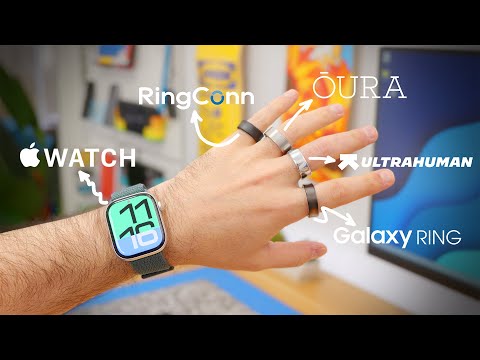
In 2026, Oura Ring 4, Samsung Galaxy Ring, and Ultrahuman Ring Air are widely ranked as the three leading AI smart rings, each excelling in a different area: Oura in depth of health insights, Samsung in ecosystem integration, and Ultrahuman in AI coaching without subscriptions. Around them, strong alternatives like RingConn Gen 2 Air and Amazfit Helio Ring broaden the landscape with better battery life and lower total cost of ownership.
Below is a clear, up‑to‑date overview in American English, with prices, pros and cons, and real‑world impact across work, health, and society.
Core Players in 2026 Smart Rings
Most expert 2026 roundups agree on the same top cluster of rings:
Oura Ring 4 – best overall insights and long‑term trend analysis.
Samsung Galaxy Ring – best if you’re deep into the Galaxy ecosystem.
Ultrahuman Ring Air – best advanced AI coaching with no subscription.
RingConn Gen 2 / Gen 2 Air – best battery life and budget choice.
Amazfit Helio Ring – best value inside the Zepp/Amazfit fitness ecosystem.
All of these track the basics (heart rate, HRV, sleep, activity, temperature), but differ in AI features, pricing, subscriptions, and ecosystem lock‑in.
Price & Feature Comparison (2026)
Oura Ring 4 – “Deepest AI Insights”
Independent guides still name Oura Ring 4 as the benchmark smart ring for overall health insight in 2026.
Price (hardware): about $349–$549, depending on finish and edition.
Subscription: about $5.99/month for full features (readiness, advanced insights, symptom radar).
Battery life: up to 8 days per charge in typical use.
Key AI features:
Advanced Readiness Score combining HRV, sleep, trends.
Symptom Radar for early illness signals based on deviations.
Long‑term trend analysis and personalized nudges.
Positives
Best‑in‑class for people who want deep, longitudinal health and recovery insights, including high‑performing professionals and serious trainees.
Strong app design, lots of research backing its metrics.
Critical negatives
Subscription is effectively mandatory if you want the full AI value; over 2–3 years this significantly raises total cost.
No strong integration to a specific phone ecosystem (good for flexibility; neutral if you want tight phone‑OEM coupling).
Samsung Galaxy Ring – “Best for Galaxy Users”
The Samsung Galaxy Ring is designed to be the finger‑worn extension of Galaxy AI and Samsung Health, and most 2026 reviews treat it as the top option for Android users in that ecosystem.
Price: about $399 at launch for the first‑gen model referenced in 2026 guides.
Subscription: no monthly subscription required for core features.
Battery life: up to 7 days per charge.
Key AI features:
Energy Score (similar to readiness) combining sleep and activity.
Sleep coaching, wellness tips, and Galaxy AI integration.
Some gesture controls and tight integration with Galaxy phones/watches.
Positives
Great value if you already use Samsung Health and a Galaxy phone, because data and notifications stay in one ecosystem.
Strong sleep analytics and coaching without extra monthly costs.
Critical negatives
Best features are optimized for Samsung devices; experience is less compelling if you’re not on a Galaxy phone.
First‑gen hardware; some reviewers note potential teething issues and less mature app polish versus Oura.
Ultrahuman Ring Air – “Best Subscription‑Free Advanced AI”
The Ultrahuman Ring Air is popular among biohackers and performance‑oriented users because it blends AI‑driven coaching with a no‑subscription model.
Price: around $349 (one‑time).
Subscription: no ongoing subscription for core features.
Battery life: about 5–6 days per charge.
Key AI features:
Circadian rhythm guidance (best sleep and wake windows).
Caffeine timing suggestions and phase‑based training.
Smart alarms, nutrient and vitamin timing recommendations.
Positives
Very strong for proactive coaching, not just passive tracking—aimed at people who want to tweak performance and metabolism.
Good choice for users who hate subscriptions but still want sophisticated AI features.
Critical negatives
Ecosystem smaller than Samsung or Oura; fewer third‑party integrations.
Interface and insights can feel too “biohacker” or complex for casual users.
RingConn Gen 2 / Gen 2 Air – “Best Budget and Battery Life”
The RingConn Gen 2/Gen 2 Air is highlighted as the value and battery‑life leader in many 2026 comparisons.
Price: generally $199–$299, often with no subscription.
Subscription: no mandatory subscription for core features.
Battery life: about 10–12 days with the charging case system.
Key AI features:
Sleep, HR/HRV, activity, and SpO₂.
AI‑driven detection of breathing irregularities / possible apnea events in newer versions.
Positives
Top choice if you want a set‑and‑forget ring with very long battery life at a moderate price.
Good for people who travel often or dislike frequent charging.
Critical negatives
Apps and insights are less polished and less research‑validated than Oura’s.
Some reviewers note variable accuracy in high‑intensity workouts compared to top tier.
Amazfit Helio Ring – “Best Value Ecosystem Pick”
The Amazfit Helio Ring integrates tightly with Zepp Health’s ecosystem, appealing to fitness‑focused users already using Amazfit watches.
Price: usually $199–$299, depending on region and bundle.
Subscription: typically no subscription for core metrics.
Battery life: about 4–7 days depending on settings.
Key AI features:
Zepp AI‑enhanced training plans.
Recovery metrics, sleep analysis, and integration with Amazfit watches.
Positives
Great add‑on if you already use Amazfit watches and want 24/7 tracking without a watch in bed.
Offers robust metrics at a lower price than many Western brands.
Critical negatives
App and ecosystem are more fitness‑oriented, less focused on broader wellness narratives.
Regional availability and support can be patchier in some markets.
Price vs Real Cost: Hardware + Subscription
When you factor in subscriptions over 2–3 years, the true cost picture changes:
Oura Ring 4
Hardware: $349–$549.
3 years of subscription (~$5.99/month): around $215+ extra.
Real 3‑year total: roughly $560–$760+, depending on model.
Samsung Galaxy Ring
Hardware: about $399.
No mandatory subscription: real 3‑year total stays close to $399 (aside from phone cost).
Ultrahuman Ring Air
Hardware: ~$349.
No subscription: 3‑year total stays about $349.
RingConn Gen 2 Air
Hardware: $199–$299.
No subscription: 3‑year total $199–$299.
Amazfit Helio Ring
Hardware: about $199–$299.
No subscription: 3‑year total $199–$299.
This is why many reviewers warn about “subscription traps” and stress calculating ownership cost, not just the upfront price.
Critical Pros and Cons: Health, Tech, and Society
Positive Contributions
Better Sleep and Recovery Awareness
Rings like Oura and Ultrahuman give clear signals when you are over‑stressed or under‑recovered, nudging you to adjust training, workload, or bedtime.
This is useful across sectors—athletes, shift workers, founders, healthcare staff.
24/7 Tracking in a Minimal Form Factor
Rings are less intrusive than watches, which increases wear time and data completeness, especially overnight.
Early Warning Signals
Temperature, HRV, and symptom‑radar features can flag illness or unusual strain before you consciously notice it, helping you take preventive action.
Workforce and Productivity Benefits
In high‑stress workplaces, aggregated anonymous data (if managed ethically) can inform better scheduling, workload planning, and wellness programs.
Negative and Critical Issues
Data Privacy and Surveillance Risk
These rings collect intimate health and behavioral data; if employers or insurers gain access, it raises serious ethical concerns.
Policies vary by company; some are clearer than others about data ownership and sharing.
Subscription Lock‑In
Oura’s model shows how core health insights can be effectively rented via monthly fees, turning a one‑time purchase into a quasi‑service contract.
Health Anxiety and Over‑reliance
Constant alerts about sleep or readiness can create stress or obsession with metrics, rather than healthier behavior.
These are not diagnostic devices; misinterpretation can lead to unwarranted worry.
Digital Inequality
Advanced rings from Oura, Samsung, and Ultrahuman remain relatively expensive compared to basic trackers, meaning higher‑income groups get earlier access to AI‑driven wellness optimization.
Which Ring to Choose in 2026? (Straightforward Guidance)
Choose Oura Ring 4 if:
You want the deepest AI health and recovery insights,
You’re comfortable paying a monthly subscription, and
You care more about data quality and trends than ecosystem loyalty.
Choose Samsung Galaxy Ring if:
You already use a Galaxy phone and Samsung Health,
You want a ring that feels like part of the phone ecosystem,
You dislike subscriptions and prefer a single up‑front cost.
Choose Ultrahuman Ring Air if:
You value biohacker‑style coaching (circadian, nutrition, performance),
You want strong AI guidance but no subscription,
You’re willing to engage with a more technical, performance‑oriented app.
Choose RingConn Gen 2 Air if:
You care most about battery life and budget,
You want decent tracking with minimal ongoing cost,
You don’t need the absolute deepest insights or big‑name branding.
Choose Amazfit Helio Ring if:
You’re in the Amazfit/Zepp ecosystem,
You want strong fitness‑oriented metrics at a lower price,
You’re in a market where Amazfit offers good local support.
Bottom Line: AI Smart Rings as 2026 Wearables
In 2026, smart rings have matured from niche gadgets into serious health wearables, and Oura, Samsung, and Ultrahuman set the tone for what “AI‑powered wellness” looks like on your finger.
Premium is worth paying when you will:
Wear the ring 24/7,
Act on the insights (sleep, training, stress management), and
Accept the true cost (including subscriptions) and data implications.
If those conditions aren’t met, a well‑chosen subscription‑free ring like Ultrahuman, RingConn, or Amazfit will usually offer better long‑term value and still deliver most of the AI‑powered benefits that actually matter in daily life.