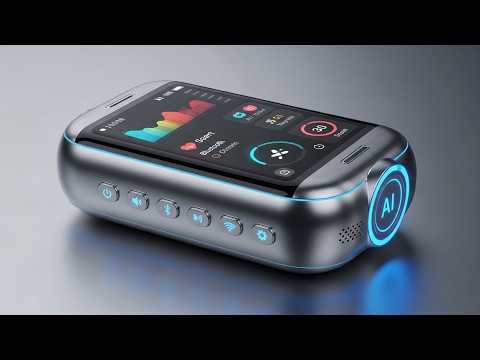
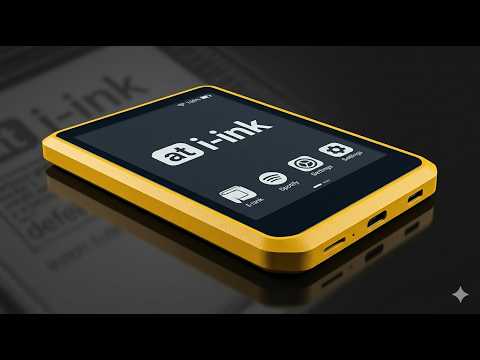
In 2026, AI gadgets are expensive because they bundle cutting‑edge chips, sensors, and cloud AI services at a time when the cost of key components like RAM and storage is being driven up by massive demand from AI data centers. At the same time, the best high‑priced devices can repay their cost in saved time, energy efficiency, or professional productivity, while others are mostly status symbols that don’t justify their premium.
Below is a clear, American‑English explanation of what you’re really paying for, when the price makes sense, and how these gadgets affect work and society.
1. Why AI Hardware Itself Got More Expensive in 2026
Component Costs Driven Up by AI
Several 2025–2026 analyses explain that AI data centers are competing directly with consumer tech for memory and storage, pushing up prices for everyone:
The BBC reported that the price of RAM more than doubled between late 2025 and early 2026, largely because AI data centers need huge amounts of memory for training and serving models.
Tech industry explainers note that manufacturers are prioritizing server‑grade memory and SSDs for AI workloads, leaving fewer chips for laptops, phones, and consumer gadgets, which raises consumer prices.
That means every AI gadget that uses:
More RAM (for local models or fast inference),
Larger SSD/flash (for offline voice, data logging, or edge AI),
is now fundamentally more expensive to build than it was a couple of years ago.
R&D and Custom Silicon
On top of commodity parts, high‑end AI gadgets increasingly use custom accelerators or co‑processors, which are expensive to design and produce at low volume. Enterprise AI cost breakdowns show that building a serious AI platform or MVP often runs $100,000–$500,000+ in development costs alone, even before scaling. Those costs are partly recouped in the price of hardware and subscriptions.
2. What You Actually Pay for in a “High-End” AI Gadget
You can think of a premium AI gadget’s cost as four main layers:
Hardware bill of materials
Chips (CPU, GPU/NPU), RAM, storage, sensors, cameras, displays, microphones.
These costs have risen due to AI‑driven demand for RAM and SSDs.
Software and AI models
On‑device models (wake‑word detection, ranking, local transcription).
Cloud inference using expensive GPUs in data centers.
Cloud infrastructure and bandwidth
Servers, networking, monitoring, and scaling; these are recurring costs, not one‑time.
AI‑heavy features like real‑time transcription, vision recognition, or multi‑turn assistants can be expensive at scale.
R&D, design, and brand margin
User research, industrial design, iterative prototypes.
Profit margin, especially high in luxury segments.
So, a $400 AI gadget isn’t just a $60 tablet with a logo; it’s often a hardware shell plus years of AI and cloud expenses baked into the price and subscriptions.
3. Full Cost Breakdown Example: A High-End AI Gadget
Consider a “typical” premium AI gadget in 2026 from independent buying guides—say a high‑end AI voice hub, smart display, or advanced wearable in the $399–$599 range.
Approximate Cost Structure (Conceptual)
Hardware (screen, chips, sensors, casing): maybe $120–$200 per unit at scale, more if it includes better cameras or an NPU.
Software, firmware, and testing amortized per unit: perhaps $50–$100 when spread over tens of thousands of units.
Cloud AI and services:
If it includes “lifetime” basic AI usage, the manufacturer must budget tens of dollars per user for API calls and server time over a few years.
Some devices instead bundle a subscription (e.g., $5–$30/month) to cover heavy AI usage.
Logistics, channel margins, marketing, and support: easily another $100+ combined.
That’s how you can fairly quickly reach a retail price near $399–$599 even when the raw components might be half that. For some subscription models, the initial gadget may even be near cost, with profit coming from recurring AI usage.
4. When the High Price Is Actually Worth It (Positive Scenarios)
A. Devices That Save Significant Time
AI gadgets that directly reduce manual work can repay their cost:
AI note‑taking devices and voice recorders that automatically transcribe and summarize meetings and classes are often priced around $169–$299 and save professionals many hours of typing and follow‑up.
Smart home hubs and thermostats around $179–$279 can automate light, climate, and security, reducing “micro‑management” of the home and cutting energy bills.
If a $300 gadget saves:
2 hours per week of tedious work,
And your time is worth even $20/hour,
that’s ~$2,080 of time per year, dwarfing the purchase price—as long as you truly use it.
B. Devices That Reduce Energy or Operational Costs
Smart thermostats and hubs that learn your patterns and adjust HVAC intelligently can reduce energy consumption in many homes, especially in variable climates.
At scale, an OECD synthesis on AI and society notes that AI‑driven optimization can help address resource scarcity and climate challenges by improving efficiency.
For a larger home, a well‑tuned AI thermostat or hub might save hundreds of dollars per year in energy, meaning a $200–$300 device can pay for itself in a couple of seasons.
C. Devices That Unlock New Capabilities
Some high‑priced gadgets make new things possible rather than speeding up old ones:
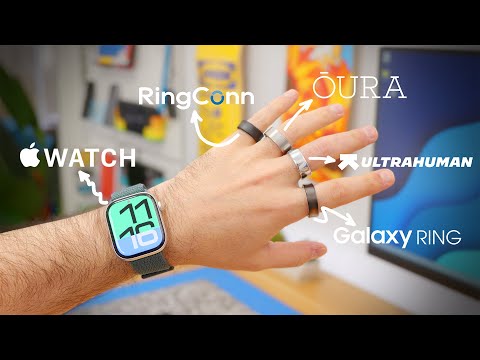
Advanced AI wearables (smart rings, watches) in the $250–$400 range can continuously track sleep, stress, and recovery, helping athletes, shift workers, and executives avoid burnout or injury.
AI translators and smart glasses with live translation (often $199–$499) open doors for travel, cross‑border sales, and international collaboration without fluency in multiple languages.
Here, value is measured in new opportunities and fewer barriers, not just money saved.
5. Why Some High-Priced AI Gadgets Are Not Worth It (Negative Scenarios)
A. Subscription Traps and Total Cost of Ownership
Many premium gadgets are deceptively priced because the real cost shows up in subscriptions:
Some health wearables and AI devices require monthly fees for full analytics or cloud AI access, turning a $300 gadget into a $600–$1,000+ three‑year commitment.
A few services now bundle hardware “for free” with $30/month AI subscriptions, meaning you may pay $360 per year indefinitely.
These can still be worth it—but only if you actively use the features month after month.
B. Over-Engineered “Toys”
Reviewers who tested AI gadgets in 2026 repeatedly found that many devices are expensive gimmicks:
A 2026 hands‑on review of five Amazon AI gadgets concluded that two were genuinely useful, two were expensive gimmicks, and one was in the middle, despite all using similar underlying AI.
Broader guides warn that some AI gadgets add complexity (apps, accounts, maintenance) without simplifying life.
If a $400 gadget does something your $200 phone or $50 smart plug already does well, the premium is hard to justify.
C. AI Price Inflation Without Meaningful Benefit
Several analyses warn that AI itself is making general tech more expensive:
News outlets describe how huge investments in AI data centers are raising prices for laptops, phones, and consoles because of memory and storage shortages.
Not every AI feature on a spec sheet delivers actual value; sometimes it is just a marketing label to justify a higher price tag.
In such cases, you might be paying for AI hype, not AI utility.
6. Broader Societal Value: Progress or Just Profit?
Where High-Priced AI Gadgets Help Society
The OECD and other organizations highlight that AI can boost productivity, improve well‑being, and help tackle climate, health, and resource challenges, when deployed thoughtfully.
Expensive early hardware often funds R&D that later lets cheaper, more efficient versions reach schools, hospitals, and mainstream consumers.
Examples:
Optimizations developed for premium smart hubs can later make cheap thermostats smarter, reducing emissions in millions of homes.
Learnings from high‑end AI wearables can improve public health screening and digital therapeutics.
Where They Risk Making Things Worse
Investigations note that AI‑driven demand for hardware is already pushing up prices for everyday tech, which can limit access to digital tools for lower‑income households.
Luxury AI solutions in fashion, retail, and services are often used to drive growth and profitability and deepen customer profiling, more than to solve social problems.
If AI gadgets are concentrated among the wealthy, the gains in efficiency and insight may widen inequality, giving already advantaged groups better tools for productivity and wealth building.
So, whether the high price is “worth it” to society depends on how widely the benefits are shared and whether the same technologies are eventually deployed in public and affordable contexts.
7. How to Decide if a High-Priced AI Gadget Is Worth It (In Practice)
Use these questions before you spend big:
Can I quantify the benefit?
Time saved per week, energy saved per month, new revenue or opportunities created.
What is the real 3-year cost?
Hardware + subscriptions + accessories. Compare this total against realistic benefits.
Is there a cheaper setup that does 80–90% of the job?
Sometimes a midrange phone + smart plug + basic assistant beats a $500+ “all‑in‑one” gadget.
How mature is the product?
Early‑generation devices carry more risk (bugs, limited support, fast obsolescence).
What are the data and privacy terms?
Check who owns the data, how long it’s stored, and whether you can export or delete it.
If a high‑priced AI gadget clearly pays you back in time, comfort, or new capability—and you’re comfortable with its long‑term costs and data policies—then in 2026 its high price tag can be justified. If not, the smartest move is often to wait for the next, cheaper wave that benefits from today’s early adopters without making you pay for the most expensive phase of the AI hardware boom.