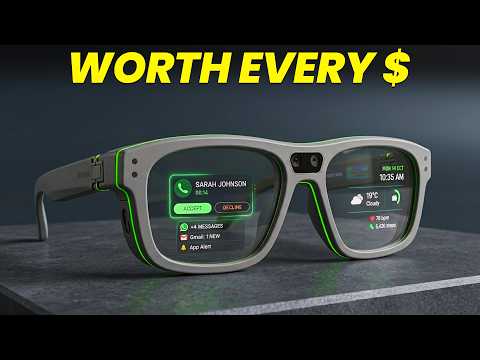
In 2026, the most advanced AI smart glasses fall into two main camps: full AR display glasses (like Meta’s Orion‑class AR tech and Xreal‑style display glasses) and AI smart glasses without big displays (like Ray‑Ban Meta), which focus on camera, audio, and an always‑available assistant. Ray‑Ban Meta has become the first smart‑glasses product to sell at scale, while higher‑end AR glasses remain more niche but far more immersive and expensive.
Below is a clear, American‑English overview of what each type really does, how much they cost, and whether the premium is justified, with both positive and critical perspectives.
1. Ray‑Ban Meta Smart Glasses (AI First, No Big AR Display)
What They Are
Ray‑Ban Meta (often called “Meta Ray‑Ban”) are classic Ray‑Ban frames with built‑in camera, open‑ear speakers, microphones, and Meta’s AI assistant, but no full‑field AR display.
Key traits:
Capture photos and video hands‑free.
Stream audio (music, calls, podcasts).
Ask Meta AI questions about what you’re seeing or doing, for example identifying landmarks or reading signs.
Price (2026)
Entry‑level Ray‑Ban Meta Gen 1 smart glasses start under $300; guides mention around $299–$329, calling this “entry‑level AI smart glasses pricing.”
They are described as “premium eyewear pricing” and very much a luxury, not a necessity.
Strengths (Positive Side)
Only smart glasses sold at scale: 2026 AR/smart‑glasses buyer guides note that Ray‑Ban Meta is “the only smart glasses product anyone has ever successfully sold at scale,” which proves mainstream acceptance.
Great for creators and social users: hands‑free POV video and photos that feel natural to capture.
Surprisingly useful as a wearable assistant—ask questions, get directions, or have it describe what the camera sees.
Critical Drawbacks
Not real AR: no large floating screens or 3D overlays; they’re closer to AI audio/camera glasses than AR headsets.
Privacy concerns: people around you may not realize you’re recording, raising legitimate worries in workplaces, schools, or private spaces.
Meta’s business model is data‑driven; privacy‑conscious users worry about how visual and audio data might be used long‑term.
Who They Really Help
Content creators, vloggers, and streamers who want frictionless POV capture.
Urban professionals who like an always‑with‑you assistant for navigation, simple questions, and audio without taking out a phone.
Some accessibility use cases: describing surroundings or reading signs for visually impaired users.
For most people, Ray‑Ban Meta is the best starting point to test whether smart glasses fit your life—affordable compared with full AR, but still clearly a luxury gadget.
2. Meta Orion‑Class AR Glasses (Full AR, High-End)
What “Meta Orion” Refers To
Meta uses “Orion” as the brand for its next‑generation AR glasses technology, promising “the world’s most advanced AR experience in a glasses form factor,” with custom silicon, optimized optics, and rich overlays. These are positioned as true AR: think virtual screens and 3D content in your field of view, not just camera + audio.
While detailed consumer pricing and specs are still emerging, the category they sit in—full AR glasses with color displays and custom chips—has clear characteristics:
Bright, color AR displays tuned for power efficiency and outdoor visibility.
On‑device AI for object recognition, translation, and spatial understanding.
Tight integration with Meta’s ecosystem (Meta AI, social features, possibly Horizon‑style experiences).
Expected Price Range
Full AR glasses with advanced optics are typically priced far above Ray‑Ban Meta, often in the $1,000+ class or bundled with other hardware. Current guides distinguish between:
Entry‑level AI glasses like Ray‑Ban Meta starting around $299.
Display‑enabled AR glasses, which sit significantly higher in cost.
That places Orion‑style AR glasses clearly in the premium, early‑adopter tier rather than mainstream eyewear pricing.
Strengths (Positive Side)
Immersive workspaces: the potential to replace or supplement monitors with AR screens anchored in your room, ideal for developers, designers, and remote workers.
Spatial AI: recognizing objects and spaces, guiding technicians, or overlaying instructions in context—powerful for field service, warehouses, and industrial training.
Future‑proof hardware: custom AR silicon designed for AI workloads and advanced rendering.
Critical Drawbacks
Price and bulk: full AR glasses are still pricier and typically bulkier than Ray‑Ban Meta‑style devices.
Ecosystem lock‑in: heavy dependence on Meta’s software platform, with uncertain long‑term openness.
Social and privacy friction: always‑on cameras and displays in everyday settings can feel intrusive.
From a societal perspective, Orion‑class AR glasses are most valuable in professional/industrial scenarios (remote assistance, training, medical visualization) but will likely remain a niche luxury for everyday consumers in 2026.
3. Xreal‑Style AR / Display Glasses (Virtual Displays, Not Social AI)
What Xreal‑Type Glasses Do
Xreal and similar brands (often grouped in “best AR/smart‑glasses” lists) focus on large virtual displays rather than social media or camera‑first features.
Typical features:
Project a 100–200+ inch‑equivalent screen in front of you when plugged into a phone, laptop, or console.
Some models add limited AR extras, but the main value is portable cinema/desktop.
Price (2026)
Smart‑glasses roundups note that:
Entry AI glasses (Ray‑Ban Meta) start around $299.
Display‑centric AR glasses from brands like Xreal typically range in the mid‑ to high hundreds of dollars, often $400–$800+, depending on resolution and field of view.
Strengths (Positive Side)
Travel productivity: effectively a multi‑monitor laptop setup that fits in a glasses case—popular with remote workers and frequent travelers.
Entertainment: personal cinema for movies and games without a giant TV; useful in small apartments or shared spaces.
Less socially intrusive than camera‑centric glasses; many are focused inward (display) rather than outward (recording others).
Critical Drawbacks
Not as strong on AI assistant and camera features as Ray‑Ban Meta; they are more about screens than general AI.
Comfort, fit, and eye strain vary; some people can’t use them for long sessions.
Still not truly “everyday” wear—more like portable monitors than sunglasses you forget you’re wearing.
In terms of contribution, Xreal‑style glasses mainly help knowledge workers and travelers be more productive and enjoy content without permanent hardware installations.
4. Price & Value Summary (2026)
Based on 2026 buyer guides and reviews:
Ray‑Ban Meta (AI smart glasses)
Rough price: $299–$329 for popular models.
Value: Best for consumer‑grade AI + camera in a familiar form factor; proven mainstream adoption.
Luxury, but at the lower end of smart‑glasses pricing.
Xreal‑style AR / display glasses
Rough price: often $400–$800+, depending on model.
Value: Great for virtual screens and travel productivity, less about social AI.
Meta Orion‑class full AR glasses
Premium AR; likely $1,000+ territory based on category norms.
Value: Most compelling for professional and industrial AR use, not yet mass‑market eyewear.
Price alone doesn’t tell you if they’re “worth it”—the answer depends on how often you’ll use them and for what.
Honest Pros and Cons Across Work, Life, and Society
Where These Glasses Shine
Work and productivity:
AR/display glasses can give remote workers portable multi‑monitor setups, improving coding, design, and research workflows.
Field technicians and trainees can receive overlaid instructions and remote guidance, reducing errors and travel time.
Creativity and media:
Ray‑Ban Meta enables new forms of first‑person storytelling, journalism, and documentation through natural POV capture.
AR glasses can drive interactive art, design, and immersive storytelling.
Accessibility:
AI vision describing scenes, reading text, and guiding navigation has clear benefits for visually impaired users, provided privacy is handled responsibly.
Major Concerns and Criticisms
Privacy and surveillance:
Always‑on cameras and AI vision can erode public and workplace privacy, especially if people don’t realize they’re being recorded.
Data flows into large tech ecosystems (like Meta), raising questions about long‑term profiling and use.
Social acceptance:
Head‑worn devices still carry social stigma in some settings; smart glasses may be banned in exams, meetings, or secure facilities.
People may feel pressured to wear them for productivity, even if they’re uncomfortable.
Inequality and access:
Advanced AR glasses and some AI features will arrive first for higher‑income users, potentially augmenting their productivity and influence faster than for others.
If workplaces favor employees who can afford such gear, that could deepen digital divides.
Over‑reliance on overlays:
Workers may become too dependent on AR instructions, reducing deep skill and situational awareness if systems fail or change.
Practical Buying Guidance (2026)
Choose Ray‑Ban Meta if:
You want AI assistant + camera + audio in a stylish, everyday form factor.
You care about social content, hands‑free capture, or accessibility features more than big AR displays.
You accept Meta’s ecosystem and privacy trade‑offs.
Choose Xreal‑style AR/display glasses if:
You’re a remote worker, traveler, or gamer who wants portable big‑screen experiences.
You value screen real estate and immersion more than always‑on social AI.
Consider Meta Orion‑class full AR only if:
You’re working on AR development, industrial workflows, or specialized training, where immersive overlays justify higher cost and complexity.
You’re comfortable being an early adopter in both hardware and platform terms.
Used thoughtfully, these 2026 smart glasses can extend human capabilities, improve productivity, and open new creative and accessibility pathways. Used carelessly, they risk normalizing constant surveillance and deepening inequality. The real question isn’t just whether the tech is advanced—it’s whether the use case you have in mind truly deserves a device you wear on your face all day.