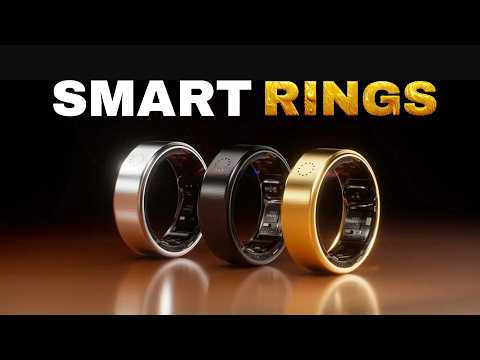
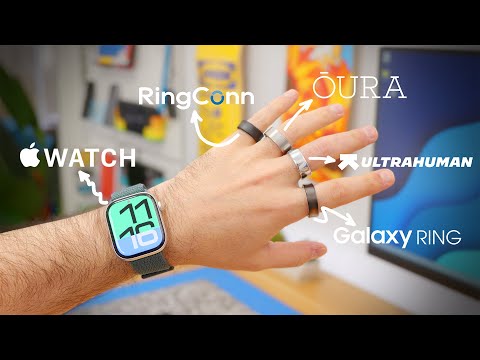
Smart rings became mainstream in 2026 because they pack continuous health, sleep, and recovery tracking into a tiny, discreet form factor that many reviewers now consider more comfortable and consistent than smartwatches. Behind these devices is a decade of work by sensor engineers, sleep scientists, data scientists, and early wearable pioneers who pushed ring-based tracking from niche “biohacker” gear into polished products backed by serious research collaborations.
Why Smart Rings Matter for Health and Fitness
Smart rings track many of the same metrics as advanced watches:
Heart rate and heart rate variability (HRV)
Sleep stages and recovery scores
Activity, steps, and calorie burn
Temperature trends and (on some models) blood oxygen or respiratory signals
Because they’re light, unobtrusive, and worn 24/7, they often give more consistent sleep and recovery data than wrist devices that people remove at night. Sports and health publications note that smart rings have become especially popular among endurance athletes, biohackers, and people who hate bulky wearables, and that many companies now work with academic partners to validate algorithms.
The Major Players and Their Contributions
Oura Ring 4 – The Reference Standard
Multiple reviews and roundups name Oura Ring 4 as the best overall smart ring in 2026 for accuracy, feature balance, and user experience.
Built from titanium with a lightweight design starting near 3–4 grams, designed for 24/7 wear.
Tracks sleep stages, HRV, resting heart rate, temperature trends, and activity, using these to compute readiness and recovery scores.
Oura has collaborated with sleep researchers and institutions over the years to refine sleep and readiness algorithms, helping legitimize ring-based sleep tracking in scientific and sports circles.
Positive impact:
Many coaches and health practitioners use Oura data as a daily recovery and sleep dashboard, helping athletes and patients adjust training or routines.
Oura’s early work helped set expectations that smart rings should be medically informed and validated, not just consumer gadgets.
Critiques:
Subscription costs for advanced insights remain controversial; some buyers dislike paying monthly after a premium hardware purchase.
Data is powerful but can drive anxiety or “sleep score obsession” for some users, especially if they interpret metrics without guidance.
Ultrahuman Ring Air – Metabolic and HRV Focus
The Ultrahuman Ring Air is often cited as the top choice for metabolic health, HRV analytics, and biohackers.
Uses titanium reinforced with tungsten carbide for durability, with a lightweight design.
Emphasizes glucose-friendly routines, circadian rhythm alignment, and detailed HRV trends, especially for users combining it with continuous glucose monitors (CGMs).
Ultrahuman as a company collaborates with sports scientists and metabolic health experts, integrating ring data into broader metabolic coaching platforms.
Positive impact:
Helps athletes and health-conscious users fine-tune training load, recovery, and metabolic habits (sleep timing, meal timing, stress).
Some reviewers highlight that it offers deep insights without mandatory subscriptions, making advanced analytics more accessible.
Critiques:
The focus on metrics like HRV and metabolic scores requires some literacy in physiology; casual users may feel overwhelmed.
As with other rings, most metrics are model-derived, not direct medical diagnostics, so misuse for self-diagnosis is a risk.
RingConn Gen 2 Air – Battery Life and Comfort Champion
Lists often nominate RingConn Gen 2 or Gen 2 Air as the best for battery life and subscription-free usage.
Offers multi-day to week-long battery life and wireless charging in a slim, lightweight body.
Tracks core metrics (sleep, heart rate, activity, HRV) and typically offers full analytics without monthly fees.
Some coverage notes emerging features like sleep apnea-risk indicators and advanced sleep analysis, developed with support from sleep experts.
Positive impact:
Makes smart ring tracking more affordable and predictable, because users can access data without ongoing subscriptions.
Long battery life and comfort make it appealing for people who want to “set and forget” their wearable.
Critiques:
Ecosystem and app polish may lag behind Oura’s mature software experience.
Algorithm validation and scientific partnerships are less well-known than Oura’s, so some athletes and clinicians still see it as a value option rather than the gold standard.
Samsung Galaxy Ring – Ecosystem Powerhouse
Tech and wearable sites highlight Samsung Galaxy Ring as the best smart ring for Samsung phone and Galaxy ecosystem users.
Integrates with Galaxy Watch and Samsung Health to provide more accurate, multi-sensor health and fitness tracking.
Offers sleep tracking, heart rate, HRV, temperature trends, and menstrual cycle-related insights, tightly integrated with Galaxy AI features.
Leverages years of Samsung’s work in health sensors, smartphone AI, and UX, backed by large internal teams and external medical partners.
Positive impact:
For Galaxy phone owners, it delivers a more seamless experience than third-party rings: single app, deeper context, and better cross-device features.
Samsung’s scale means strong hardware quality and broad availability, not just niche online distribution.
Critiques:
Tightly coupled to Samsung’s ecosystem; non-Galaxy users may not get full functionality.
As with other big-tech wearables, some users worry about data aggregation across devices and services, even when privacy features are present.
Amazfit Helio and Other Notable Rings
Other rings frequently mentioned in 2026 roundups include:
Amazfit Helio Ring – strongest when paired with Amazfit watches, giving sports-oriented metrics and training guidance at competitive prices.
Luna Ring Gen 2 – focuses on sleep and women’s health, often developed with input from gynecologists and sleep specialists to tailor insights.
Circular Wellness Ring 2 and Milavan / budget rings – provide more basic tracking, showing how early engineers and smaller startups democratized ring tech before big brands entered.
These devices collectively show how multiple engineering teams, medical advisors, and early adopters have contributed to making smart rings a serious health category rather than a single-company story.
How Important People and Teams Shaped Smart Rings
Even though consumer guides focus on brands, the evolution of smart rings is deeply shaped by:
Sleep and circadian researchers who validated algorithms (e.g., using polysomnography comparisons) and pushed companies to move from crude “time in bed” to richer sleep staging and readiness models.
Sports scientists and coaches who worked with companies like Oura and Ultrahuman to align HRV, load, and recovery metrics with real-world training outcomes.
Hardware and sensor engineers who miniaturized optical, temperature, and inertial sensors into ring form, solving challenges like skin contact, ring orientation, and power management.
Data scientists and ML engineers who built the models that transform raw PPG and motion signals into actionable insights, heavily influencing how useful these devices feel day to day.
Reviewers frequently mention that Oura, Ultrahuman, and others earned trust not just through marketing, but by publishing validation work, engaging with experts, and iterating based on community feedback.
Pros and Cons of Smart Rings vs. Other Wearables
Advantages
24/7 wearability: lighter and less obtrusive than watches; many people forget they’re wearing them, improving data consistency.
Battery life: several days per charge, sometimes more than many smartwatches.
Discretion: minimal visual impact; suits professionals who don’t want obvious fitness gadgets.
Focus on recovery and sleep: more emphasis on holistic wellness than constant notifications, which can reduce distraction.
Limitations
Little or no display: all insights come via phone apps; no on-ring screen.
Limited workout controls: you can’t easily start/stop workouts on the ring; best results often come from pairing with a phone or watch.
Algorithm opacity: many metrics are derived, not directly measured, and not all companies fully disclose methods or limitations.
Subscription fatigue: several platforms charge monthly for full analytics, raising total cost.
How to Choose the Best Smart Ring for You (2026)
Based on multiple comparative guides, here’s a concise framework:
Primary Goal
Sleep & recovery focus → Oura Ring 4 or Ultrahuman Ring Air.
Metabolic / HRV biohacking → Ultrahuman Ring Air.
No subscription & long battery → RingConn Gen 2 Air.
Deep ecosystem integration → Samsung Galaxy Ring (for Galaxy users), Amazfit Helio (for Amazfit users).
Budget & Total Cost
Check both hardware price and subscription; some “cheaper” rings can cost more over time.
Fit, Finish, and Comfort
Ensure a ring sizing kit is available; poor fit ruins sensor contact and comfort.
Consider materials (titanium vs. steel) if you have allergies or want lighter weight.
Data Philosophy and Privacy
Read how the company handles data export, deletion, and third-party access; some users prefer brands that support data portability.
Support and Ecosystem
Look at update history and support quality; larger brands and well-established startups tend to provide more frequent improvements and bug fixes.
Real-World Contribution to Work and Society
Smart rings are part of a broader shift where everyday AI gadgets reshape how individuals and organizations manage health, energy, and productivity.
Positive scenarios:
Early health awareness: trends in HRV, resting heart rate, and sleep may prompt earlier check-ups or lifestyle changes, helping reduce long-term risk.
Workplace wellness: some companies offer voluntary programs using aggregated, anonymized ring data to tailor wellness initiatives—if done ethically and transparently.
Athletic performance: teams and independent athletes gain access to elite-style monitoring without bulky hardware.
Risks and concerns:
Data misuse: insurers or employers misusing health data remains a concern if regulations and ethics lag behind technology.
Over-quantification: people may over-focus on scores at the expense of listening to their bodies and mental states.
Access gap: high-quality rings still cost more than many can easily afford, which can widen disparities in access to digital health tools.
In 2026, smart rings sit at the intersection of precision sensors, AI-driven analytics, and years of work by engineers, scientists, and early adopters who believed health tracking didn’t have to live on the wrist. If you choose carefully—matching your goals, budget, and ecosystem—these small devices can deliver big, continuous insights into how you sleep, recover, and perform, while reminding us that behind every “smart” gadget is a long chain of people whose expertise made it possible.