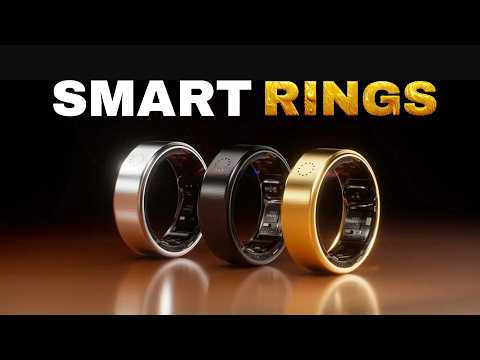
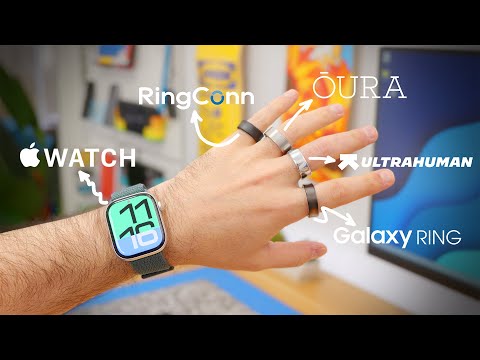
Among smart rings in 2026, Oura Ring 4, Samsung Galaxy Ring (2nd‑gen family), and Ultrahuman Ring Air sit at the top of the market for people who want luxury design plus advanced health intelligence. Each reflects years of work by hardware engineers, sleep and sports scientists, and big tech ecosystems, but they embody very different ideas of what “luxury” means in a health wearable.
What Makes a Smart Ring “Luxurious” in 2026?
Luxury in smart rings is a mix of:
Materials and build: titanium, polished finishes, ceramic options, and recessed sensors for comfort and durability.
Design and discretion: minimal, jewelry-like profiles that disappear on the hand yet feel premium.
Intelligence and ecosystem: depth and reliability of health insights, app design, and integration with phones and other devices.
Oura, Samsung, and Ultrahuman all arrived here through tight collaboration between engineers, data scientists, and health professionals, moving from early “quantified self” experiments to devices endorsed by athletes, coaches, and wellness experts.
Oura Ring 4 – Discreet Luxury and Wellness Intelligence
Oura Ring 4 is widely described as the reference smart ring and often the best overall or best luxury option in 2026.
Design and Hardware
Full titanium construction with recessed interior sensors to improve comfort and durability.
Width around 7.9 mm and thickness about 2.9 mm, weighing roughly 3.3–5.2 grams depending on size.
Water-resistant to 100 meters (IPX8 / ~10 ATM), so you can wear it in the shower, pool, or while recreational diving.
This combination gives Oura a minimal, jewelry-like look that reviewers consistently describe as one of the most elegant implementations of health tech in ring form.
Sensors and Features
Red/infrared LEDs for blood oxygen trends, green/IR LEDs for 24/7 heart rate and HRV, plus temperature and movement sensors.
Tracks sleep stages, resting heart rate, HRV, respiratory rate, temperature trends, and activity, then turns them into readiness and sleep scores.
Battery life typically 5–8 days, with 20–80 minutes to charge.
Oura’s algorithms have been shaped over years through sleep lab validations and collaborations with researchers and performance coaches, which is why many health specialists still use Oura as a benchmark.
Luxury Pros
Feels like a premium wellness instrument, not a gadget; finish and form evoke fine jewelry.
App UX is polished and insight-focused, which many reviewers say makes complex data easy to understand and act on.
Strong track record (multiple generations) and partnerships improve trust and perceived value.
Critical Negatives
High price plus monthly subscription for full features; critics argue this turns luxury into a long-term financial commitment.
Emphasis on scores (readiness, sleep) can lead to over-quantification and anxiety in some users.
Data is stored in a proprietary ecosystem; while Oura allows some data export, you still depend heavily on its app and cloud.
Samsung Galaxy Ring 2 – Ecosystem Luxury and AI Integration
Samsung’s Galaxy Ring line (with second-generation hardware expected on a roughly annual cycle) embodies luxury as part of a broader Galaxy ecosystem, tightly integrated with phones, watches, and Samsung Health.
Design and Hardware
Expected to use titanium in finishes like black, gold, and silver, with sizes from 5 to 15 and a very light weight (around 2.3 grams in current specs).
Rated to IP68 and 10 ATM, similar to high-end watches, making it robust for daily wear.
Galaxy Ring shares Samsung’s design language: smooth, polished, and minimal, with styling that naturally matches Galaxy watches and phones.
Sensors and Features
Tracks heart rate, stress, blood oxygen, sleep stages, and skin temperature, feeding data into Samsung Health and Galaxy AI features.
Designed to complement Galaxy Watch, giving multisensor fusion for better accuracy when both devices are worn.
Integrates with Galaxy AI for contextual insights, suggestions, and potentially gesture control, depending on model and firmware.
Because Samsung has large in‑house teams and medical partnerships for its health platform, Galaxy Ring benefits from decades of consumer electronics and UX experience.
Luxury Pros
For Galaxy users, this is the most seamless and “invisible” luxury: your phone, watch, and ring work as one system.
Ties into Galaxy AI, so ring data enriches features like sleep coaching, activity recommendations, and stress tools.
Strong brand trust and retail presence—easy to try, service, and integrate into an existing Samsung lifestyle.
Critical Negatives
Luxury here is heavily ecosystem-locked: outside Samsung phones, feature depth can drop significantly.
Some reviewers and users worry about cross-device data aggregation, especially if health metrics tie into other Samsung services or partners.
As a relatively newer product line compared to Oura, long-term algorithm validation and wear patterns are still accumulating.
Ultrahuman Ring Air – Performance Biohacker Luxury
Ultrahuman Ring Air positions itself as the luxury ring for serious biohackers and metabolic health enthusiasts, with a strong emphasis on HRV, strain, and metabolic markers.
Design and Hardware
Built from titanium reinforced with tungsten carbide, offering a tough, premium-feeling shell.
Slightly heavier than some competitors (around 3.6 grams in one test), and reviewers note that its sensors are more pronounced, making them more noticeable on the finger than Oura or Samsung.
Rated IPX8, swim-proof up to 100 meters.
The ring feels like a rugged luxury tool, more “performance instrument” than pure jewelry, which appeals to some and not others.
Sensors and Features
Uses PPG, infrared LEDs, and accelerometer to track heart rate, HRV, sleep, activity, and temperature, with special focus on metabolic and nervous system status.
Integrated into Ultrahuman’s broader platform, which also includes apps and support for continuous glucose monitoring; they work with sports scientists and metabolic health experts for interpretation.
Pricing around 349 USD / 329 GBP / 325 EUR with no mandatory subscription, seen as a cost-competitive alternative to Oura.
Reviewers highlight its deep analytics but also note some discrepancies in sleep tracking accuracy, especially compared with other rings.
Luxury Pros
Appeals strongly to athletes and high-end biohackers seeking detailed HRV and metabolic insights without ongoing subscription fees.
No mandatory subscription is a big plus for users who view long-term wellness tools as capital investments, not service contracts.
Tight integration with Ultrahuman’s coaching and app ecosystem makes it feel like part of a curated performance lifestyle.
Critical Negatives
Some testers report sleep tracking inaccuracies, with consistent underestimation compared to other devices, which undermines trust if sleep is your priority.
Pronounced sensors can make it slightly less comfortable or “invisible” than competing luxury rings.
While accurate for many metrics, it still lacks the broad public validation and brand recognition Oura and Samsung have.
Side-by-Side Luxury Snapshot
Aspect Oura Ring 4 Samsung Galaxy Ring (2 family) Ultrahuman Ring Air
Core Luxury Identity Discreet wellness jewelry with validated sleep & readiness Ecosystem luxury for Galaxy users with AI integration Performance/biohacker ring with deep metabolic & HRV focus
Materials Full titanium, recessed sensors, some ceramic variants
Titanium finish, multiple colors, very light
Titanium with tungsten carbide reinforcement
Weight ~3.3–5.2 g
~2.3 g (current model)
~3.6 g; sensors feel more pronounced
Waterproofing Up to 100 m (IPX8/10 ATM)
IP68 & 10 ATM expected
IPX8, swim-proof up to 100 m
AI / Ecosystem Strong standalone app; integrations with 40+ apps
Deep Samsung Health & Galaxy AI integration
Integrated with Ultrahuman metabolic platform
Pricing & Subscriptions Premium price + subscription for full features
Premium, may tie into Galaxy services
~349 USD with no mandatory subscription
Strengths Polished app, strong science track record, refined hardware
Seamless for Galaxy users, strong AI/UX, low weight
Deep HRV/metabolic focus, no subscription, rugged luxury feel
Weaknesses Subscription fatigue, score anxiety, proprietary ecosystem
Ecosystem lock-in, cross-data privacy concerns
Sleep accuracy concerns, slightly less comfortable for some
Positive and Negative Scenarios Across Society
Positive Contributions
Personal health management: All three rings empower users to monitor sleep, stress, and recovery, potentially encouraging earlier lifestyle changes or medical consultations.
Professional performance: Athletes, executives, and creatives use these rings as luxury-grade dashboards, aligning training and work schedules with physiological readiness.
Data for research and coaching: Aggregated, anonymized data from rings like Oura and Ultrahuman supports sports science, sleep studies, and digital health programs, if handled ethically.
Critical Risks
Inequality and access: These “most luxurious” rings are priced out of reach for many, concentrating advanced digital health tools in higher-income segments.
Data privacy and misuse: As rings integrate into larger ecosystems (especially Samsung’s), there are risks of cross-context health data usage unless regulations and corporate policies are strong.
Over-reliance on scores: Overemphasis on AI-generated scores can distort users’ perceptions of their own health and sleep, especially when algorithms are imperfect.
Which Luxurious Smart Ring Makes Sense for You?
Choose Oura Ring 4 if you want refined hardware, a strong scientific track record, and a polished wellness app, and you accept subscriptions as part of a long-term wellness service.
Choose Samsung Galaxy Ring if you live inside the Galaxy ecosystem, value seamless AI integration across phone, watch, and ring, and see luxury as cohesive, cross-device experience rather than a standalone object.
Choose Ultrahuman Ring Air if you are a performance-focused user or biohacker, want deep HRV/metabolic analytics and no ongoing subscription, and are comfortable with a slightly more “instrumental” feel.
In 2026, these three rings represent the high end of ring-based health tech, shaped by diverse teams of engineers, scientists, and designers who turned a speculative idea into real, daily tools. They show how luxury in wearables is no longer just about materials, but about how intelligently, ethically, and seamlessly a device can fit into—and elevate—our lives.