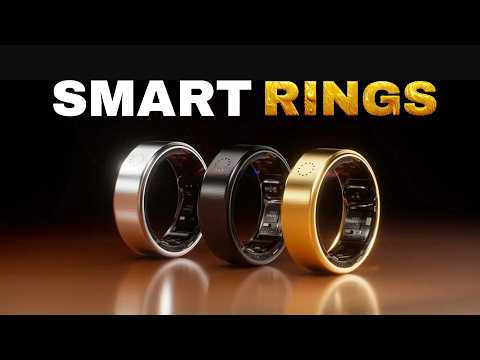
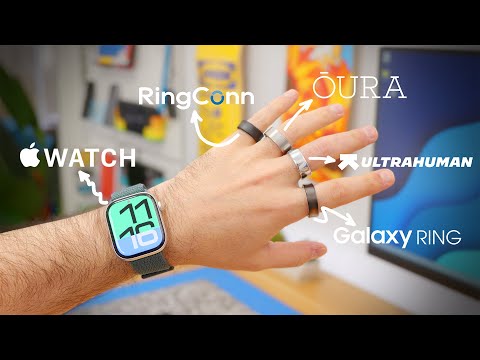
In 2026, the longest-lasting smart rings stand out because they combine multi‑day (often 7–12+ day) battery life with advanced health tracking for sleep, readiness, and daily activity, often outperforming smartwatches in endurance and wearing comfort. Long battery life is not just a spec—it’s what makes continuous, high‑quality health data possible without constantly thinking about chargers.
Why Battery Life Matters So Much in Smart Rings
Smart rings are meant to be 24/7 devices. They track:
Sleep stages and nightly HRV
Resting heart rate and temperature trends
Daily activity, stress load, and recovery patterns
To do that reliably, they must stay on your finger through the night and across several days, including travel, busy work weeks, and training blocks. Compared to smartwatches that often need daily charging, the best rings deliver 7 to 12 days of life per charge under typical conditions, making them far more practical for long-term trend tracking.
RingConn Gen 2 / Gen 2 Air – “Longest Battery Possible”
Independent guides that rank smart rings by battery explicitly name RingConn Gen 2 (and its updated “Air” variant) as the current endurance leader, with recommendations like “Longest battery possible → RingConn Gen 2 (10–12 days).”
Battery Life and Features
Real-world ranges of 10–12 days on a single charge under typical usage, depending on features enabled.
Wireless charging case and efficient hardware design make it one of the few rings that comfortably pushes beyond a week for most users.
Tracks sleep, heart rate, HRV, temperature trends, and activity, while focusing on strong battery endurance and no mandatory subscription.
Positive Aspects
Ideal for users who hate frequent charging and want continuous data through trips and hectic periods.
Long battery life ensures less data gaps and more accurate long-term trends for sleep and recovery.
Critical Points
App polish and ecosystem depth tend to lag behind more mature players like Oura.
Battery performance can still degrade over time—user reports suggest that even long-life rings can lose capacity after 16–18 months if heavily used.
Oura Ring 4 – 5–8 Days with Advanced AI Tracking
While not the absolute battery king, Oura Ring 4 still offers one of the best balances of battery life and advanced health analytics, typically lasting 5–8 days on a single charge.
Battery Specs and Factors
Oura’s official battery documentation notes:
Testing on sizes 8–10 showed 5–8 days of battery life per charge with new rings, fully drained from 100% to 0%.
Battery life depends on:
Ring size (larger sizes have slightly larger batteries).
Blood Oxygen Sensing: enabling SpO2 at night can shorten battery by up to 2 days.
Automatic Activity Detection with Activity HR: heavy use (2–3 hours/day) can reduce battery by 1–2 days.
Age and total usage of the ring.
Positive Aspects
Even at 5–8 days, Oura still outperforms most smartwatches while delivering very rich sleep and readiness analytics.
Fast charging (often under an hour) and relatively predictable drain make it easy to integrate into a weekly routine.
Critical Points
Advanced features (SpO2, frequent activity HR) directly cut into battery life, so users often tweak settings to hit the high end of the range.
Because Oura relies heavily on its AI analytics, there’s a constant trade-off between insight depth and battery endurance.
Samsung Galaxy Ring – Aiming for 7 Days, Fixing Stability
Samsung markets Galaxy Ring as a low-maintenance wearable designed to last up to 7 days per charge under ideal conditions.
Battery Performance and Updates
Official communications and reviews describe Galaxy Ring as targeting about a week of battery life, similar to high-end Galaxy Watches in extended modes.
However, some early users reported inconsistent drain and sudden drops, prompting Samsung to release firmware updates focused on battery stability.
New firmware (e.g., version Q50XWWU2AYK3) aims to improve battery stability and more accurate percentage estimates, so actual performance aligns with marketing claims.
Positive Aspects
When functioning as intended, Galaxy Ring offers strong AI-driven stress and sleep monitoring with roughly week-long endurance, which is good for an ecosystem-heavy device.
Galaxy users benefit from multi-device synergy: ring data complements phone and watch data without needing separate charging patterns.
Critical Points
Stability issues and user complaints highlight that firmware and software tuning matter as much as hardware capacity.
Some users report declining endurance over time (from ~6–7 days to 2–5 days), reinforcing the need for battery health management and realistic expectations.
Other Long-Life Smart Rings (7–10 Days)
Beyond the headliners, several devices deliver multi-day to 10-day stamina:
Acer FreeSense Smart Ring:
Described as one of the lightest rings (~2.5 g) with up to 10 days of battery life, while tracking heart rate, SpO2, skin temperature, and more.
Amazfit Helio Ring:
Designed to pair with Amazfit watches, with strong sports metrics and multi-day battery suited for endurance athletes.
Circular Wellness Ring 2 and similar devices:
Focus on AI wellness assistance and often deliver 7+ days under moderate use, though real-world life varies by settings and firmware.
These show how many engineering teams prioritized power efficiency alongside sensor accuracy, making smart rings particularly strong in endurance compared with wrist wearables.
Why 10–14 Days Matters for Sleep, Training, and Work
In realistic scenarios, “up to 14 days” usually represents best-case marketing or early lifespan performance for rings like RingConn and some newer devices, with typical daily-use numbers closer to 7–12 days.
Positive Scenarios
Sleep and recovery accuracy:
Fewer charging interruptions mean more complete datasets, improving the reliability of AI models for sleep, stress, and readiness trends.
Athletes and shift workers:
Long battery life is critical for multi-day events, travel, or odd schedules, where consistent overnight wear enables better load management and recovery planning.
Busy professionals:
People in demanding jobs can treat rings as always-on baselines, rather than one more device that needs nightly charging, making it easier to commit to long-term self-tracking.
Negative and Critical Scenarios
Battery degradation over time:
Community reports show that many rings lose noticeable capacity after 16–18 months, especially under heavy use, forcing replacements or reduced endurance.
Incentive to overuse sensors:
Longer battery life can tempt users to enable all sensors all the time, which sometimes leads to over-collection of data and more battery stress than needed.
Environmental and e‑waste considerations:
Lithium-based batteries in sealed rings are not easily replaced by users, meaning degraded rings become e‑waste unless companies offer robust refurbish or recycling programs.
How to Choose a Long-Battery Smart Ring in 2026
When your priority is battery life plus serious tracking, a practical selection framework is:
Target Endurance Range
If you want 10–12+ days, look at RingConn Gen 2/Gen 2 Air or similar endurance-focused models.
If 5–8 days is enough and you want premium analytics, Oura Ring 4 remains a leading choice.
Feature vs Battery Trade-offs
Understand that enabling SpO2, frequent activity HR, and intensive AI features will shorten real-world battery life; choose which you truly need.
Ecosystem Fit
Galaxy users may accept slightly shorter endurance in exchange for deep Samsung integration with Galaxy Ring.
More platform-agnostic users may prefer rings like RingConn or Oura that work well across iOS and Android.
Longevity and Support
Check for firmware updates, battery health policies, and replacement options, since even the best batteries degrade.
Societal and Personal Value
Think about how you’ll actually use the data: for self-awareness, training, or clinical conversations. The real value comes from behavior change, not just long specs.
In 2026, the Longest Battery Life Smart Rings—capable of up to around two weeks in ideal cases and a solid week or more in real life—make continuous, AI-driven health tracking far more practical. They show how careful engineering and power management can elevate wearables from daily gadgets to sustained health companions, while also reminding us that endurance, accuracy, privacy, and sustainability must evolve together to truly benefit individuals and society.