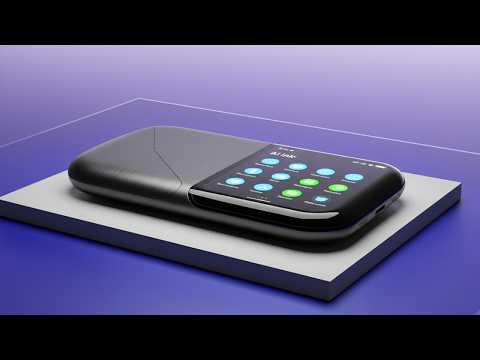
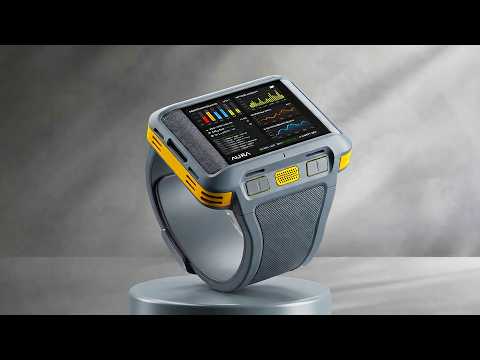
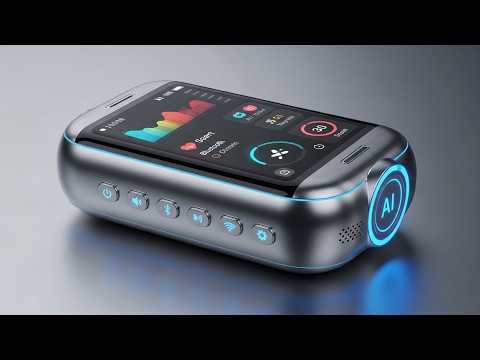
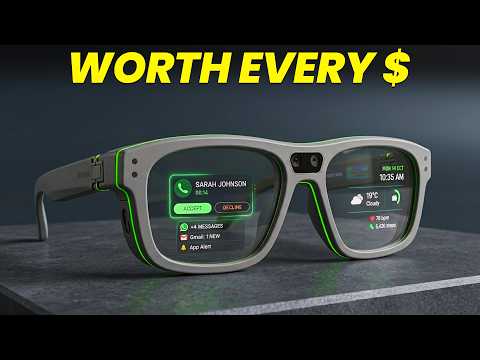
The AI gadget landscape in 2026 is defined by a shift from single‑purpose devices to an interconnected layer of “always‑on” assistants embedded in smart glasses, wearables, audio devices, and home hubs that anticipate needs across work, health, and everyday life. Smart glasses now deliver hands‑free, context‑aware AI assistance in real time, while predictive “life assistants” orchestrate schedules, reminders, translation, and information retrieval across all your devices, making personal tech feel less like a set of tools and more like a continuous, adaptive service.
Smart Glasses: From Niche to Near-Mainstream
By 2026, smart glasses have moved from prototype novelty to a serious, fast‑growing category.
An industry analysis of CES 2026 concludes that smart glasses are “rapidly evolving into a mainstream category,” with big partnerships and diverse use cases from gaming to enterprise work and everyday assistance.
New players such as Amazfit and XGIMI are entering the space alongside existing AR firms, while brands like Rokid showcase lightweight glasses that blend sleek fashion with powerful AR and AI features, signaling broad ecosystem investment.
These devices are no longer just heads‑up displays; they are becoming front‑line interfaces for AI.
What AI Smart Glasses Can Actually Do in 2026
Smart glasses in 2026 integrate AI to handle vision, language, and context in real time.
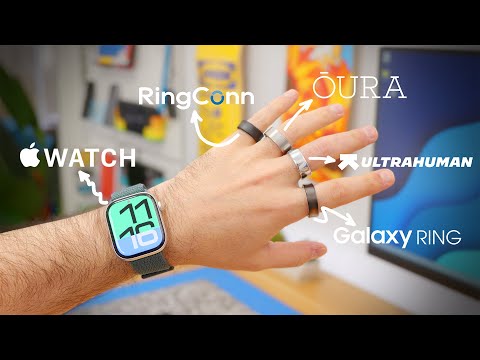
CES coverage describes use cases such as payments on the go (e.g., Rokid glasses enabling mobile payments), real‑time fitness integration that displays workout stats in your field of view, and health tracking via connections to rings and wearables like the R1 ring.
Social and product posts highlight glasses with built‑in AI assistants, HD cameras, photo and video capture, music control, and wireless calling—all controlled hands‑free with voice commands and subtle gestures.
In practice, this means you can see navigation arrows on the street, get just‑in‑time translations, capture POV content, or access summaries of recent messages without pulling out a phone.
The Predictive Life Assistant: AI as Your Second Self
Parallel to hardware advances, AI is becoming a “predictive life assistant” that integrates across devices.
A World Economic Forum article describes wearable AI and “personal superintelligence” as a hands‑free, context‑aware layer that helps people work more efficiently and stay present by surfacing timely information, reminders, and suggestions without constant screen checks.
The broader vision is that AI agents will combine data from glasses, phones, wearables, and calendars to predict needs—like reminding you about a key talking point as you approach a meeting room or suggesting a break when stress and workload metrics spike.
Instead of just answering questions, these systems increasingly interject proactively with relevant information and prompts based on where you are, what you’re doing, and what’s coming next.
A Massive and Growing Market
The economic momentum behind AI gadgets is substantial.
A 2026 market insights report projects that the global wearable AI devices market will grow from about USD 69.8 billion in the mid‑2020s to approximately USD 270.2 billion by 2036, driven by health monitoring, productivity, and immersive experiences.
Analysts note that North America leads adoption thanks to strong infrastructure and the presence of major tech companies, but Asia and Europe are rapidly expanding as well, especially in smart glasses and other wearable categories.
This capital flow accelerates innovation—but also intensifies competition, lock‑in strategies, and data monetization.
How These Gadgets Are Reshaping Work
Hands‑free computing in the workplace
Research on wearables at work reports that use of such devices increased to 10.2% of workers by 2024, with most of those wearables being smart glasses, and many users wearing them frequently on the job.
AI smart glasses are used in logistics, manufacturing, healthcare, and field services to overlay instructions, checklists, and real‑time data, reducing errors and freeing workers’ hands for physical tasks.
This can boost productivity and safety—but also enables more granular monitoring of workers’ activities and performance.
Knowledge work and creative fields
In offices and creative industries, AI wearables and predictive assistants help capture meetings, transcribe discussions, surface relevant documents, and summarize information across apps, reducing manual “busy work.”
Workers can stay focused on conversations or deep work while AI quietly manages context switching, reminders, and quick lookups via subtle prompts in glasses or earpieces.
Used well, this reduces cognitive overload; used poorly, it can become an additional source of distraction and information spam.
Impact on Daily Life and Human Connection
Augmenting daily routines
The World Economic Forum notes that hands‑free AI can help people stay present in social and physical environments while still benefiting from digital support—for example, by translating speech in real time or prompting you with someone’s name and last meeting context when you meet them again.
Consumer‑oriented content from 2026 highlights “top AI gadgets” that integrate phones with smart glasses, earbuds, and on‑device AI, effectively turning your whole personal tech stack into a coordinated companion.
This can make social and professional interactions smoother, especially across languages and cultures.
Risks to attention and authenticity
At the same time, constant access to predictive prompts and overlays can blur boundaries between genuine memory and AI‑fed cues, and between being fully present and being half in an invisible digital layer.
There is concern that reliance on AI to remember names, facts, or next actions could weaken our own cognitive habits over time or make interactions feel “scripted” by algorithms.
People may begin to question how much of what they say and do is genuinely their own initiative versus AI‑nudged behavior.
Positive Contributions to Society and Sectors
Healthcare and accessibility
AI smart glasses and wearables support people with disabilities by offering navigation assistance, object recognition, text‑to‑speech, and contextual guidance, helping them interact more independently with physical environments.
Real‑time translation and captioning through glasses can reduce language barriers in healthcare, education, and public services, improving access for migrants and multilingual communities.
Education and training
In training scenarios, AR glasses can guide learners step‑by‑step through procedures with overlays and contextual hints, making complex tasks easier to practice and reducing the need for constant instructor supervision.
Predictive assistants can adapt learning content to each student’s pace and behavior, potentially making education more personalized and engaging.
Economic productivity and innovation
Coordinated AI gadgets serve as a foundation for new business models in logistics, telepresence, remote work, and field services, as companies leverage hands‑free data access and real‑time analytics.
As more sectors adopt AI wearables, productivity gains and safety improvements can translate into broader economic benefits, including better resource use and fewer errors or accidents.
Critical Downsides and Structural Risks
Privacy, surveillance, and data extraction
Smart glasses and predictive assistants collect vast amounts of data: video, audio, location, biometric signals, and interaction patterns. If centralized, this data can form detailed behavioral profiles that are attractive to advertisers, employers, and governments.
Even if individuals like the convenience, people around them may not consent to being recorded or analyzed by AI, raising new forms of bystander privacy issues in workplaces and public spaces.
Without robust regulation and default‑private designs (on‑device processing, strict limits on sharing), the AI gadget revolution risks normalizing pervasive surveillance.
Platform lock-in and ecosystem power
The close integration of glasses, phones, wearables, and cloud AI tends to favor large ecosystem providers that can control hardware, operating systems, and AI services end‑to‑end.
Deep integration makes experiences smoother—but also makes switching providers harder, strengthening a few companies’ leverage over users’ data, pricing, and what is possible within their “walled gardens.”
This can stifle competition and slow user‑centric innovation if not counterbalanced by open standards and interoperability requirements.
Inequality and the “AI-augmented elite”
Advanced AI gadgets remain relatively expensive; if they confer real advantages in productivity, networking, and learning, people and organizations that can afford them may widen gaps over those who cannot.
Workers whose jobs expect the use of AI wearables (e.g., in warehousing or field service) may end up monitored more closely, while the ownership and interpretation of the resulting data remains with employers or vendors, not workers themselves.
This raises questions about who truly benefits from AI augmentation and how to ensure fair access and governance.
The Real Meaning of the 2026 AI Gadget Revolution
The Incredible AI Gadget Revolution of 2026: From Smart Glasses to Predictive Life Assistants is not just about flashy hardware; it’s about AI becoming a persistent layer that sits between people and the world.
Smart glasses and other wearables are moving toward mainstream adoption, with rich AR use cases and integrated AI assistants reshaping how we work, navigate, and connect.
Market forecasts show wearable AI devices on track to more than triple in value over the next decade, indicating that this is a structural shift, not a short‑term fad.
Thought leaders frame “personal superintelligence” as a possibility where AI deeply augments human capability and connection—but only if designed to respect attention, privacy, and human autonomy.
Done well, this revolution can reduce friction, expand accessibility, and give people powerful new ways to learn, collaborate, and care for each other. Done badly, it could entrench surveillance, deepen inequalities, and outsource too much of our cognition and agency to opaque systems. The decisive factor will be how we govern and design these tools—not just how impressive the gadgets themselves appear in 2026.