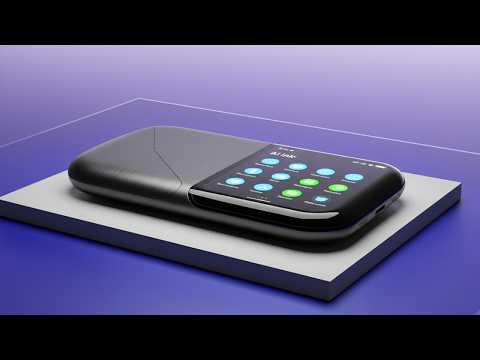
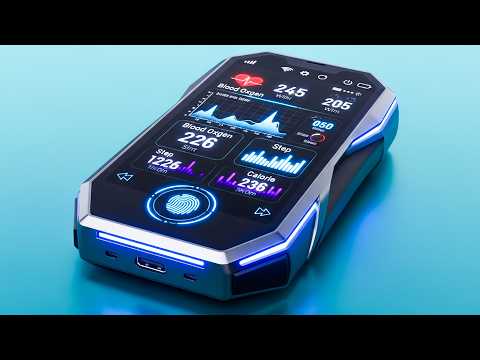
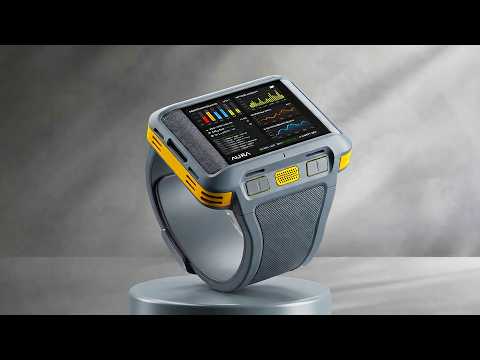
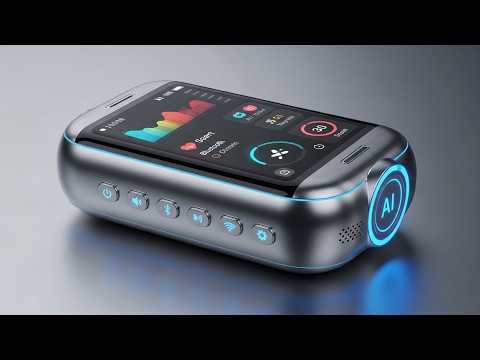
In 2026, AI wearables and lapel pins are starting to pull everyday computing away from the smartphone screen and into small, unobtrusive gadgets that listen, see, and think alongside you in real time. These devices capture conversations, track health and context, recall what you’ve said and done, and feed you suggestions or actions proactively, often without you ever taking a phone out of your pocket.
What “Beyond the Smartphone” Actually Means in 2026
We are not seeing phones disappear overnight, but we are seeing a shift in where intelligence lives and how we interact with it.
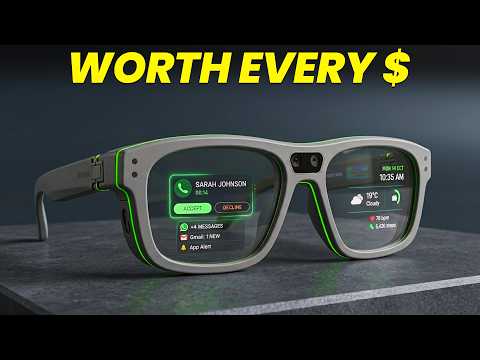
A 2026 wearables market overview notes that the industry is moving away from “screen‑heavy wrist computers” toward compact, AI‑driven devices designed for long battery life and ambient use—rings, pins, pendants, and smart glasses that fade into daily life.
A market insight report projects the global wearable AI devices market to grow from about USD 69.8 billion in the mid‑2020s to roughly USD 270.2 billion by 2036, with North America leading the market thanks to strong infrastructure, early adoption, and major tech players.
In this context, the smartphone increasingly becomes a background hub, while AI wearables act as the front line of interaction.
Key Categories: Pins, Pendants, Rings, and Glasses
AI pins and pendants
AI pins and pendants clip to your clothing or hang around your neck as always‑on or tap‑to‑start assistants.
A Forbes‑featured tester spent a month with four AI wearables—the Omi device, the Plaud NotePin, the Limitless Pendant, and the Bee Pioneer Edition—and found that they can recall conversations, track meetings, and turn spoken words into to‑do lists and action items.
CNET coverage of CES 2026 highlighted Plaud’s Note and NotePin devices, which record, transcribe, and summarize conversations using advanced models like GPT‑4.1 and Gemini 2.5 Pro, effectively acting as a “memory layer” for busy professionals.
These are not just microphones; they combine on‑device recording with cloud AI to deliver structured notes, summaries, and follow‑ups.
AI smart rings and subtle wearables
Smart rings and other “invisible” wearables deliver health and notification functions without the visual weight of a phone or large watch.
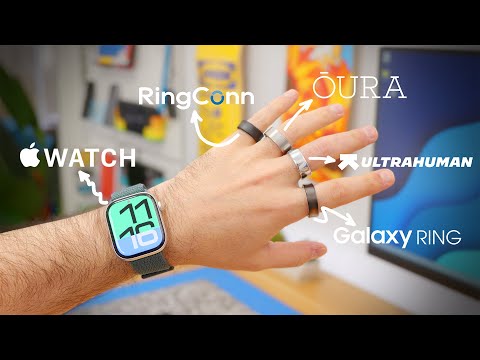
A 2026 trends article on AI smart rings emphasizes that rings are replacing traditional fitness wearables, with AI‑powered health monitoring becoming the main growth driver.
Smart rings are used to monitor sleep, heart rate, stress, and recovery while providing subtle haptics and AI‑generated insights, letting users stay connected and monitored without staring at a screen.
These devices feed health and activity data into AI systems that can coach, warn, or adapt services in the background.
Experimental “silent speech” sensors
Concept devices push communication beyond voice and touch.
One 2026 AI pin concept, called Sein, is shown as a wearable sensor that reads neck muscle movements and converts silent speech into audible voice, aiming to “revolutionize communication” for users who need privacy or have speech challenges.
While still early, these ideas show how AI wearables are experimenting with more intimate interfaces than phones can offer.
What These Gadgets Can Actually Do Today
Memory and productivity
AI wearables and pins excel at capturing and organizing information.
Devices like Plaud NotePin, Limitless Pendant, and similar pins can continuously or selectively record conversations, then use AI to generate transcripts, bullet‑point summaries, and to‑do lists, making it easy to follow up on meetings or ideas without typing.
Reviews describe being able to ask the device or app, “What did we decide about pricing last Tuesday?” and getting a relevant extract instead of digging through notes.
They effectively act as a personal recall system, offloading a big chunk of cognitive load for knowledge workers, students, and creators.
Health, well‑being, and context
AI wearables also reshape health and context awareness.
Research on wearable health technologies shows a rapid shift from clinic‑centered care to daily, continuous monitoring, enabling personalized feedback and interventions based on real‑world data instead of occasional checkups.
Smart rings and other health wearables not only track metrics but increasingly use AI models to detect early deviations from baseline, potentially flagging stress, overtraining, or early signs of illness before users notice.
This transforms health devices from passive loggers into proactive coaches and early‑warning systems.
Everyday assistance and connection
Beyond health and notes, AI wearables supplement social and daily experiences.
A World Economic Forum article highlights how wearable AI can boost productivity, enhance travel and communication, and improve well‑being by offering contextual assistance—like real‑time translation, reminders based on location, or gentle prompts in social situations.
Instead of unlocking a phone, users can interact via voice, taps, or subtle gestures on wearables that respond instantly with context‑aware actions.
This creates a more “ambient” form of personal tech, where help appears at the edge of attention instead of through a screen.
Market Momentum and Industry Players
Growth and regional dominance
The economic momentum behind AI wearables is strong.
A market report indicates North America dominates the wearable AI devices market in 2026, driven by strong connectivity, consumer purchasing power, and the presence of major tech companies and startups.
The broader wearable AI market is projected to roughly quadruple from about USD 69.8 billion to around USD 270.2 billion by 2036, with health monitoring and ambient productivity as key drivers.
This signals that investors and manufacturers expect AI wearables and pins to be a lasting category, not a passing fad.
Big tech and startups
Established giants (like those behind popular smartwatches, earbuds, and AR glasses) are integrating more on‑device AI and subtle interfaces, making their devices less screen‑centric and more context‑aware.
Startups such as Plaud (Note/NotePin), Limitless, and others are innovating around wearable note‑taking and personal AI layers, sometimes outpacing big companies in experimentation but facing challenges in reliability and long‑term support.
The result is a crowded, fast‑moving ecosystem where new ideas appear quickly but not all products will survive.
Positive Impact: Real Value for Work and Society
For work and creativity
AI pins and pendants reduce the need for manual note‑taking, freeing people to focus on conversations, negotiations, and creative brainstorming while the AI handles capture and organization.
Wearables that remember everything become powerful tools for journalists, sales teams, consultants, and content creators, enabling better follow‑up, fewer missed details, and richer, more accurate outputs.
This can increase productivity and reduce “meeting fatigue” by making outcomes and decisions easier to track.
For health and well‑being
Wearable AI supports continuous, personalized health insights, moving care from occasional check‑ins to everyday guidance and earlier recognition of potential issues.
For people with chronic conditions, disabilities, or cognitive challenges, AI wearables can provide assistance, reminders, and monitoring that improve autonomy and quality of life.
These benefits extend healthcare into daily life in a way that can be more accessible and less intimidating than clinical environments.
For social connection and experiences
Wearable AI can assist with real‑time translation, names and context recall, or subtle social cues, reducing friction in multicultural environments and helping people who struggle with social interactions.
In travel and everyday tasks, AI wearables can offer just‑in‑time guidance (navigation, recommendations, safety prompts) without requiring users to constantly look down at a phone.
This can make technology feel more like a supportive presence and less like a distraction.
Critical Concerns and Negative Scenarios
Privacy and constant recording
A major concern is the “dystopian” feel of being recorded all the time.
Reviews explicitly acknowledge that AI wearables “might sound a little dystopian,” because devices like Omi, Plaud NotePin, Limitless Pendant, and Bee can recall conversations in detail, raising questions about consent and expectations in social and professional settings.
Without clear norms, people may not know when they’re being recorded or how their words might be stored, transcribed, and searchable, which can chill open conversation and erode trust.
Privacy policies, visible indicators, and social conventions are lagging behind the technology.
Data security and corporate use
The more intimately these devices track speech, behavior, and health, the more valuable—and vulnerable—the data becomes; breaches or misuse could expose extremely personal information.
There is also a risk that companies use aggregated wearable data to refine advertising, workplace monitoring, or insurance risk scoring in ways that users did not anticipate or explicitly approve.
Strong regulation, transparent data practices, and local/on‑device processing where possible are essential to mitigate these risks.
Dependence and cognitive offloading
Over‑reliance on AI recall can reduce the incentive to develop memory, note‑taking, and organizational skills, potentially making people less mentally engaged in the moment.
If AI summaries are biased or incomplete, users might act on a simplified version of events instead of the full context, especially in high‑stakes professional settings.
As with any powerful tool, using AI wearables wisely requires understanding their limitations, not treating them as infallible.
Inequality and access
Advanced AI wearables and pins are often premium products; if they significantly boost productivity and health outcomes, unequal access could deepen existing social and economic gaps.
People and regions with weaker connectivity or lower purchasing power may not benefit to the same extent, even as their data and environments become more influenced by AI ecosystems built elsewhere.
Policies and market strategies that support affordability and inclusive design will be crucial.
Are We Really “Beyond” Smartphones?
In 2026, Beyond the Smartphone Era: Incredible AI Wearables and Pins Redefining Personal Tech describes a transition, not a complete replacement.
Analysts describe AI‑enhanced wearables as a “step change” redefining the form and function of personal technology—moving from passive, screen‑based devices to active, context‑aware companions that live on your body.
A widely shared 2026 review asks whether this is “finally the end of the smartphone era,” concluding instead that we are entering a phase where phones become one node in a personal network of AI devices, and the most important interactions increasingly happen through wearables.
If guided carefully—with privacy protections, security, accessibility, and human‑centered design—AI wearables and pins can genuinely expand human capability and comfort. If not, they risk turning our most personal spaces—our bodies, conversations, and health—into just another layer of extractable data.