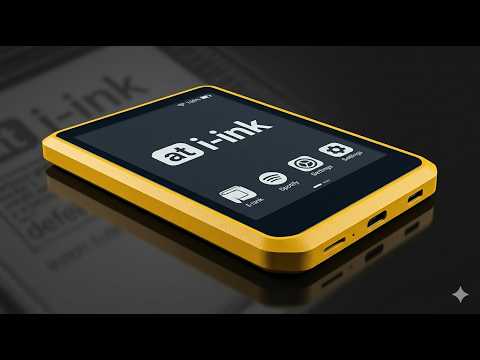
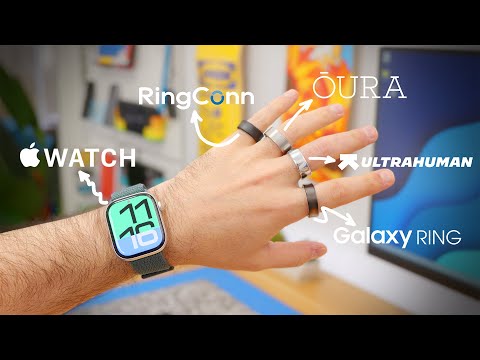
On‑device AI in 2026 is turning phones, PCs, wearables, and smart home devices into truly personal intelligent gadgets that respond instantly and keep most of your data on the hardware you own instead of in distant data centers. Thanks to powerful NPUs (neural processing units) and optimized models, tasks like real‑time translation, photo enhancement, voice assistance, summarization, and AR can now run locally with sub‑10 ms latency, making interactions feel immediate while greatly reducing the need to send sensitive content to the cloud.
What “On-Device AI” Actually Means in 2026
On‑device AI refers to models that run directly on your gadget—smartphone, laptop, watch, glasses, car computer—rather than on cloud servers.
A 2026 guide explains that the main benefits are lower latency, stronger privacy, offline access, reduced cloud costs, and better real‑time performance.
Qualcomm describes on‑device AI as intelligence that runs “directly on your phone, laptop, or smartwatch, no cloud required,” enabling real-time responsiveness and enhanced privacy.
In practical terms, this means your device now handles wake-word detection, local voice commands, image and video processing, text rewriting, and even small generative models by itself.
Why 2026 Is a Turning Point for Devices and Hardware
Analysts argue that 2026 is the year hardware and devices “steal the limelight” in AI.
An industry review notes that voice assistants are becoming more sophisticated, on‑device AI is now standard on smartphones, and consumer apps rely on AI for AR and personalized health insights.
The article concludes that 2026 marks a shift from cloud‑centric AI to pervasive, embedded intelligence where growth hinges on making AI “personal” (consumerization), bringing it into devices, and equipping it with the necessary hardware performance.
Network experts similarly predict that AI in devices and networks will deliver new efficiencies, including power savings and improved user experience, as operators and OEMs adopt local AI processing.
Privacy: Why Local Processing Changes the Game
Data stays on your device
On‑device AI significantly improves the privacy baseline because sensitive data no longer has to leave your device for many tasks.
Qualcomm emphasizes that by processing models locally, on‑device AI “keeps data private” and reduces exposure to cloud breaches.
A 2026 explainer contrasts on‑device and cloud AI: on‑device AI is said to be superior when privacy matters—biometrics, personal inputs—because data is not transmitted to remote servers.
A widely viewed 2026 video on smartphone privacy explains that on‑device AI lets your phone handle queries locally so your photos, messages, and voice commands never leave your hardware, sharply reducing breach risk and third‑party access.
But privacy is more than “stays on device”
A 2026 essay cautions that while on‑device AI improves the privacy baseline, it also demands a more mature understanding of privacy.
Even with local processing, devices may log data, sync summaries, or use telemetry for improvement; users need clear controls and transparency to understand what is stored and shared.
True privacy requires not only local computation but also thoughtful design of logging, consent, and data minimization across the entire system.
So, on‑device AI makes strong privacy possible, but does not guarantee it without good policies and UX.
Speed and Responsiveness: Sub-10 ms as the New Normal
Latency advantages
On‑device AI eliminates network round-trips, which is critical for real-time experiences.
A 2026 comparison notes that on‑device AI delivers near-instant responses with latencies often below 10 ms for tasks like live translation and local image generation.
Cloud AI, even over advanced 5G, is bound by internet latency: complex queries often see roundtrip times between 50 and 200 ms, making it less ideal for mission‑critical real-time interactions.
Another video on AI PCs highlights that on‑device AI “wins” when you need quick edits, live captions, background blur, local search, and text rewrites—tasks that feel better when they’re instant and don’t spin up fans or drain battery like constant cloud calls.
Battery and performance
NPUs are designed for steady AI workloads and can handle many local tasks efficiently:
The AI PC vs. cloud AI breakdown notes that NPUs let CPUs and fans “chill,” and battery typically lasts longer for repeated AI operations locally than if the same tasks were offloaded to the cloud continuously.
Qualcomm similarly markets its Snapdragon platforms as enabling seamless, real-time AI across workflows without heavy performance or battery penalties.
This is why many 2026 phones, PCs, and wearables highlight NPU specs as prominently as CPU and GPU.
On-Device AI vs. Cloud AI: Complementary, Not Enemies
A 2026 guide explicitly frames on‑device AI and cloud AI as two sides of the same evolution.
On‑device AI prioritizes speed, privacy, and independence, ideal for tasks requiring instant and secure responses or offline operation.
Cloud AI focuses on raw power, scalability, and cutting-edge intelligence, better for heavy tasks like large generative models, multi-step research, or shared team context.
The consensus: on‑device AI is the “clear winner” when you need instant results, private data, or offline reliability; cloud wins for big, collaborative, or frontier‑model jobs.
Real 2026 Use Cases: Truly Intelligent Gadgets
Smartphones and wearables
In 2026, most high-end smartphones and many mid-range models ship with on‑device AI as standard.
Common local tasks: wake‑word detection, voice commands, real‑time translation, camera enhancements, local photo/video editing, smart replies, and on‑device summarization.
AI wearables—smart glasses, earbuds, watches—use on‑device AI for live translation, captions, notification summaries, and context-aware prompts without relying on constant cloud connectivity.
A Scientific American piece notes that Apple and OpenAI are reportedly betting on AI hardware and wearables, arguing that to move from niche to widespread use, they must respect privacy—something on‑device architectures are designed to support.
PCs and AI laptops
AI PCs with NPUs run local copilots that can:
Summarize documents, rewrite text, perform local search across files, and generate captions—all offline or with minimal cloud involvement.
Handle “steady AI workloads” with better battery and thermals, making local use more pleasant than streaming everything to the cloud.
This enhances productivity in sensitive environments (legal, medical, enterprise) where sending data to external servers is risky or restricted.
Smart home and edge devices
Routers, cameras, and home hubs increasingly run AI locally:
Local face recognition, voice commands, and anomaly detection reduce the need to stream raw audio/video to cloud servers, improving privacy and latency.
Network operators use edge and on‑device AI to optimize performance and power, leading to more efficient networks and smarter home/IoT experiences.
This is part of a broader trend toward distributing intelligence throughout the network, not just in data centers.
Economic and Industry Impact
Hardware costs vs. cloud costs
On‑device AI demands more powerful hardware, which has cost implications:
A 2026 analysis cites Gartner projections that rising memory costs will increase PC prices by 17% and smartphone prices by 13% compared to 2025, in part due to AI-capable hardware.
However, for users and organizations with frequent AI workloads, local processing can save hundreds of dollars annually in avoided cloud subscription and API costs.
So, you pay more upfront for hardware, but potentially less over time if you lean heavily on local AI instead of pay‑per‑use cloud services.
Telecoms and networks
Mobile operators see benefits in distributing intelligence to devices and edges:
AI at the device and network edge can increase productivity, power savings, and service quality, as noted in 2026 industry commentary.
Less raw data sent to the cloud reduces bandwidth pressure and backhaul costs, which matters as both AI and streaming demand surge.
This aligns incentives: operators want efficient networks; users want fast, private experiences.
Critical Downsides and Open Questions
Not all tasks can be local
On‑device AI still has limitations:
Complex, large-scale generative tasks, multi-step research, and cutting-edge models remain better served by the cloud due to compute and memory constraints.
Keeping models updated and secure on millions of devices is challenging; without careful design, local models can lag, fragment, or become attack vectors.
This means hybrid architectures are here to stay; devices will often blend local and cloud AI depending on context.
Security and attack surface
While keeping data local reduces exposure, devices themselves can be compromised:
Physical theft, malware, and side‑channel attacks can target on‑device models and data, so security must be strong at both hardware and software levels.
AI running locally may be harder for centralized systems to monitor, making anomaly detection and governance more complex.
Privacy-conscious design needs to go hand-in-hand with robust device security and user education.
Inequality and accessibility
High-end hardware requirements risk widening gaps:
Devices with strong on‑device AI capabilities may be more expensive, limiting access in lower-income regions or among cost-sensitive users.
If key privacy and responsiveness benefits are tied to premium devices, digital divides could deepen, especially for people who might benefit most from private, offline AI (e.g., activists, journalists).
Policy and market innovation (e.g., affordable AI chipsets, open models) will influence how broadly these benefits are shared.
Real Contribution to Society—and How to Use It Well
On‑device AI in 2026 offers genuine advances:
Privacy: Stronger default protections by keeping sensitive data on devices, aligning with rising expectations and regulations.
Speed and usability: Sub‑10 ms responses for translation, editing, and AR make AI feel like a natural extension of the device rather than a remote service.
Resilience and autonomy: Devices remain useful when offline or under poor connectivity, which is vital for global inclusion and critical use cases.
But the real societal value depends on design and governance:
Transparency about what is processed locally vs. in the cloud and how data is logged or shared.
Security practices that protect on‑device models and data from local attacks.
Efforts to keep powerful, privacy-preserving AI accessible beyond high‑end devices and wealthy markets.
Why On-Device AI Is Creating Truly Private and Instant Intelligent Gadgets in 2026 is ultimately about shifting AI from distant servers into the gadgets you own. When done right, this shift gives people more control, faster experiences, and safer ways to use AI in daily life; when done poorly, it risks expensive, fragmented, and misunderstood systems that don’t deliver on the promise of “truly private and instant” intelligence.