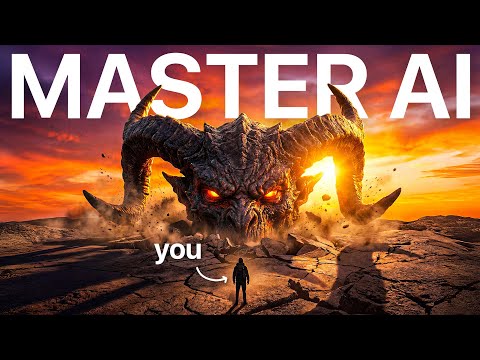
How AI Is Making Content Creation 10x Faster
Artificial intelligence, particularly generative AI tools like ChatGPT, Jasper, Synthesia, and multimodal platforms, is fundamentally transforming content creation. What once required hours or days of research, drafting, editing, and production now happens in minutes or hours, enabling individuals and teams to produce significantly more output with higher consistency. This shift delivers real productivity gains that are reshaping marketing, media, education, and business communication.
Present-Day Impact: Quantifiable Speed and Efficiency Gains
Data from 2024–2025 shows dramatic acceleration:
93% of marketers use AI to generate content faster.
Marketers save an average of 3 hours per piece of content and 2.5 hours daily. Teachers save about 6 hours weekly on lesson planning.
Companies publish 42% more content per month with AI.
A Harvard Business School study found AI users completed tasks 25.1% faster with over 40% higher quality ratings.
In 2025 analyses, 74.2% of new web pages contained detectable AI-generated content, and over half of new English-language articles were primarily AI-written.
The global AI-powered content creation market was valued at approximately USD 2.15 billion in 2024 and is projected to reach USD 10.59 billion by 2033, growing at a 19.4% CAGR. Other estimates point to even larger figures for digital content creation, potentially hitting tens of billions by 2031.
Andrew Ng, a leading AI expert and educator, emphasizes that every knowledge worker can already achieve a meaningful productivity boost with generative AI. He highlights how AI shortens the time from idea to prototype, enabling faster iteration and experimentation across roles like marketing and product management.
Sam Altman, CEO of OpenAI, notes that AI makes content creation easier, faster, and cheaper, potentially leading to a “Cambrian explosion” of creativity. He argues that as production scales, human authenticity and ideas become even more valuable.
Positive Contributions and Future Outlook
AI democratizes high-quality content production. Small businesses, independent creators, and educators can now compete with larger organizations. It supports hyper-personalized campaigns, multilingual content, video avatars, and automated editing—freeing humans for strategy, creativity, and audience engagement.
Future results: Expect continued market expansion, more sophisticated agentic workflows (iterative AI that researches, drafts, critiques, and revises), and multimodal tools that seamlessly handle text, video, audio, and images. Productivity gains could compound, with some projections showing teams producing 3x or more assets in the same time. AI may enable new economic models for creators, such as compensation for style or likeness usage.
In the labor market, AI often augments rather than replaces. Studies show firms adopting AI grow faster, with gains in employment and wages in exposed industries (e.g., +3.9% jobs and +4.8% wages in higher-exposure sectors). It disproportionately benefits lower-performing workers, narrowing skill gaps through “skill compression.”
Critical Balance: Negatives, Risks, and Challenges
While transformative, AI content creation has significant downsides:
Quality and Reliability: AI hallucinates facts, spreads biases, and produces generic or inaccurate content. Over-reliance risks eroding trust and brand voice. NewsGuard reported over 1,200 AI-generated news sites by mid-2025, many spreading falsehoods.
Misinformation and Disinformation: Generative tools lower barriers to fake news, deepfakes, and propaganda. Falsehoods spread faster, challenging journalism and democracy.
Job Market Impacts: Freelance writing, copyediting, and translation gigs have seen declines (e.g., 2% fewer contracts, 5% earnings drop in exposed roles). While overall disruption has been limited so far, routine cognitive tasks face pressure, potentially widening inequality without reskilling.
Intellectual Property and Ethics: Training on human work raises copyright concerns; outputs can lack originality or inadvertently plagiarize. SEO risks include penalties for low-value AI spam.
Other Issues: Reduced creative diversity, overproduction of content (noise), and environmental costs of training/inference.
Gary Marcus, a prominent AI critic and cognitive scientist, has long warned about reliability gaps, lack of true understanding, and risks like misinformation proliferation. He cautions against overhyping scaling alone as a path to robust intelligence.
Broader Influences on Society, Community, and the Workforce
AI-driven content creation boosts economic efficiency and accessibility but demands vigilance. It influences media by accelerating information flow while challenging truth verification. In communities, it empowers voices but risks amplifying echo chambers or manipulated narratives. Societally, it raises questions of authenticity, authorship, and equity—who benefits from these productivity gains?
In the job market, the net effect leans toward augmentation and new roles (e.g., AI prompt engineering, oversight, ethical governance, and hybrid creative-technical positions) when paired with human strengths. Success depends on human-AI collaboration: using AI for speed and scale while applying human judgment for depth, ethics, and originality.
Why This Matters
AI is not just speeding up content creation—it is redefining value in the creative economy. The “10x faster” claim holds in many workflows through measurable time savings and output increases, but true 10x impact emerges from strategic integration rather than blind automation. Organizations and creators who master this balance—leveraging AI’s efficiency while mitigating its risks—will thrive. Those who don’t risk producing volume without value or falling behind in a hyper-competitive landscape.
The future favors thoughtful adopters: faster production, greater reach, and more time for what matters—ideas, connection, and innovation. As Andrew Ng suggests, AI empowers broader participation in creation, potentially making society richer and more productive overall.