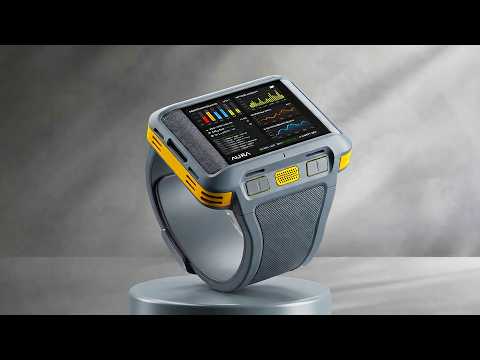
Artificial intelligence is now capable of analyzing medical images — such as X-rays and MRIs — in just seconds, often matching or even surpassing human radiologists in specific tasks. This technology is one of the most promising developments in modern healthcare.
How AI Actually Reads Medical Images
AI systems use advanced deep learning models, particularly Convolutional Neural Networks (CNNs), trained on millions of labeled medical images. These models learn to recognize patterns, abnormalities, and subtle signs of disease that the human eye might miss.
Chest X-rays: AI can detect pneumonia, lung nodules, tuberculosis, and heart failure with high accuracy. Some models now reach an AUC (Area Under the Curve) of 0.93 to 0.98.
MRI Scans: AI excels at identifying brain tumors, multiple sclerosis lesions, prostate cancer, and spinal abnormalities. Recent systems can generate preliminary reports in under 30 seconds.
Dr. Rohan Khera, a cardiologist and AI researcher at Yale School of Medicine, has been a leading voice in this field. His work demonstrates that AI can analyze ECGs and imaging studies with remarkable precision, sometimes identifying conditions before traditional symptoms appear.
Impressive Real-World Results
Recent studies show significant progress:
AI-assisted breast cancer screening increased cancer detection rates by 10–29% while reducing radiologist workload.
In lung cancer screening, AI reduced missed nodules by up to 26%.
For diabetic retinopathy, AI systems approved by the FDA now achieve accuracy comparable to expert ophthalmologists.
In emergency settings, AI can flag critical findings like pneumothorax or brain hemorrhage within seconds, helping prioritize life-threatening cases.
The Real Value of This Technology
Positive Impact:
Dramatically faster diagnosis, especially in high-volume or underserved areas.
Reduced burnout among radiologists facing increasing imaging demands.
Earlier detection of serious diseases, leading to better treatment outcomes.
Greater consistency — AI doesn’t get tired or distracted.
Critical Perspective and Limitations:
Despite the impressive results, AI still has important limitations. Many models function as “black boxes,” making it difficult for doctors to understand exactly why the AI reached a certain conclusion. There are also concerns about bias in training data, which can lead to poorer performance on certain ethnic or demographic groups. Additionally, over-reliance on AI without proper human oversight can sometimes reduce overall diagnostic accuracy.
The Future Outlook
Experts like Dr. Rohan Khera believe we are heading toward a hybrid model: AI handles initial screening and routine analysis, while doctors focus on complex cases, patient communication, and final clinical decisions. This partnership has the potential to make healthcare faster, more accurate, and more accessible worldwide.
The bottom line:
Yes — AI can already read X-rays and MRI scans in seconds, and in many specific tasks, it performs at or above human level. The real breakthrough isn’t just speed, but the ability to combine AI’s analytical power with human medical judgment.
This technology is no longer experimental. It is rapidly becoming a standard tool in modern medicine.