Heaviest Hitters: Top 10 Banks with the Most Assets in 2026 Revealed
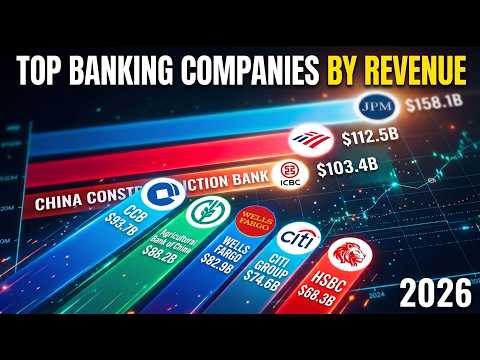
In 2026, a small group of “heaviest hitters” dominates global banking by total assets, with four Chinese state‑owned banks at the top and a mix of U.S., European, and Japanese giants completing the top 10. Together, these ten institutions manage well over 40 trillion USD, giving them enormous power over credit flows, jobs, and economic development worldwide.
The 2026 Top 10 by Assets
Using consolidated asset data compiled in early 2026 from CompaniesMarketCap and summarized by banking analysts and S&P Global Market Intelligence, the top 10 banks by total assets are broadly as follows:
Industrial and Commercial Bank of China (ICBC) – about 7.3–7.6 trillion USD in assets, retaining its position as the world’s largest bank and the clearest symbol of China’s financial scale.
Agricultural Bank of China – roughly 6.8–7.0 trillion USD, propelled by lending to agriculture, rural development, and infrastructure across China’s vast domestic market.
China Construction Bank (CCB) – around 6.2–6.5 trillion USD, a core financier of infrastructure and property, central to China’s urbanization model.
Bank of China (BOC) – approximately 5.3–5.5 trillion USD, the most globally exposed of the “Big Four,” with a strong trade‑finance and cross‑border profile.
JPMorgan Chase – about 4.4–4.6 trillion USD in assets, the largest Western bank and a critical pillar of the U.S. dollar–based financial system.
Bank of America – roughly 3.4 trillion USD, a U.S. consumer and corporate banking powerhouse with substantial investment‑banking activities.
HSBC – close to 3.2–3.3 trillion USD, headquartered in the UK but heavily focused on Asia, especially Hong Kong and mainland China.
BNP Paribas – about 3.2–3.3 trillion USD, Europe’s largest bank by assets and a key corporate and investment bank in the euro area.
Crédit Agricole – roughly 2.8–3.1 trillion USD, a French cooperative‑rooted giant with strong retail, corporate, and asset‑management divisions.
Mitsubishi UFJ Financial Group (MUFG) – around 2.7 trillion USD, Japan’s largest bank and a crucial provider of wholesale funding and project finance in Asia and beyond.
Analysts estimate that the top 50 global banks now hold about 101.6 trillion USD in assets, and the top four Chinese banks alone control roughly 25.5 trillion USD—around a quarter of that total. This concentration illustrates how “asset gravity” has shifted decisively toward Asia while North America and Europe retain enormous influence through fewer but very powerful institutions.
Chinese Giants: Scale and Structural Tensions
China’s dominance in the 2026 rankings is clear: the country holds the top four positions and five of the top twelve spots by total assets. This reflects decades of rapid growth, high domestic savings, and a financial system in which large state‑owned banks are used as policy tools to support industrialization, urbanization, and export‑led development.
On the positive side, Chinese megabanks have financed highways, rail lines, ports, energy networks, and massive housing projects that underpinned China’s rise and created millions of direct and indirect jobs in construction, manufacturing, logistics, and related services. They have also extended large volumes of credit to emerging economies through Belt and Road projects, supporting infrastructure and trade corridors across Asia, Africa, and parts of Europe.
On the negative side, this growth model has generated heavy exposures to an overbuilt property market, local government financing vehicles, and state‑directed projects that may not always be commercially viable. The Banker’s 2026 “Top 1000 World Banks” describes China’s rise as a “fragile” dominance, noting pressure on profitability, rising credit risks, and the need for repeated capital injections by the state. In short, the Chinese giants are enormous and systemically critical, but their balance sheets are tightly bound to domestic policy and economic cycles.
U.S. Titans: JPMorgan and Bank of America
Despite being smaller than the Chinese “Big Four” by assets, U.S. banks—especially JPMorgan Chase and Bank of America—remain global “heaviest hitters” in terms of profitability, market value, and influence over capital markets. Forbes’ Global 2000 for 2026 confirms JPMorgan as the top global financial firm, supported by record profits from AI‑driven dealmaking, capital raising, and trading.
Positively, these U.S. banks:
Anchor the global dollar system, providing critical payment, clearing, FX, and custody services that support global trade and investment.
Finance a broad mix of sectors—from tech and healthcare to industrials and energy—shaping innovation and employment in the U.S. and beyond.
Invest heavily in digital banking and cybersecurity, which improves efficiency and access for millions of retail and corporate clients.
However, their power also raises concerns. Their dominant positions in trading, derivatives, and capital markets mean that mis‑pricing or risk‑management failures can transmit shocks rapidly across borders. Their size entrenches “too big to fail” expectations, and cost‑cutting drives branch closures and job losses in some communities even as they create high‑paid roles in financial centers.
European and Japanese Pillars
European and Japanese banks round out the top 10 and remain vital to global financial stability despite lower average asset size relative to Chinese and U.S. players. BNP Paribas and Crédit Agricole anchor much of continental Europe’s corporate and retail finance, while HSBC remains a key bridge between Western capital and Asian markets. MUFG, Japan’s largest bank, continues to be a major provider of cross‑border loans, project finance, and wholesale funding, particularly in Asia‑Pacific.
Positive aspects include:
Diversified regional roles: European banks provide critical credit to SMEs, manufacturers, and exporters, especially in France, Germany, Italy, and Spain, while Japanese banks supply stable long‑term funding to both domestic firms and emerging‑market projects.
Risk‑sharing via cross‑border finance: Their participation in syndicated loans and bond markets helps share risk across jurisdictions, moderating shocks that might otherwise remain concentrated.
Yet they face structural challenges: low growth, legacy non‑performing loans in some markets, pressure on fees, and the cost of ongoing digital and regulatory investments. Profitability tends to lag U.S. peers, and restructuring often means branch closures, job cuts, and in some cases reductions in exposure to riskier emerging markets.
Real Contribution to Jobs and Sectors
The top 10 “heaviest hitters” move unimaginable volumes of money, but their real value for society lies in how they transform savings into productive investment and employment. Collectively, the top 50 banks manage about 101.6 trillion USD in assets and sit at the center of credit, deposits, and liquidity flows.
Their positive contributions include:
Infrastructure and energy: Financing power plants, renewable energy parks, transport networks, and digital infrastructure that improve productivity and create long‑term jobs in engineering, construction, operations, and maintenance.
Trade and supply chains: Providing trade finance, letters of credit, and working‑capital lines that keep global supply chains moving for manufacturers, agribusinesses, and logistics firms.
Household and SME finance: Offering mortgages, consumer credit, and SME loans that underpin housing markets, local entrepreneurship, and service‑sector employment.
However, the negative or ambivalent side is equally important:
Credit pro‑cyclicality: In booms, big banks can feed asset bubbles (for example, in real estate); in downturns, they pull back sharply, amplifying recessions and hurting workers and smaller firms who are most dependent on credit.
Uneven access: Despite digital advances, lower‑income households and very small businesses still face barriers to affordable credit, while large corporates enjoy preferential access and pricing.
Social externalities: Financed activities can generate pollution, displacement, and social tensions when projects lack strong environmental and social safeguards.
Systemic Risk and Regulatory Trade‑offs
All of the top 10 banks are considered systemically important, subject to higher capital requirements, stricter liquidity rules, and frequent stress testing. Following the 2008 crisis, regulators have tried to balance the benefits of scale (diversification, efficiency, ability to finance large projects) with the dangers of concentrated risk and “too big to fail” expectations.
Positively, stronger capital buffers and resolution frameworks make it less likely that taxpayers will bear the full cost of a major bank failure. These measures also encourage better internal risk controls and liquidity management, supporting greater resilience in the face of shocks such as property slumps, geopolitical tensions, or cyberattacks.
Yet systemic risk has not disappeared—if anything, it has changed form. Interconnected exposures through derivatives, repo markets, and cross‑border funding mean that a serious problem at one or more of the heaviest hitters can still propagate across the system rapidly, affecting credit availability and asset prices worldwide. Moreover, the compliance burden may entrench incumbents by raising barriers to entry for smaller challengers and fintechs, potentially reducing competitive pressure and innovation.
ESG, Climate, and Digital Transformation
In 2026, large banks present themselves as central to climate transition finance and inclusive growth. Many of the top 10 have announced multi‑trillion‑dollar sustainable‑finance targets, backing renewable energy, green buildings, low‑carbon transport, and social projects. They also invest heavily in digital platforms and generative AI, moving from experimentation to execution in areas like credit scoring, fraud detection, and client service.
Positively, climate and ESG‑linked financing can redirect capital toward cleaner technologies and more inclusive projects, while digitalization reduces costs and expands access—particularly via mobile banking in emerging markets. AI and data analytics help identify risks earlier, support customised products, and combat financial crime more effectively.
Negatively, many of these same institutions continue to finance fossil‑fuel and high‑emission industries at large scale, raising legitimate questions about the credibility of their climate commitments. At the same time, increased reliance on AI and data intensifies concerns over privacy, algorithmic bias, and cyber‑security, especially when a cyber incident at a top‑10 bank could disrupt global payments and markets.
A Critical Balance: Power vs. Public Interest
The “heaviest hitters” of 2026—the top 10 banks by assets—are not just big; they are embedded in every layer of the global economy. They enable trade, jobs, infrastructure, and innovation, but they also concentrate financial and political power in a way that can challenge competition, resilience, and fairness.
From a positive perspective, their scale allows them to finance projects smaller banks cannot, stabilize markets during stress, and invest in cutting‑edge technology that improves efficiency and access. From a critical perspective, their dominance can amplify crises, entrench inequalities in access to finance, and slow the transition to a more sustainable and inclusive economy if short‑term profit remains the overriding goal.
For policymakers, businesses, and citizens in 2026, the central question is no longer just “Who are the biggest banks?” but “How do these heaviest hitters use their balance sheets?”—whether to reinforce fragile status quos, or to support a more resilient, green, and broadly shared path of global progress.