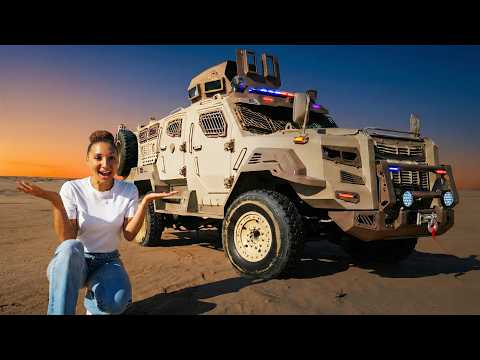
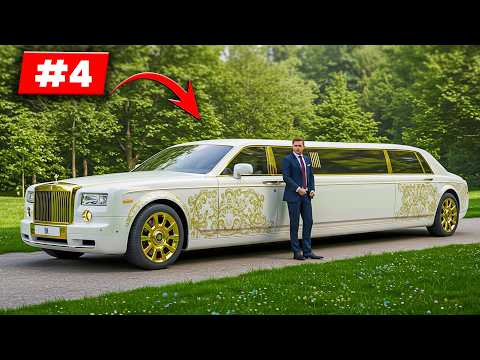
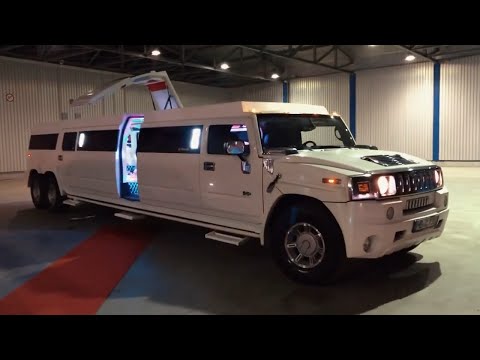
The largest armored cars in 2026 sit at the intersection of luxury engineering and battlefield-inspired protection. They are built to protect high-value passengers, support security teams, and keep moving in situations where standard vehicles would fail.
Why these vehicles matter
These vehicles are more than status symbols. In the right context, they protect presidents, diplomats, executives, law-enforcement teams, and humanitarian personnel operating in high-risk environments. Their value comes from survivability, mobility, and continuity of operations, not from appearance alone.
That said, their size is also the source of their biggest compromise. Heavy armor, ballistic glass, reinforced suspension, run-flat systems, and protected underbody structures make them much heavier than normal vehicles, which increases cost, fuel use, tire wear, and maintenance demands.
Luxury and protection
The strongest examples combine premium comfort with military-grade defense. Factory-built references such as Mercedes-Benz Guard and BMW Protection show how automakers integrate security into high-end platforms, while specialists like INKAS and Alpine Armoring extend that concept into SUVs, trucks, limousines, and tactical builds. Public reporting on the U.S. presidential limousine, “The Beast,” shows how far this category can go when maximum protection is required.
This blend of comfort and defense is what makes the segment interesting. A customer can have luxury seating, communications systems, climate control, and privacy while also getting ballistic and blast-resistant engineering. In premium executive protection, that combination is often the difference between a stressful trip and a survivable one.
Positive contribution
The social and economic value of large armored vehicles is real when they are used appropriately. They support executive protection, government transport, cash-in-transit security, tactical policing, border patrol, and emergency response in unstable regions. In those roles, they help keep people alive and operations running, which is a concrete contribution to public safety and institutional continuity.
They also support specialized employment. Armored-vehicle production depends on engineers, fabricators, materials experts, ballistic testers, welders, installers, and maintenance crews, which gives the sector value beyond the vehicles themselves. In that sense, the industry contributes to advanced manufacturing and security infrastructure.
Negative trade-offs
The criticism is equally important. These vehicles are expensive to buy and even more expensive to maintain, especially when armor systems, custom glass, and reinforced components need repair or replacement. Their weight also limits agility, increases braking distance, and makes them less practical for dense urban environments.
There is also a social downside when they are used without a real threat profile. In low-risk settings, a massive armored SUV or limousine can look like a symbol of excess, separation, or fear rather than necessity. A good article should make clear that these vehicles are tools for risk management, not substitutes for better public safety, smarter policy, or stronger institutions.
Best scenarios
These vehicles make the most sense in high-threat, high-value, and mission-critical settings. The best examples include presidential convoys, diplomatic movement, private security in unstable regions, law-enforcement rescue operations, and humanitarian transport in conflict-adjacent zones. In those situations, the extra weight and cost are justified by the security outcome.
By contrast, they are often unnecessary for ordinary personal driving. A large armored SUV may provide peace of mind, but it can also be overkill if the user does not face a credible risk. That distinction is essential if you want the article to feel serious and trustworthy rather than promotional.
Best references
For a 2026 article with strong E-E-A-T signals, the best references are recent manufacturer and industry sources. Alpine Armoring is useful for current armored-vehicle capabilities and the MASTIFF® platform, INKAS for current civilian and institutional protection offerings, and Mercedes-Benz/BMW coverage for factory-built high-security benchmarks. For the presidential limousine, public reporting remains the realistic source because the official specifications are intentionally limited.