The world’s biggest armored vehicles are not built for style; they are built to survive gunfire, explosive threats, and hostile environments while keeping passengers mobile and protected. In 2026, the strongest way to write about them is as high-security machines with real mission value, not as flashy “bulletproof cars” in the usual entertainment sense.
Why they are so massive
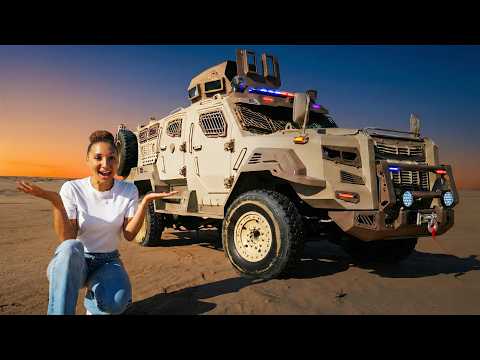
Their enormous size comes from layered protection systems: thick armor, ballistic glass, reinforced floors, sealed cabins, upgraded suspension, and run-flat tire systems. The U.S. presidential limousine known as “The Beast” is widely reported to weigh around 15,000 to 20,000 pounds and to ride on a heavy-duty truck-based platform, which explains why it looks more like a rolling bunker than a normal limousine. Large armored trucks and SUVs from companies like Alpine Armoring, INKAS, and Terradyne follow the same logic: if the threat is serious, the vehicle must be physically overbuilt to keep working after an attack.
That size is not an accident, but it also creates a major trade-off. The heavier the vehicle, the more it costs to buy, fuel, maintain, and operate, and the less practical it becomes for ordinary driving.
Presidential limo benchmark
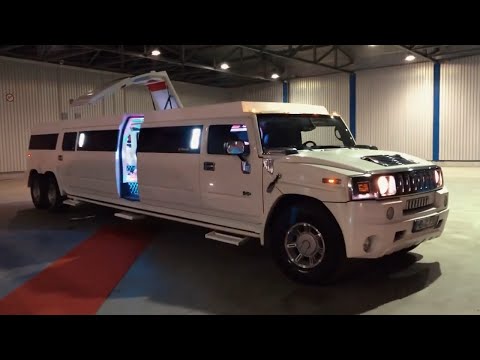
“The Beast” remains the clearest example of an 18-foot-plus armored limousine built for the highest level of protection. Public reporting describes it as using a medium- or heavy-duty truck chassis with armor-plated doors, bullet-resistant windows, a sealed cabin, run-flat tires, emergency medical supplies, and advanced communications systems. Because official details are intentionally limited, most exact specs remain classified, which is normal for a presidential security vehicle.
Its value is not just symbolic. For the U.S. government, a vehicle like this supports continuity of leadership, diplomatic mobility, and protection during travel in unpredictable environments. The downside is obvious too: secrecy, immense cost, and a design that is far too specialized for everyday use.
Heavy truck reality
For armored trucks, the story is different but equally important. Alpine Armoring promotes its A12-level MASTIFF® as a heavy-duty protection platform capable of stopping .50 BMG rounds, and Terradyne has been covered as a manufacturer serving law enforcement, border patrol, and military medical users. INKAS also markets armored SUVs, trucks, and special-purpose vehicles for civilian and institutional clients across multiple protection levels.
These trucks are valuable because they can move personnel and equipment through dangerous terrain where standard vehicles would fail. In border security, tactical law enforcement, and emergency medical support, a heavy armored truck can be the difference between completing the mission and being forced to stop. But the same weight that improves survival also reduces speed, agility, and fuel efficiency, so these vehicles must be matched carefully to the threat environment.
Positive contribution
The real contribution of big armored vehicles is practical, not glamorous. They protect heads of state, corporate security teams, law enforcement officers, cash transport crews, and humanitarian personnel operating in high-risk regions. In those roles, they help reduce casualties, preserve critical operations, and keep important people moving when conditions are dangerous.
They also support advanced manufacturing and skilled labor. Armoring companies rely on engineers, fabricators, ballistic-testing specialists, maintenance teams, logistics workers, and custom-build technicians, so the industry contributes to specialized employment and technical know-how. That makes the sector a real part of security infrastructure and industrial capability, not just a luxury market.
Negative trade-offs
The criticism is just as strong. These vehicles are expensive, heavy, and often excessive for users who face no genuine threat. They can be harder to park, slower to respond in urban traffic, and more expensive to repair because nearly every major system is reinforced or custom-built.
There is also a social issue. In stable environments, a huge armored SUV or limo may project wealth, fear, or separation from the public rather than necessity. A credible article should say plainly that armor is a tool for risk management, not a substitute for safer cities, better institutions, or smarter public policy.
Best use cases
These vehicles make the most sense in high-threat settings where failure is unacceptable. That includes presidential transport, diplomatic convoys, executive protection in unstable regions, law-enforcement response, and humanitarian work in conflict-adjacent areas. In those settings, the added size and cost are justified by the security outcome.
Outside those environments, the same machines become overkill. A heavy armored limousine or truck can offer peace of mind, but it can also create inefficiency and unnecessary expense if the risk profile does not support it.
Best sources to cite
For a polished EEAT-style article, the strongest references are the most current manufacturer and industry sources: Alpine Armoring for A12 and MASTIFF® details, INKAS for current armored vehicle offerings, Terradyne for operational use cases, and Mercedes-Benz/BMW protection coverage for factory-built benchmarks. For “The Beast,” public reporting is the best available source because many specifications are intentionally undisclosed.
If you want the final article to rank well and read like a premium English-language feature, keep the tone serious, balanced, and specific. Emphasize engineering reality, real-world use, and the limits of armor rather than hype