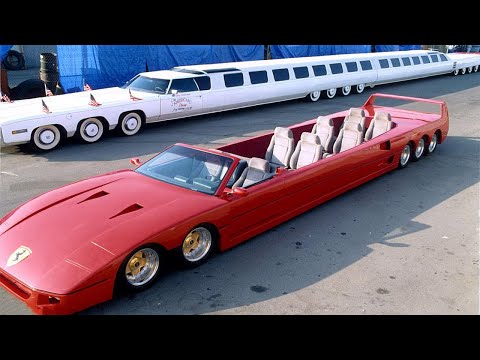
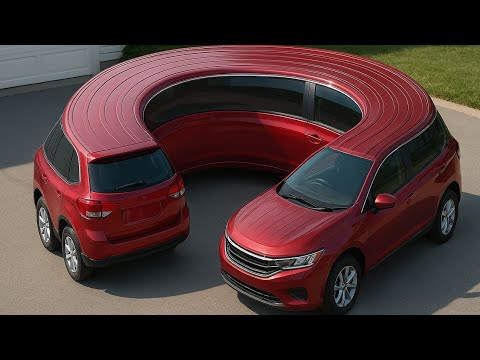
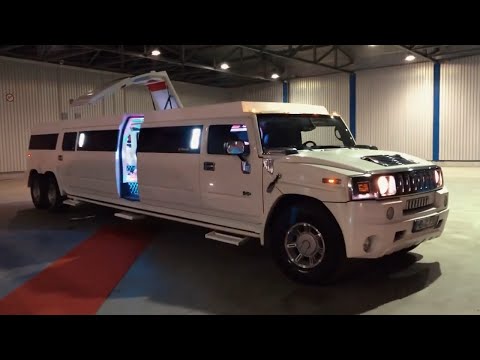
The world’s most luxurious limousines are dramatically larger than standard executive cars, but their true impact comes from a mix of scale, craftsmanship, and symbolism. The most famous example is The American Dream, which Guinness World Records lists as the longest car at 30.51 meters, or 100 feet and 1.50 inches, measured in Orlando in 2022.
Record-setting size
The American Dream remains the clearest reference point for “largest” in limousine culture because it pushes size into spectacle. Guinness describes it as a car built for the transportation of a small number of passengers, yet this vehicle was restored from the parts of the original record-breaking limo and recertified at 100 feet and 1.50 inches.
That length is far beyond normal road vehicles and makes the limo a mobile engineering showcase rather than an everyday transportation solution.
Reports on the restoration describe the vehicle as a 9-ton Cadillac Eldorado-based build with room for around 75 people, which helps explain why it attracts so much attention from museums and media.
What makes them luxurious
Luxury limousines stand out because they treat the interior as the main product. In the American Dream’s case, coverage describes amenities such as a pool, helipad, jacuzzi, mini-golf area, sun deck, beds, and lounge-like spaces, which turn the car into a rolling event venue.
Other ultra-luxury limos, such as Rolls-Royce and Maybach-based stretches, rely less on spectacle and more on privacy, materials quality, and executive comfort.
This contrast matters because it shows that “luxury” can mean either maximal excess or refined restraint.
Why the records matter
Longest-limo records are culturally important because they preserve a specific era of custom-car ambition. They also document how far coachbuilding can go when designers, fabricators, and investors are willing to ignore practicality in favor of imagination.
The American Dream’s restoration showed that heritage vehicles can be rescued, re-certified, and turned into attractions that draw public interest. That creates value for museums, tourism, and content creators who benefit from unique historical artifacts.
In that sense, the record is not just about size; it is about preserving a piece of automotive storytelling.
Positive contribution
These limousines support skilled labor across several sectors. Restoration projects employ fabricators, welders, painters, upholsterers, mechanics, transport specialists, and museum staff, while custom luxury builds help keep niche craftsmanship alive.
They also generate publicity for tourism and events, especially when a record-holder becomes a museum centerpiece or a viral media subject. The American Dream is a strong example of how one unusual vehicle can create attention far beyond the automotive world.
There is also educational value: extreme limousines make it easier to discuss engineering trade-offs such as turning radius, axle load, weight distribution, and passenger layout.
Negative criticism
The criticism is equally strong. A 100-foot limo is not practical for normal travel, and it is expensive to maintain, store, insure, and move.
Its environmental footprint is also difficult to defend when compared with modern, more efficient mobility systems. In a world focused on cleaner transport and better access, the social return of a record-breaking novelty vehicle is limited.
That does not make the limo irrelevant, but it does mean its value is mainly cultural and commercial rather than broadly social.
Real-world scenarios
The best case is museum and exhibition use, where the vehicle preserves history, attracts visitors, and supports local jobs without being forced into regular road service.
A second scenario is promotional and entertainment use, where luxury limos generate brand visibility and event revenue for a narrow set of clients and businesses.
The weakest scenario is repeated operational use, because the scale and logistics make the vehicle cumbersome and costly while offering little practical benefit to ordinary transportation needs.
Final judgment
The world’s most luxurious limousines are huge not only in physical size, but also in cultural meaning. The longest stretch limo records prove how far custom builders can push automotive design, with The American Dream standing as the most recognizable benchmark.
Their contribution to society is real but specialized: they preserve craftsmanship, support niche employment, and create tourism value, yet they also represent excess, inefficiency, and weak scalability.
So the answer to “how big are they?” is not just measured in feet and meters — it is measured in the size of their influence, which is impressive but limited.