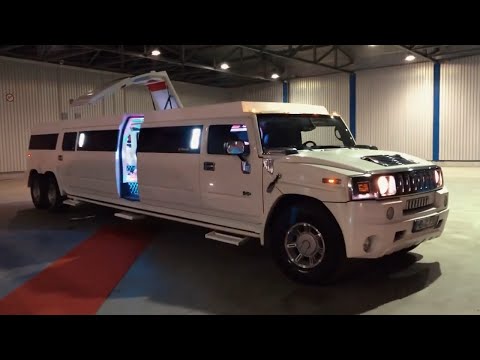
The largest luxury limousines are not just stretched cars; they are rolling statements of wealth, craftsmanship, and private power. From record-setting custom builds like The American Dream to executive benchmarks associated with Maybach, Rolls-Royce, and Bentley, these vehicles represent the most extreme edge of automotive luxury, where size, exclusivity, and symbolism matter as much as transportation.
Why these limousines stand out
In this category, “largest” does not always mean the most useful, and “most luxurious” does not always mean the biggest. Some limousines are built to impress through sheer scale, while others focus on rear-seat refinement, privacy, and prestige for billionaires, heads of state, and high-profile executives.
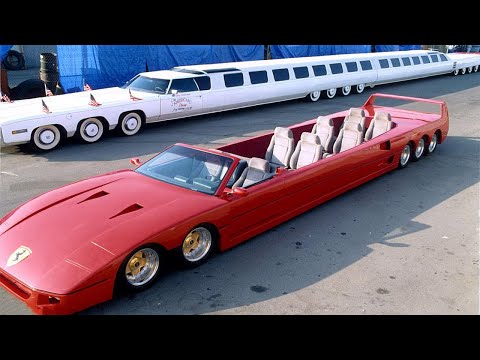
The American Dream remains the most famous example of the first type, with Guinness World Records confirming a restored length of 100 feet and 1.50 inches, 26 wheels, and seating for around 75 people.
By contrast, the Mercedes-Maybach Pullman reflects the second approach, emphasizing executive comfort and a more realistic luxury format for diplomatic and corporate travel.
The American Dream benchmark
The American Dream is the clearest case of limousine excess taken to its limit. It was originally built by custom-car designer Jay Ohrberg, later restored, and recertified by Guinness in 2022 as the world’s longest car.
Its reported amenities include a swimming pool, diving board, jacuzzi, mini-golf area, helipad, TVs, waterbed, and luxury lounge space, which makes it less of a vehicle and more of a mobile attraction.
That scale creates fascination, but it also creates real engineering and operational challenges, including turning, transport logistics, and maintenance costs.
What luxury really means
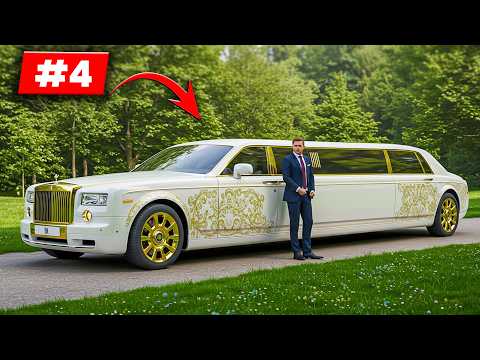
In the billionaire segment, luxury limousines are often less about raw length and more about exclusivity, protection, and privacy. Vehicles such as the Mercedes-Maybach S600 Pullman, Rolls-Royce Phantom Limousine, Bentley Mulsanne Grand Limousine, and armored executive variants are designed to function like private offices or secure lounges rather than public road cars.
That is why the idea of “square footage” matters: the interior becomes the true product, not the exterior badge alone. A limousine that gives a client quiet, privacy, and control can be more valuable than a longer but less functional showpiece.
In this sense, brands like Maybach and Rolls-Royce sell status through refinement, while custom builders sell status through rarity and spectacle.
Positive contribution
These limousines support several real industries. Restoration and coachbuilding create work for fabricators, mechanics, painters, upholsterers, and transport teams, while museums and exhibitions benefit from the public attention these vehicles generate.
They also preserve automotive history by keeping rare craftsmanship alive, especially when a unique vehicle is rescued rather than left to decay. The restoration of The American Dream is a good example of how preservation can turn a forgotten novelty into a cultural asset.
There is also an educational benefit: extreme limousines offer case studies in chassis engineering, weight distribution, passenger layout, and custom fabrication, which can be useful in design schools and specialized workshops.
Negative criticism
The criticism is substantial and deserved. Ultra-large limousines are often inefficient, expensive, and difficult to justify as everyday transportation because they consume more materials, require special handling, and offer limited utility beyond display or elite transport.
They can also symbolize inequality, because their purpose is usually to serve a very small number of wealthy owners while broader transportation systems still need investment in accessibility, affordability, and sustainability.
From an environmental standpoint, oversized luxury vehicles are hard to defend unless they are preserved as historical artifacts or repurposed in ways that reduce waste.
Billionaire ownership angle
The billionaire connection matters because these vehicles are often purchased, commissioned, or displayed by people and companies seeking prestige, visibility, and control over image. In the luxury world, ownership itself becomes part of the message: the vehicle signals access, influence, and taste, not just mobility.
That ownership pattern creates jobs and supports niche markets, but it also concentrates the benefits in a small ecosystem of collectors, custom builders, luxury brands, and media outlets.
So while the economic activity is real, the social reach is limited compared with investments that improve mass transit, clean mobility, or public infrastructure.
Real societal value
The true public value of these limousines is mostly indirect. They help preserve craft knowledge, attract tourism, generate media content, and demonstrate how far design can be pushed when budget and imagination are unrestricted.
Their strongest role is cultural, not practical: they are artifacts that document a particular era of luxury, ambition, and automotive theater.
Their weakest role is social scalability, because they do not solve transportation problems for ordinary people and often stand apart from the needs of modern urban life.
Final view
The largest luxury limousines are fascinating because they expose the tension between beauty, excess, and usefulness. The American Dream captures the extreme end of the spectrum, while Maybach, Rolls-Royce, and Bentley show how luxury can also be expressed through restraint, privacy, and executive refinement.
Their contribution to society is real but narrow: they support skilled labor, preserve heritage, and inspire engineering creativity, yet they remain poor models for broad transportation progress.
That balance is what makes them compelling — they are symbols of what human design can achieve, and reminders of where extravagance stops serving the public good.