The world of ultra-luxury limousines is where engineering ambition, celebrity culture, and pure extravagance meet. These vehicles are not built for ordinary commuting; they are status symbols, rolling showpieces, and in some cases record-holding engineering experiments that reveal both the creativity and the excess of the automotive industry.
What makes these limousines special
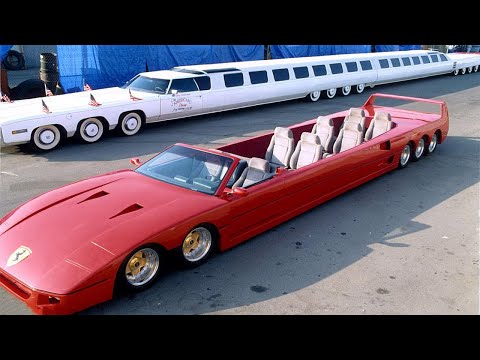
The best-known examples in this category combine unusual length, handcrafted interiors, armored or executive-grade safety, and brand prestige. The most extreme case is The American Dream, a 100-foot-and-1.5-inch Cadillac-based limousine restored and recertified by Guinness World Records in 2022, with reported features including a helipad, pool, putting green, lounge space, and room for about 75 people.
On the opposite end of the spectrum, vehicles like the Mercedes-Maybach S-Class Pullman represent a more refined form of limousine luxury: still enormous by sedan standards, but designed around comfort, privacy, and executive travel rather than spectacle.
That contrast matters, because it shows that “luxury” in limousines is not only about size; it is also about craftsmanship, security, prestige, and the intended social function of the vehicle.
The headline icons
Any serious list of the biggest and most luxurious limousines has to include The American Dream, because it remains the most famous and the longest officially recognized limousine in the modern imagination. Guinness states that the restored car measured 30.54 meters, or 100 feet and 1.50 inches, after its 2022 restoration.
The Mercedes-Maybach S600 Pullman also deserves top-tier placement because it stands as a benchmark for factory-built executive luxury, combining Maybach’s brand identity with a stretched cabin, partitioned passenger area, and V12 powertrain.
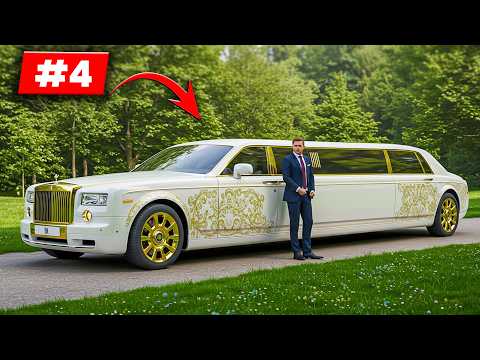
Other widely cited names in luxury-limo rankings include the Bentley Mulsanne Grand Limousine by Mulliner, the Rolls-Royce Phantom Limousine, the Mercedes-Maybach S600 Pullman Guard, and the Maybach 62s Landaulet, each representing a different philosophy of luxury, from bespoke chauffeured comfort to private-jet-style travel on wheels.
What ties them together is not just their price or size, but the way they turn the vehicle into a mobile interior space for power, privacy, and ceremony.
Positive impact
These limousines contribute to several industries in real, measurable ways. Restoration and customization projects support fabricators, upholsterers, body engineers, painters, machinists, transport specialists, museum staff, and content creators, while also preserving rare automotive craftsmanship that would otherwise disappear.
They also fuel tourism and media attention, especially when a record-setting vehicle becomes a museum attraction or a viral feature story. The American Dream’s restoration, for example, was significant enough to attract major coverage and public curiosity because of its scale, history, and unusual engineering.
From an educational standpoint, these vehicles help teach design trade-offs: weight versus maneuverability, style versus safety, and spectacle versus practicality. That makes them useful case studies for automotive students, industrial designers, and even business students studying brand value and experiential marketing.
Negative side
The critical view is just as important. The biggest limousines are usually impractical for ordinary transport, expensive to maintain, difficult to park, and highly inefficient compared with modern mobility standards.
In the case of The American Dream, MotorTrend described the restored vehicle as extremely excessive and fundamentally impractical, requiring careful route planning because of its cruise-ship-like turning radius and unusual size.
There is also an environmental critique: vehicles designed primarily for novelty or elite display offer limited social return relative to their material, energy, and logistical costs. In a period when cities are prioritizing public transit, electrification, and lower-emission mobility, oversized luxury limousines can look disconnected from broader social needs.
That does not make them worthless, but it does mean their value is concentrated in niche cultural and economic circles rather than in everyday public benefit.
Real social value
The real contribution of these vehicles is strongest in specialized sectors. Museums benefit from attraction value, luxury brands benefit from prestige, restoration shops gain high-skill work, and media outlets gain compelling stories that generate traffic and engagement.
For the wider society, their value is indirect: they help preserve technical heritage, demonstrate the outer limits of custom fabrication, and support creative industries that depend on imagination and design excellence.
But the social contribution is limited when compared with investments that improve mass transportation, accessibility, or environmental performance at scale. In other words, the limousines matter more as cultural artifacts than as practical infrastructure.
Why Maybach stands out
Maybach represents a more disciplined version of luxury. Instead of pushing size to absurd limits, it focuses on executive calm, rear-seat privacy, premium materials, and refined engineering.
That makes the Mercedes-Maybach Pullman especially important in any top-10 discussion, because it shows that luxury can be defined by restraint, not only by extravagance. Its importance comes from the balance between comfort, status, and usability, which is why it has remained a reference point in high-end chauffeur-driven travel.
Compared with the American Dream, the Maybach approach is more commercially credible and socially legible, because it serves a clearer market: diplomatic, corporate, and elite executive transport.
Final assessment
If the goal is to rank the biggest and most luxurious limousines ever built, The American Dream leads on sheer size and spectacle, while Mercedes-Maybach Pullman leads on modern, factory-made executive prestige.
The broader list belongs to a rare category of automobiles that are part engineering showcase, part luxury statement, and part cultural theater. Their value is real, but it is uneven: they create jobs, preserve heritage, and inspire awe, yet they also symbolize excess, inefficiency, and unequal access to mobility.
That tension is exactly why they remain fascinating — they are not just cars, but mobile symbols of what society admires, tolerates, and criticizes in the pursuit of luxury.