The world’s largest luxurious limousines are more than oversized vehicles; they are symbols of status, engineering ambition, and extreme customization. From the record-setting American Dream to the gold-plated Sultan of Brunei’s Rolls-Royce stretch, these limousines show how far luxury can go when cost, rarity, and spectacle are the main goals.
What makes them extraordinary
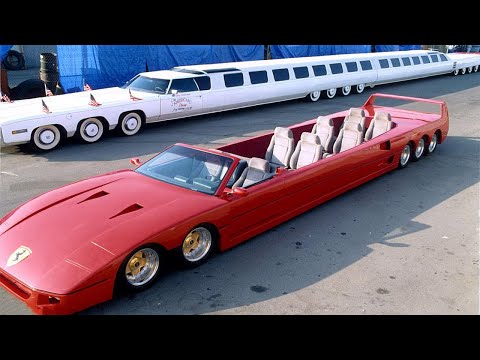
The American Dream remains the most famous giant limo on earth because it was restored and re-certified at 100 feet and 1.50 inches, making it the longest car ever recorded. Reports describe it with 26 wheels, a pool, a helipad, a sun deck, a jacuzzi, beds, and room for dozens of passengers, turning it into a moving landmark rather than a normal road vehicle.
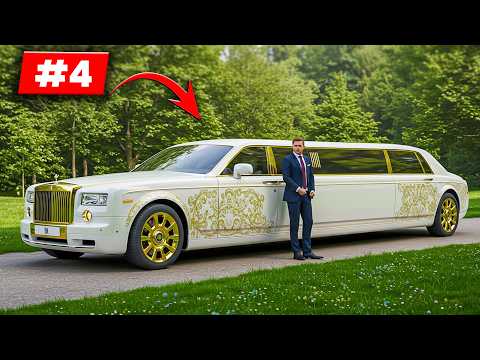
At the other extreme, the Sultan of Brunei’s Rolls-Royce stretch limousine represents ultra-elite luxury through rarity and exclusivity, with media reports valuing it at around $14 million and describing gold-plated details and royal-level craftsmanship.
Between those two, vehicles like the Midnight Rider and Rolls-Royce Phantom stretches show how limousine culture splits into two worlds: one driven by record-breaking size, and another by refined, aristocratic prestige.
The American Dream effect
The American Dream is the benchmark because it is impossible to ignore. Its scale, custom construction, and unusual features make it one of the most recognizable examples of American coachbuilding ever created.
It also has real historical value, because the restoration preserved a rare artifact of custom-car culture that might otherwise have disappeared.
For museums, collectors, and media outlets, that gives the vehicle value beyond its price tag: it becomes an attraction, an educational object, and a piece of automotive folklore.
Sultan of Brunei’s Rolls-Royce
The Sultan of Brunei’s Rolls-Royce limousine is important for a different reason. It is not mainly famous for length; it is famous for wealth, rarity, and royal exclusivity.
Reports say the Sultan’s collection includes thousands of vehicles, and that his custom Rolls-Royce stretch limo stands as one of the most expensive limousines ever associated with a private owner.
That type of ownership reflects a different luxury logic: instead of attracting attention through absurd size, it signals power through scarcity, craftsmanship, and access to the unattainable.
Midnight Rider and other mega limos
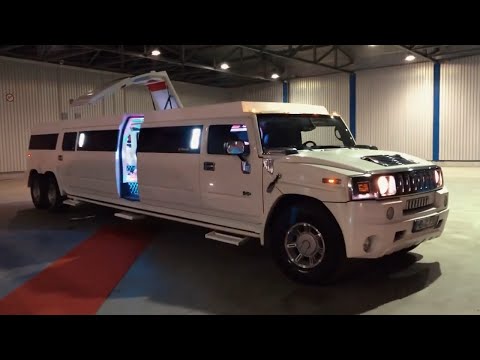
The Midnight Rider is one of the best-known party limos in the world and is often listed among the most expensive because it combines novelty with a nightclub-style interior.
Unlike the American Dream, it is more about the experience inside than about being a record-holder in length, but it still belongs to the same cultural category of elite excess.
Rolls-Royce stretches, meanwhile, are usually the most elegant of the giant limos, because they emphasize quiet comfort, premium materials, and formal prestige rather than overt theatrics.
Positive contribution
These limousines create real work for a wide range of specialists. Custom fabrication, upholstery, paint, mechanical restoration, transport logistics, and museum display all depend on the kind of highly specialized labor these projects require.
They also support tourism and media interest, especially when a vehicle is tied to a famous owner, a royal collection, or a Guinness-level record. That can translate into visitor spending, event revenue, and long-term attention for preservation sites.
In educational terms, they demonstrate advanced problem-solving in design, weight distribution, passenger layout, and mechanical adaptation. For students and professionals in automotive and industrial design, these vehicles are useful case studies in extreme engineering.
Negative criticism
The criticism is serious. These limousines are expensive to build, costly to maintain, difficult to move, and not suited to everyday transportation.
They also sit uneasily beside social needs like affordable transit, cleaner mobility, and practical public infrastructure. In that sense, they can appear as monuments to inequality rather than contributions to broad public progress.
Environmental concerns matter too, because ultra-large luxury vehicles usually require more resources per passenger than modern, efficient alternatives. Their value is therefore concentrated in prestige and symbolism, not scalability.
Real societal value
The real social value of these limousines is indirect but genuine. They preserve craft traditions, generate specialty jobs, and keep rare automotive history alive for future audiences.
They also show how luxury can function as a cultural artifact: a way societies record wealth, taste, and technical ambition in physical form.
But their contribution to broad social progress is limited. They inspire admiration and conversation, yet they do little to solve the everyday challenges of mobility, inclusion, or sustainability.
Final perspective
From the American Dream to the Sultan of Brunei’s Rolls-Royce, the biggest luxurious limousines on earth are extraordinary because they reveal both the power and the limits of money in automotive design. They create jobs, preserve craftsmanship, and generate cultural interest, but they also embody excess, inefficiency, and very narrow social utility.
That tension is exactly why they remain fascinating: they are not just cars, but rolling symbols of what luxury can achieve when imagination has no practical boundaries.