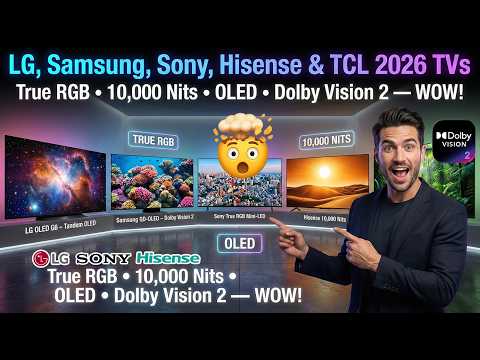
The biggest TV advances of 2026 are centered on three things: brighter RGB-based display systems, smarter motion and ambient sensing, and AI features that make the TV feel more adaptive to the room and the content. These upgrades are not just marketing language; they are changing how premium TVs perform in bright living rooms, gaming setups, home theaters, and professional spaces.
What Is Changing
Samsung’s 2026 TV strategy shows how fast the category is evolving. The company is expanding its Micro RGB lineup, adding Vision AI Companion, AI Motion Enhancer Pro, 4K AI Upscaling Pro, and glare-resistant designs meant to improve real-world viewing in difficult lighting. LG, TCL, and Hisense are moving in a similar direction with brighter OLED, RGB Mini-LED, and high-end AI processing, which confirms that the premium TV race is now about processing intelligence as much as panel technology.
RGB LED-based systems are important because they aim for better color purity and higher brightness than older backlight approaches. That matters in HDR movies, sports, and games where vivid highlights and color detail can disappear on weaker displays. At the same time, the technology is still early, so manufacturers are asking buyers to pay more for features that may still vary in consistency depending on the model and the scene.
Why Sensors Matter
Motion sensors and ambient-aware picture systems are becoming more practical because most people do not watch TV in a controlled studio environment. A TV that understands room brightness can change contrast, tone mapping, and brightness more intelligently than older fixed picture modes. That is especially useful in apartments with windows, family rooms with changing daylight, and shared spaces where one setting never works all day.
The positive side is convenience and better everyday image quality. The negative side is that these systems can sometimes over-correct, making images look too processed, too bright, or less faithful to the original creative intent. In other words, sensors help most when they are subtle, not when they dominate the picture.
Immersive AI Benefits
AI is now doing much more than upscaling. Samsung’s 2026 platform uses conversational tools, content suggestions, live translation, and integrated assistant features to make the TV more interactive and useful beyond simple playback. That can improve usability for families, older adults, and users who want a more natural way to search content or control smart-home features.
There is also a real productivity angle. In retail, hospitality, education, and corporate environments, these smarter TVs can improve presentation clarity, support multilingual use, and reduce the need for manual setup. For creators and broadcasters, the better motion handling, color control, and HDR tuning can help preview content more reliably before delivery to streaming platforms or large displays.
Real Strengths
The strongest benefit of these 2026 TVs is adaptability. RGB LEDs and advanced AI processors make premium screens more capable in mixed lighting, fast-motion content, and high-contrast HDR scenes. For gamers, features like high refresh rates, low latency, and smarter motion handling are just as important as raw brightness because they improve responsiveness and clarity during fast gameplay.
Another major strength is that these technologies are pushing the broader industry forward. Competition between Samsung, LG, TCL, and Hisense is forcing better panels, stronger processors, and more refined software experiences across the market. That progress eventually reaches midrange models too, which means the impact is not limited to flagship buyers.
Weaknesses And Risks
The main criticism is price. Cutting-edge RGB LED and AI-heavy TVs tend to launch at premium levels, which makes them less accessible for average buyers, schools, and smaller businesses. There is also a risk that brands focus too much on headline features like “AI” or “micro RGB” without fully proving long-term reliability or software support quality.
Another issue is complexity. More sensors and more automated processing can make TVs smarter, but they can also make them harder to trust if the image shifts too aggressively or if privacy-conscious users dislike the amount of data-driven functionality built into the system. The best implementation will be the one that improves the picture quietly and predictably, not the one that constantly advertises itself.
Social And Industry Value
These TVs contribute to society mainly by improving how people consume information and entertainment in everyday environments. Better displays support clearer news viewing, more accessible content, more engaging education screens, and higher-quality digital signage in public places. They also strengthen the display and semiconductor ecosystem by pushing innovation in backlights, AI processing, and real-time image optimization.
At the same time, the industry should remain critical. The real measure of progress is not whether a TV has the newest label, but whether it improves picture quality, usability, and longevity in meaningful ways. In 2026, the best TVs are the ones that combine RGB-led brightness, motion-aware processing, and AI features without sacrificing accuracy, privacy, or long-term value.
Best Overall Takeaway
The 2026 TV breakthrough story is not about one single technology replacing everything else. It is about RGB LED systems, motion-aware sensors, and immersive AI features working together to create TVs that adapt better to real life. When done well, that combination can improve home entertainment, professional presentation, and everyday usability in a way that feels genuinely useful rather than just flashy.