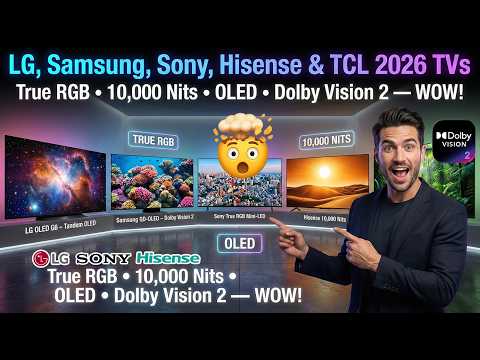
The most future-proof TVs in 2026 are no longer defined by one feature alone. They combine AI-powered picture optimization, advanced sensor systems, QD-OLED or high-end OLED panels, and serious gaming performance to deliver value across home entertainment, creative work, and connected living.
What Defines Future-Proof
In 2026, “future-proof” means more than having a bright screen or a premium badge. It means the TV can handle modern HDR formats, high refresh-rate gaming, room-aware AI tuning, long software support, and enough processing power to stay useful as streaming, cloud gaming, and smart-home integration continue to evolve. Samsung’s 2026 OLED lineup highlights this direction with AI Vision-style smart features, 4K AI Upscaling Pro, AI Motion Enhancer Pro, and up to 7 years of OS updates on One UI Tizen OS.
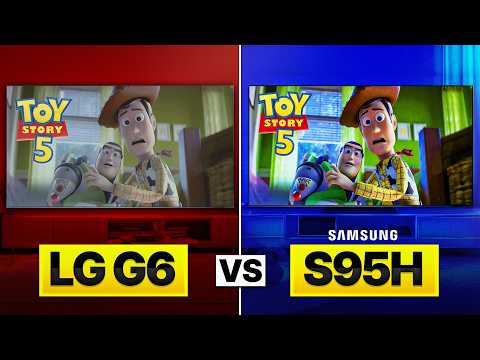
QD-OLED remains one of the strongest premium display technologies because it combines OLED’s deep blacks with quantum-dot color performance. Samsung’s 2026 S95H also pairs that panel approach with Motion Xcelerator 165Hz, NVIDIA G-SYNC compatibility, and FreeSync Premium Pro, which makes it particularly attractive for competitive gamers and high-end PC users. LG’s 2026 G6 answers with its brightest OLED yet, Alpha 11 AI Processor Gen3, Dolby Vision, Dolby Atmos, and 4K 165Hz VRR, creating a strong cinema-plus-gaming package.
Why AI Sensors Matter
AI vision and room-sensing features are becoming a real differentiator because they reduce the need for manual calibration. Samsung’s 2026 OLED lineup uses AI-driven tools to detect content type, adjust picture settings, refine motion, and optimize audio behavior based on the scene and room conditions. LG’s 2026 OLED models also emphasize personalization, including AI Picture/Sound Wizard and ambient light compensation in Filmmaker Mode, which helps the TV adapt to real homes instead of showroom conditions.
The positive side is convenience, better out-of-box accuracy, and less friction for non-experts. The negative side is that more AI means more dependence on account ecosystems, internet access, and privacy permissions, especially when features like voice assistants, recommendations, and cloud services are baked into daily use. That tradeoff is important for buyers who want simplicity, longevity, and better control over their data.
Gaming And Motion
Gaming is one of the clearest areas where premium TVs show future value. Samsung’s S95H supports 4K 165Hz gaming, G-SYNC, and FreeSync Premium Pro, while LG’s G6 and C6 also support 4K 165Hz VRR and low-latency gaming features. For console players, these features matter less as marketing points and more as actual improvements in clarity, smoothness, and responsiveness.
There are still limits, though. A 165Hz panel only reaches its full benefit when paired with a compatible PC or source device, and many games will not consistently output at that level. So the real value is not that every frame becomes magic, but that the TV is built to stay relevant as game hardware becomes more powerful over time.
Positive And Negative
The strongest argument in favor of these TVs is that they serve multiple audiences at once. Movie lovers get better tone mapping, black levels, and HDR performance; gamers get low latency and high refresh rates; and households get smarter automation and more polished streaming support. That versatility is what makes them genuinely future-oriented rather than just expensive.
The downside is that premium pricing remains a barrier. LG’s 2026 G6 starts at $2,499, while Samsung’s S95H starts at $2,499 for the 55-inch model and rises sharply at larger sizes. Another drawback is format fragmentation: some buyers still care about Dolby Vision, while others care more about glare control or gaming features, which means no single TV wins every category.
Real-World Value
For consumers, these TVs improve entertainment, accessibility, and ease of use in daily life. For creators and media professionals, they help preview HDR content more accurately and with more headroom for highlights and color detail. For workplaces such as hospitality, retail, executive lounges, and event spaces, they provide premium visual presentation and a more modern smart-screen experience.
Their broader social contribution comes from how they push display innovation forward. Companies like Samsung and LG are investing in panels, processors, adaptive software, and longer update cycles, which influence not only TVs but also monitors, signage, and related consumer-electronics sectors. At the same time, the industry has to remain critical about privacy, long-term support, and whether AI features are truly useful or simply decorative.
Best Buyer Fit
Samsung S95H is the strongest fit for users who prioritize QD-OLED color, glare handling, smart AI features, and top-tier gaming performance. LG G6 is the stronger choice for buyers who want the brightest OLED experience, Dolby Vision support, strong cinematic tuning, and excellent all-around premium performance. Both are serious future-proof options, but they serve slightly different priorities.
The broader 2026 TV landscape shows that future-proofing is now about balance, not hype. The best sets combine panel quality, intelligent processing, gaming speed, and meaningful software support, which is why flagship TVs from Samsung and LG remain central references in the market.