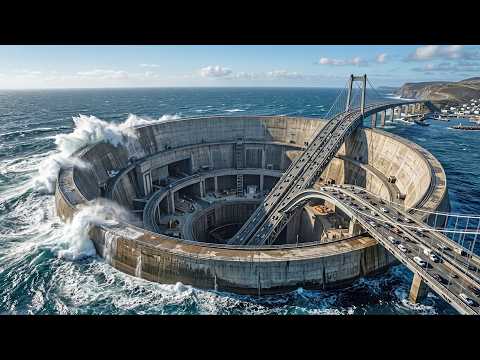
From International Space Station to ITER: The Most Expensive and Transformative Technologies Ever Built
The International Space Station and ITER are two of the most ambitious and expensive technology projects ever attempted, and they represent very different kinds of transformation. The ISS has already delivered decades of research, international cooperation, and practical spillovers into medicine, engineering, and space operations, while ITER is a still-unproven but potentially revolutionary bet on fusion energy.
Why these projects matter
These technologies are expensive because they are built to answer questions that ordinary systems cannot solve. They require custom engineering, specialized materials, global coordination, and long time horizons, which makes their true cost much higher than the initial construction budget.
Their importance is not just technical. They shape labor markets, scientific capability, industrial supply chains, and national strategy. In that sense, they are not just machines or facilities; they are long-term investments in future capacity.
The International Space Station
The ISS is the largest single structure humans have ever put in space, and it remains one of the clearest examples of a high-cost project producing visible scientific value. NASA’s oversight reporting has also highlighted that ISS management faces cost pressure, aging systems, and operational challenges as the station moves deeper into its final phase of service.
Its positive contribution is substantial. The station supports microgravity research, Earth observation, and astronaut training, while also serving as a model of international technical cooperation among NASA, Roscosmos, ESA, JAXA, and CSA. Its negative side is just as important: it is expensive to operate, vulnerable to budget shortfalls, and increasingly difficult to sustain without reducing research output or crew capacity.
ITER and the fusion promise
ITER is one of the most expensive scientific experiments ever built, and also one of the most uncertain. BBC reporting described it as a very expensive gamble with a cost already around 15 billion euros at an earlier stage, and later reports show additional delays and cost growth.
Its revolutionary promise is fusion energy: a potential future source of abundant, low-carbon power that could reshape electricity generation, industrial decarbonization, and energy security. The positive scenario is enormous, because success would affect utilities, heavy industry, climate policy, and advanced manufacturing. The negative scenario is equally serious, because ITER does not generate electricity for the grid and may still take years to prove whether practical fusion power is achievable.
What they contribute to society
The real value of these projects extends across many sectors of work. The ISS supports aerospace engineers, scientists, technicians, mission planners, and research institutions, while also generating knowledge useful in medicine, materials science, and Earth monitoring. ITER supports plasma physics, cryogenics, superconducting magnet development, and advanced engineering supply chains that involve major international partners and contractors.
Their broader social value lies in capability building. The ISS shows what sustained orbital operations can accomplish, while ITER keeps alive the possibility of a new energy system that could support a lower-carbon future. Even when the return is indirect, the knowledge and workforce development can matter for decades.
Positive and negative scenarios
The positive scenario for the ISS is continued research value, a stronger commercial space transition, and long-term lessons for future orbital stations and lunar missions. The negative scenario is declining funding, aging hardware, and reduced scientific output as the station nears retirement.
The positive scenario for ITER is a genuine fusion breakthrough that could influence the global energy landscape. The negative scenario is that it becomes a symbol of overpromised science: technically impressive, politically expensive, and too delayed to deliver useful energy in time to matter for near-term climate needs.
The critical trade-off
The main criticism of these megaprojects is opportunity cost. Every billion spent on orbital infrastructure or fusion research is money not spent on healthcare, housing, education, or grid modernization, and that matters when public budgets are tight.
Still, it would be a mistake to judge them only by short-term economics. Some technologies are expensive because they create possibilities no smaller project can unlock. The real question is whether they produce lasting scientific, industrial, and social value that justifies the cost.
Final perspective
From the International Space Station to ITER, the most expensive technologies ever built are also some of the most transformative. The ISS has already changed how humans work in space and how nations cooperate, while ITER may yet reshape the future of energy if its scientific gamble succeeds.