Dream Chicago Mansions: Explore the City’s Largest and Most Luxurious Homes Today
Dream‑level Chicago mansions in 2026 range from colossal Gold Coast estates and skyline‑view penthouses to ultra‑modern city homes and North Shore lakefront palaces that are closely tied to the Chicago market. Together, they define the very top of regional luxury living, showcase ambitious design and craftsmanship, and raise important questions about how extreme wealth interacts with the city’s economy, labor markets, and social challenges.
The Biggest City Mansion: Astor Court, Gold Coast
At the center of today’s “dream mansion” conversation in Chicago is Astor Court, a 25,000‑square‑foot estate on North Astor Street in the Gold Coast, relisted in 2026 at an asking price of 21 million dollars. Owned since the late 1980s by personal‑injury attorney Paul Episcope and now represented by high‑end broker Emily Sachs Wong, Astor Court is currently the most expensive active listing within Chicago city limits and one of the largest single‑family homes in the city.
Astor Court occupies an unusually wide and deep lot, giving it rare city‑scale grounds and allowing for grand interior volumes, multiple formal rooms, and extensive amenities that rival suburban estates. Its combination of historic character, lake‑adjacent prestige, and sheer square footage makes it a focal point for anyone exploring Chicago’s dream mansions today, and it sets a reference point for how far urban luxury can stretch without leaving the city.
Other Landmark Chicago Mansions and Penthouses
Astor Court shares the stage with a small cluster of other ultra‑luxury city properties that appear repeatedly in recent coverage of Chicago’s most expensive homes. A well‑known earlier example is the Burton Place mansion at 3 West Burton Place in the Gold Coast, a roughly 20,000‑square‑foot, six‑bedroom, 13‑bath residence historically listed around 18.75 million dollars and long recognized as one of the city’s top‑priced homes. Inside, such homes typically feature grand staircases, extensive custom woodwork, multiple entertaining spaces, wine rooms, and spa‑style suites that embody classic urban opulence.
Chicago’s dream‑home map also includes a handful of penthouses that effectively function as vertical mansions. Earlier lists of the city’s priciest residential offerings have highlighted multiple full‑floor or multi‑level units along Michigan Avenue and Walton Place with asking prices from about 12.5 to over 15 million dollars, combining panoramic Lake Michigan views with large floor plates, private terraces, and concierge‑style services. Recent luxury‑home media tours further showcase a roughly 15‑million‑dollar modern mansion in Chicago that uses floor‑to‑ceiling glass, an infinity‑edge pool, a double‑height foyer, a private theater, a full bar, and a fitness studio to deliver resort‑like living within city limits.
North Shore Mansions Connected to the Chicago Dream
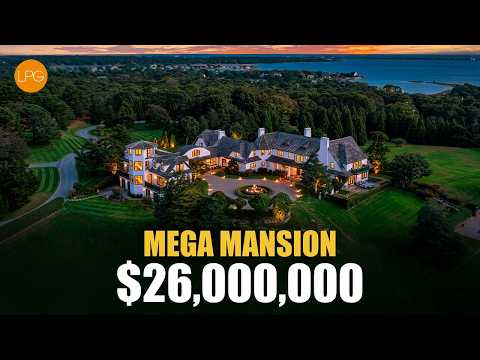
Even though they sit outside Chicago’s formal boundaries, several North Shore estates—especially in Lake Forest, Winnetka, Kenilworth and Highland Park—are central to how buyers and media understand “Chicago dream mansions” today. A highly publicized Lake Forest estate on Circle Lane, for example, has appeared in national and local tours as a 15,000‑square‑foot, six‑bedroom, lakeside residence on more than five acres, with approximately 570 feet of private Lake Michigan shoreline, resort‑style pool and spa, a gourmet outdoor kitchen, and a three‑tier fountain inspired by the original Rockefeller McCormick estate that once occupied the land.
Inside, this Lake Forest mansion pairs Old World craftsmanship—Christopher Peacock kitchen, reclaimed timbers, groin‑vaulted loggias, Tuscan‑style stone wine cellar—with modern sustainability features such as geothermal heating and radiant floors, plus a 22‑car subterranean garage and a dedicated 16‑seat theater. Other North Shore properties frequently associated with Chicago’s dream‑home narrative include Michael Jordan’s 37,000‑square‑foot Highland Park estate at 2700 Point Lane, with a full‑size basketball court and speakeasy lounge, and large family‑oriented houses in Kenilworth that balance refined architecture with practical, livable luxury.
Because these estates are marketed through Chicago‑centric luxury agents and covered in Chicago‑focused media tours, they are part of the “Chicago mansions” universe that buyers and enthusiasts explore, even when the mailing address is technically a separate suburb.
Economic and Labor Contributions of Dream Mansions
These dream‑level mansions contribute meaningfully to Chicago’s broader economy and labor markets, even though they represent a very small share of total housing. Each high‑value listing or sale supports specialized real‑estate firms, luxury brokers, legal and tax advisors, title companies, appraisers, and bespoke financing and wealth‑management services that depend on large, complex deals for revenue. High‑profile properties and media tours help agents build reputations and attract additional listings and international clients, reinforcing a niche but powerful segment of the real‑estate industry.
On the physical side, designing, building, restoring, and maintaining such mansions creates sustained work for architects, structural engineers, interior designers, landscape architects, and skilled trades—from custom millwork, masonry, and roofing to advanced mechanical systems and smart‑home integration. Modern dream homes with infinity pools, wellness centers, theaters, and extensive outdoor entertainment areas rely on a wide array of contractors and service providers, while historic mansions require careful preservation efforts that support specialized craftsmanship.
High assessed values for these homes also feed local tax bases in Chicago and North Shore communities, strengthening municipal and school‑district budgets in areas where these properties sit. Owners’ spending on local restaurants, cultural institutions, private schools, art, and concierge services further circulates money into high‑skill service sectors tied to affluent households.
Critical Perspective: Inequality, Market Risk and Social Impact
Despite their economic contributions, Chicago’s dream mansions sit within a broader real‑estate and social context that is far from simple. Recent commentary on the city’s luxury market notes that high‑end prices and activity have been under pressure from concerns about crime, taxation, and school quality, with some billionaire owners taking substantial losses when selling prominent properties. These dynamics highlight that ultra‑luxury housing does not exist in isolation: it is affected by city‑wide issues that shape demand, values, and perceptions of safety and opportunity.
At the same time, the existence of mansions priced in the tens of millions of dollars contrasts sharply with the realities of many Chicago and regional households who face rent burdens, stagnant wages, and limited access to affordable, high‑quality housing. When large estates occupy prime lakefront land or oversized city lots, critics argue that they may reinforce exclusionary patterns, limiting opportunities for more diverse, mixed‑income development in high‑opportunity areas.
There is also a concern that some dream mansions function more as wealth‑storage assets than vibrant community homes, especially when they remain unsold for years or are used primarily as occasional retreats. In those cases, the direct social integration—neighbors, local school involvement, everyday support for local institutions—can be weaker than the fiscal and employment benefits, leaving a sense of distance between the properties and the broader community.
Real Contribution to Chicago’s Progress
In a positive scenario, dream Chicago mansions and the luxury market around them can play a constructive role in city and regional progress. High‑end tax revenue, philanthropic capacity, and global visibility can be linked to inclusive objectives: more affordable and “missing middle” housing, better infrastructure across diverse neighborhoods, and programs that support education and workforce development beyond the most affluent households. Heritage‑sensitive renovation and sustainable new construction—like geothermal systems in Lake Forest or efficient modern city mansions—can make luxury compatible with environmental responsibility.
In a more negative scenario, however, dream mansions remain primarily symbols of concentrated wealth, marketed as aspirational objects while zoning battles, safety concerns, and uneven investment continue to divide the city and region. In that context, the largest and most luxurious homes risk becoming visual markers of a widening gap rather than anchors of shared prosperity.
As of 2026, exploring Chicago’s dream mansions means seeing both sides at once: the grandeur of Astor Court and North Shore lakefront estates, the innovation of modern skyline‑view homes, and the complex social and economic landscape in which they stand. Whether these properties ultimately support a healthier, more balanced future for Chicago will depend on how owners, market leaders, and policymakers choose to connect this visible luxury to broader, inclusive strategies rather than letting it remain detached on the hill—or bluff—above the rest of the city.