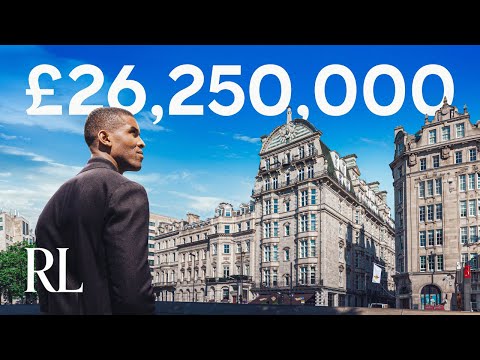
London’s most expensive streets, including Grosvenor Place, continue to represent the highest tier of global residential real estate in 2026. These addresses stand apart not only because of their extraordinary price levels, but also because of their rare combination of location, architectural heritage, privacy, and access to elite amenities in areas such as Belgravia, Mayfair, and Knightsbridge.
Recent market reporting shows that Grosvenor Place has moved into the top position among London’s most expensive streets, with average home values above £28 million, overtaking other long-established prestige addresses. That scale of valuation reflects far more than luxury aesthetics. It is the result of extreme supply scarcity, international demand, historic streetscapes, and the enduring status of central London as a safe haven for wealth.
This article explores why streets like Grosvenor Place matter to buyers, developers, and the broader property market. On the positive side, these neighborhoods generate meaningful economic activity across architecture, construction, surveying, interior design, legal services, private banking, concierge services, and luxury retail, while also helping maintain London’s reputation as a leading global capital for finance and design. High-value transactions also support premium craftsmanship and sustain long-term investment in some of the city’s most historic urban fabric.
At the same time, the social and economic criticism is unavoidable. Reports in 2025 and 2026 have highlighted falling luxury sales, weaker foreign demand, and a rising concern that some of London’s wealthiest streets and homes are increasingly disconnected from ordinary housing needs. Broader debates around empty properties, tax pressure, and the shrinking pool of ultra-rich buyers show that the ultra-prime market can contribute to inequality, speculative ownership, and reduced housing accessibility for local residents. In that sense, these streets symbolize both success and imbalance: they sustain jobs and investment, but they also expose the limits of a housing system shaped by extreme wealth concentration.
The market picture is also more complex than simple price growth. While London remains home to some of the most expensive streets in the world, luxury property values have softened in parts of the market, with analysts pointing to policy changes, tax uncertainty, and reduced appetite among overseas buyers. That makes Grosvenor Place and similar addresses especially important to understand in 2026, because they reflect not only wealth and exclusivity, but also the changing economics of luxury living in London.
This piece offers a balanced, data-informed look at why London’s most expensive streets remain at the pinnacle of luxury living, what they contribute to the economy, and why they continue to shape public debate about wealth, housing, and urban inequality.