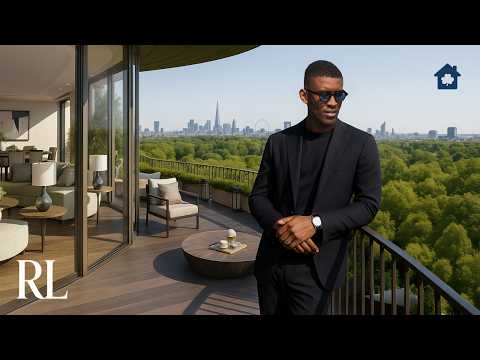
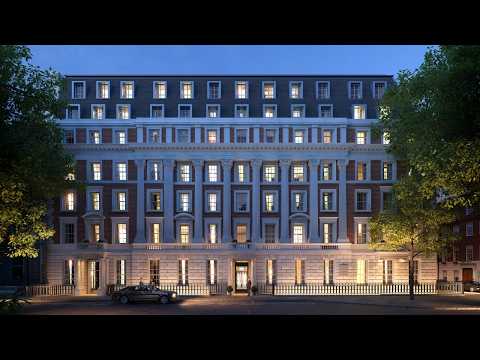
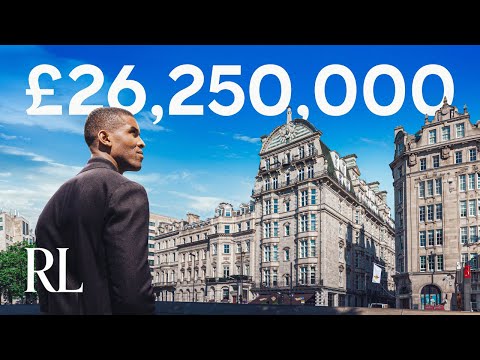
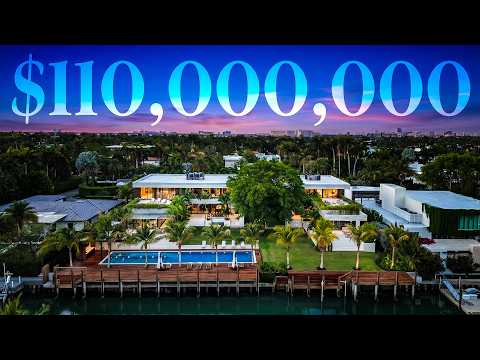
London’s billionaire mansion market remains one of the most exclusive and closely watched property segments in the world, and in 2025 the strongest activity has continued to center on Belgravia and Regent’s Park. These neighborhoods combine privacy, heritage architecture, and rare land availability, which is why they consistently attract ultra-high-net-worth buyers seeking trophy homes, long-term capital preservation, and prestige in one of the most globally recognized luxury markets.
This article explores the top super-prime properties in London through the lens of real market movement, not just visual luxury. Recent reporting shows that Belgravia has remained one of the strongest addresses for high-value sales, while Regent’s Park has produced some of the city’s most dramatic headline transactions, including The Holme, which sold after a long marketing period and was later reported again at a far higher value in 2026. Together, these examples reveal how scarcity, architectural uniqueness, and international demand continue to shape the top end of London real estate.
There is an important positive case for this market. Super-prime homes support a wide ecosystem of professionals and firms, including architects, construction crews, interior designers, surveyors, private bankers, lawyers, estate agents, and luxury service providers, all of whom benefit from major capital projects and high-value transactions. They also help preserve historic districts, sustain premium craftsmanship, and reinforce London’s reputation as a global center for wealth management, design, and high-end development.
At the same time, the social critique is unavoidable. Reports in 2025 and 2026 have raised concerns that some of London’s wealthiest neighborhoods are increasingly marked by underused or temporarily empty properties, driven by shifting tax policy, political uncertainty, and changing investor behavior. That creates a difficult balance: these homes generate jobs and global attention, but they can also contribute to housing inequality, inflate expectations at the top of the market, and widen the gap between elite ownership and broader public access.
The broader market context matters as well. In 2025, high-value sales slowed as proposed tax changes and the end of the non-dom regime created caution among wealthy buyers, yet the first half of 2026 showed signs of renewed activity, including stronger appetite for trophy homes and a rebound in ultra-prime demand. This makes Belgravia and Regent’s Park especially relevant in 2025–2026, because they sit at the intersection of global capital, policy change, and the future direction of London’s luxury housing market.
This piece offers a balanced, data-informed look at London’s billionaire mansions, combining market facts, neighborhood analysis, and a critical examination of what super-prime real estate contributes to society — both positively through jobs, investment, and preservation, and negatively through exclusivity, speculation, and social imbalance.