Biggest Luxury Houses in Chicago: $21M Gold Coast to Lake Michigan Lakefront Estates
In 2026, Chicago’s biggest luxury houses form a narrow but highly influential tier of real estate, topped by a 21‑million‑dollar Gold Coast mansion and stretching out to vast Lake Michigan lakefront estates in suburbs like Lake Forest, Winnetka, and Kenilworth. These properties combine extreme size, rare locations, and high architectural ambition, while raising complex questions about their true contribution to local jobs, public finances, and social progress.
The $21M Gold Coast Giant: Astor Court
At the center of Chicago’s ultra‑luxury story in 2026 is Astor Court, a 25,000‑square‑foot mansion at 1355 North Astor Street, relisted at 21 million US dollars and currently the most expensive active home in the city. Owned by Chicago personal‑injury attorney Paul Episcope and represented by prominent luxury broker Emily Sachs Wong, the property sits on an unusually wide and deep lot in the Gold Coast, a neighborhood long associated with old‑money prestige and lakefront proximity.
Astor Court offers six bedrooms, six bathrooms, grand curved staircases, original marble fireplaces, and sweeping views toward Lake Michigan, effectively merging historic character with large‑scale private living space rarely available in an urban setting. If it sells near its asking price, it would far surpass Chicago’s existing record for a single‑family home—set in 2024 when a custom Lincoln Park mansion closed at 15.3 million US dollars—redefining the upper boundary of the city’s residential pricing.
Other Gold Coast Mansions and Record Penthouses
Astor Court is not alone at the top end of Chicago’s luxury housing market; several other Gold Coast properties form a cluster just below it. A notable example is the 1888 mansion and carriage house at 915 North Dearborn Street, totaling around 13,000 square feet and listed at 18.5 million US dollars, marketed as a “rare piece of Chicago history” with a bar, spa, zen room, integrated waterfall, and glass‑blown ceilings.
Beyond houses, vertical luxury in Chicago is represented by record‑setting penthouses along Lake Shore Drive and the Magnificent Mile. In July 2026, a penthouse occupying the top three floors at 1500 North Lake Shore Drive sold at auction for 13.9 million US dollars, drawing five registered bidders and setting a new monthly benchmark for ultra‑luxury high‑rise living in the city. Earlier, a unit at 9 West Walton Street recorded a 10.1‑million‑dollar sale, helping establish a small but visible tier of trophy condos that compete with mansions for attention among high‑net‑worth buyers.
Lake Michigan Lakefront Estates: Space, Privacy, and Legacy
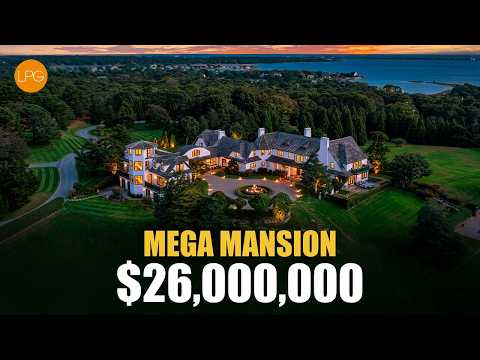
Outside Chicago’s city limits, some of the biggest luxury houses connected to the metropolitan market sit directly on or near Lake Michigan, trading sheer land and water access for commute time. A 15,000‑square‑foot estate at 595 Circle Lane in Lake Forest—on the historic Harold F. and Edith Rockefeller McCormick property—has been listed around 17 to 25 million US dollars since 2024, with six bedrooms, nine bathrooms, pool, spa, boathouse, monumental staircase, and a marble fountain drawn from the original estate.
Other enormous lakefront or lake‑adjacent estates include new‑construction mansions in Winnetka and Kenilworth, such as a roughly 15,000‑square‑foot home in Winnetka listed near 16.9 million and a 17,000‑square‑foot Kenilworth property around 16.75 million. These houses feature oversized windows with unrestricted lake views, refrigerated wine cellars, sports courts, and planned private beaches, positioning them as self‑contained environments where owners can live, entertain, and recreate without leaving their grounds.
Collectively, the biggest luxury houses—from Astor Court to Lake Forest, Winnetka, and Kenilworth—form a regional network of properties whose only common denominator is scale and price: multi‑level structures, vast interior programs, and extensive amenities that demand sustained management and capital.
Economic and Labor‑Market Contributions
On the positive side, these mega‑properties generate intense economic activity relative to their number. Every listing and sale supports specialized real‑estate brokers, attorneys, tax and estate planners, appraisers, and private‑banking teams who manage complex transactions, often involving trusts or corporate structures. High‑profile agents and firms build reputations around such deals, which in turn attract more luxury listings and international interest to the Chicago region.
The design, construction, restoration, and daily maintenance of these houses create work for architects, engineers, interior designers, landscape architects, and skilled trades like masonry, millwork, roofing, HVAC, and smart‑home integration. Historic mansions require careful preservation, while new lakefront builds demand sophisticated structural and environmental engineering, particularly along Lake Michigan where erosion and weather exposure pose long‑term challenges.
These properties also contribute significantly to local property‑tax bases. The assessed values of Gold Coast mansions and North Shore lakefront estates feed municipal budgets and school systems, especially in high‑income suburbs where large valuations translate into strong revenue streams over time. Luxury owners often spend heavily on local services—restaurants, cultural institutions, private schools, and health and wellness providers—further circulating money through the regional economy.
Critical Perspective: Inequality, Land Use, and Social Impact
The negative side of Chicago’s biggest luxury houses starts with their place in a broader housing landscape marked by affordability pressures and uneven investment. While a small set of properties trades at or above 20 million US dollars, many Chicago residents face rent burdens and limited access to quality housing, creating a stark visual and financial contrast between lakefront mansions and under‑resourced neighborhoods.
From a land‑use perspective, large estates and ultra‑luxury mansions concentrate enormous capital and physical space in a few locations. In dense urban areas like the Gold Coast, one 25,000‑square‑foot house occupying a wide lot can preclude more diverse housing types that might serve a broader population; in suburbs, very large lakefront parcels reduce opportunities for mixed‑income development along some of the region’s most desirable coastline. If demand for such properties is driven more by wealth storage than active community participation, their contribution to social cohesion may be limited.
There is also a risk that extreme top‑tier prices shape expectations and messaging in ways that prioritize luxury branding over inclusive planning. Media coverage celebrating record prices and “jaw‑dropping details” can reinforce narratives that success is defined primarily by acquiring enormous homes, sidelining discussions about sustainable, equitable growth.
Real Contribution to Progress: Conditions and Choices
Ultimately, the real value of Chicago’s biggest luxury houses for society depends on how they are embedded in wider civic and economic choices. When owners, developers, and public officials connect the prosperity represented by these mansions to broader initiatives—such as philanthropic funding, affordable housing partnerships, infrastructure upgrades beyond elite districts, and support for education and workforce programs—the symbolic and fiscal power of these estates can help drive more balanced progress.
Conversely, if these properties remain insulated islands of privilege, their long‑term impact may be to deepen spatial and economic divides, even as they showcase Chicago and its suburbs as capable of competing with global luxury hubs. In 2026, the $21M Gold Coast mansion and the Lake Michigan lakefront estates stand as both architectural achievements and tests of regional priorities: whether Chicago uses its most visible wealth to reinforce exclusivity or to underpin a more inclusive vision of urban and suburban prosperity.