World’s Most Expensive Chicago Homes: Lake Forest Estates to Gold Coast Penthouses
Chicago’s ultra‑luxury housing market in 2026 is defined by a small set of spectacular properties that stretch from historic Lake Forest lakefront estates to record‑setting Gold Coast mansions and penthouses overlooking Lake Michigan. Together, these homes shape pricing benchmarks, influence investment flows, and raise critical questions about how extreme wealth interacts with the broader city and regional economy.
Lake Forest Estates: Suburban Waterfront at the Top
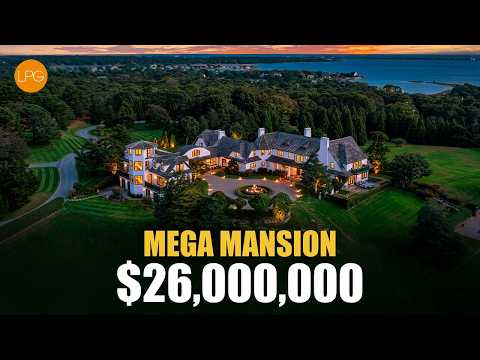
At the very top of the Chicago‑area price ladder in 2026 sits a 15,000‑square‑foot mansion at 595 Circle Lane in Lake Forest, on the grounds of the historic Harold F. and Edith Rockefeller McCormick estate. After an initial 27.5 million US‑dollar listing in 2024, the asking price was cut to 25 million in early 2026, yet it remains the single most expensive active home listing in the Chicago metro area and would easily be the highest sale ever recorded in Lake Forest if it traded at that level.
The property’s six bedrooms, nine bathrooms, monumental staircase, marble fountain, pool, spa, boathouse, and sweeping Lake Michigan views embody the classic North Shore model of luxury: large private grounds, historic pedigree, and resort‑like amenities wrapped into a single family compound. High‑net‑worth buyers for such estates are typically corporate executives, investors, or multi‑generational families seeking long‑term capital preservation and lifestyle security, and they often work through established luxury brokerages and private banking networks to structure complex deals.
Gold Coast Mansions: Urban Grandeur and Historic Prestige
Inside the city limits, the Gold Coast continues to anchor Chicago’s most expensive urban homes, with more than one mansion trading or listed above 18 million US dollars in recent years. A standout example is the Astor Court estate at 1355 North Astor Street, a 25,000‑square‑foot mansion on an unusually wide and deep lot that was relisted in 2026 for 21 million US dollars, making it the most expensive active listing within Chicago’s city proper.
This property, owned by prominent personal‑injury attorney Paul Episcope and now represented by top‑performing agent Emily Sachs Wong, couples six bedrooms and six bathrooms with rare outdoor space and a long history as a private residence on one of the city’s most prestigious streets. Nearby, another Gold Coast mansion at 915 North Dearborn Street—an 1888 home and carriage house totaling roughly 13,000 square feet with spa, bar, zen room, custom waterfall, and glass‑blown ceilings—is listed at about 18.5 million US dollars, reflecting how historic architecture plus contemporary luxury amenities can command prices far above typical city inventory.
These mansions feed a specialized ecosystem: boutique luxury brokerages, architectural firms experienced in historic preservation, interior designers focused on ultra‑high‑end clients, and property‑management teams capable of handling staff, security, and complex maintenance demands. Their presence, combined with strong price growth of 7–12 percent in premium neighborhoods such as Gold Coast, Streeterville, River North, and Lincoln Park, has helped Chicago’s luxury segment outperform the broader city market entering 2026.
Gold Coast Penthouses: Vertical Luxury and Scarcity
If mansions provide horizontal sprawl, Gold Coast penthouses offer vertical exclusivity, often serving as Chicago’s most visible expressions of urban wealth. In July 2026, a penthouse on Lake Shore Drive in the Gold Coast achieved an auction sale of 13.9 million US dollars, setting a new benchmark for high‑floor luxury and underscoring intensifying competition for view‑driven properties along the lakefront.
Recent market snapshots and curated lists of Chicago’s priciest homes show multiple downtown penthouses historically trading or listed above 10 million US dollars, including units along Michigan Avenue and Walton Place with floor‑to‑ceiling views, private terraces, and concierge‑level services. Luxury‑focused agents and market commentators note that, inside the city, only a handful of addresses have crossed the 10‑million‑dollar threshold in recent years, and nearly all of them are Gold Coast or Magnificent Mile penthouses where scarcity, privacy, and direct lake frontage drive the highest valuations.
These homes tend to attract a mix of local business leaders, global investors, and relocating professionals who prefer walkable access to cultural institutions, fine dining, and premium retail over the estate‑style seclusion of the North Shore. They also help maintain strong demand for high‑end building services—24‑hour security, concierge teams, amenity management, and building‑wide upgrades—that support jobs and vendor relationships in the downtown core.
Economic and Labor‑Market Contributions
From an economic standpoint, the region’s most expensive homes—whether Lake Forest estates or Gold Coast mansions and penthouses—contribute outsized value relative to their small number. Each mega‑listing supports high‑margin work across specialized real estate brokerage, legal and tax advisory, valuation and appraisal, luxury financing, and wealth‑management consulting, anchoring professional service clusters that rely on large transactions to sustain their business models.
Design, construction, and maintenance activities tied to these properties also generate steady employment for architects, engineers, interior designers, landscape professionals, and skilled trades, particularly in historic districts where restoration and modernization must be carefully balanced. Lakefront estates require ongoing investment in shoreline protection, structural upkeep, and sophisticated mechanical systems, while penthouses depend on building‑wide modernization of elevators, climate control, and security infrastructure, all of which support contractors and suppliers at premium rates.
In addition, the high assessed values of these homes feed local property‑tax bases, helping fund municipal services and school districts in Lake Forest, Chicago, and surrounding communities, even if the distribution of those public benefits remains uneven. Luxury spending by owners—on art, dining, hospitality, and philanthropic initiatives—can further ripple through the regional economy, although the magnitude varies significantly from household to household.
Critical Perspective: Inequality, Urban Balance, and Long‑Term Progress
The positive narrative around these homes focuses on job creation, tax revenue, and global visibility: Chicago and its suburbs demonstrate they can compete with coastal markets by offering world‑class estates and penthouses at prices that are still, in many cases, below the most extreme valuations in cities like New York or Los Angeles. For high‑net‑worth buyers, the region’s mix of urban culture, Great Lakes waterfront, and relatively stable pricing makes these properties compelling long‑term investments.
Yet there is a sharp negative counterpoint, rooted in housing affordability and spatial inequality. While median Chicago home prices have risen modestly—about 5.1 percent year‑over‑year to roughly 410,000 US dollars—luxury segments in Gold Coast and similar neighborhoods have posted much stronger appreciation, widening the gap between elite and everyday housing experiences. Against that backdrop, estates priced at 25 million US dollars and city homes above 20 million US dollars can appear as symbols of exclusion in a region where many households face rent burden, limited access to quality housing, and uneven neighborhood investment.
From a policy and planning standpoint, the key question is whether these ultra‑expensive homes will function as anchors for a more inclusive form of regional progress or as isolated islands of wealth. If local governments and private owners channel some of the economic and reputational gains from this luxury segment into broader initiatives—such as affordable housing funds, infrastructure improvements beyond high‑income districts, and support for education and workforce development—the net contribution of these properties could be meaningfully positive.
If, however, the market continues to reward extreme concentration of capital in a few lakefront enclaves without corresponding investment elsewhere, the long‑term impact may be a more polarized metropolitan landscape, with Lake Forest estates and Gold Coast penthouses standing as striking but divisive markers of who benefits most from Chicago’s economic strength. In that sense, the world’s most expensive Chicago homes are not only real‑estate trophies; they are tests of how a city and its suburbs choose to balance aspiration, equity, and sustainable progress over the coming decade.