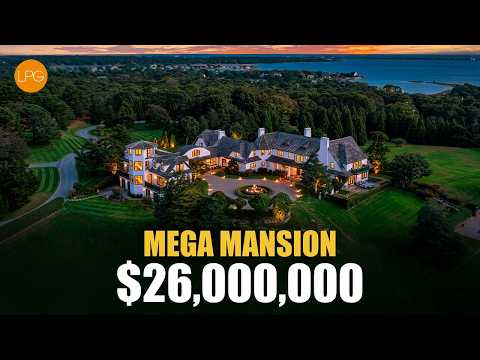
Most Expensive Luxury Homes New York: Hidden Gems in Manhattan, Brooklyn & The Hamptons
New York’s most expensive luxury homes in 2026 extend far beyond the familiar supertalls of Billionaires’ Row, encompassing hidden-gem townhouses in Greenwich Village, waterfront mansions in Brooklyn and Staten Island, and off-market oceanfront estates in the Hamptons that rarely appear on public listing services. Despite Mayor Zohran Mamdani’s new pied-à-terre tax on second homes over $5 million, which took effect July 1, 2026, the ultra-luxury market has not slowed—instead, it has accelerated in key segments, with Manhattan’s $20 million-plus properties recording a 25% annual increase in contract signings and Hamptons sales above $20 million surging 59% in 2025.
Market Context: Scarcity, Off-Market Deals, and a Two-Tier Reality
Manhattan’s luxury residential market entered 2026 with momentum that has only accelerated through the spring, even as the broader residential market shows mixed signals. Cash deals dominate, inventory at the top end has shrunk by nearly 40%, and days on market have fallen sharply, creating upward pressure on prices even as median citywide co-op and condo prices have risen a modest 4–8%. This dynamic has produced a two-tier market: while median co-op and condo prices across the city hover around $1.25–1.275 million, one- to three-bedroom family townhomes have jumped 28.4% in value, with a median price of $6.1 million, and new luxury developments have seen prices climb 28.4% year over year, now averaging $3.44 million.
In the Hamptons, the story is similar but more extreme. Median home prices in Q4 2025 rose over 33% annually to a record $2.3 million, fueled by Wall Street bonuses forecast to exceed $60 billion and a severe shortage of inventory, with only around 1,000 homes on the market in the fourth quarter—well below the long-term historical average. The top 10 priciest deals in the Hamptons in 2025 accounted for $579 million in transaction volume, up from $327 million in 2024, and the market saw the most expensive single-lot residential sale in Hamptons history when Access Industries’ Len Blavatnik paid a record $115 million for eight-and-a-half acres at 408 Further Lane. Yet beneath the headline numbers, brokers report “quiet cracks” in the luxury segment, with fewer transactions, longer negotiation periods, and a growing reliance on off-market access as turnkey estates become increasingly rare.
Manhattan Hidden Gems: Village Townhouses and Fifth Avenue Classics
Greenwich Village and Fifth Avenue Prewar Residences
While much attention focuses on Midtown supertalls, some of Manhattan’s most valuable and architecturally distinctive homes lie in Greenwich Village and along Fifth Avenue’s prewar corridor. A 2026 tour of hidden luxury homes highlights a $13 million apartment at 16 Fifth Avenue in Greenwich Village, where classic pre-war architecture, high ceilings, original moldings, and park-adjacent streets create a sense of old-world grandeur rarely found in new developments. These residences appeal to buyers who prioritize neighborhood character, walkability, and proximity to cultural institutions over sheer square footage or skyline views.
Townhouses in the West Village and Greenwich Village, such as the six-story Greek Revival at the center of pop star Pink’s $21.5 million purchase, originally listed at $25 million before a 14% price adjustment, illustrate how historic properties with provenance and privacy can command elite prices even outside the traditional “trophy” corridors. These transactions underscore a broader pattern: even ultra-premium inventory is moving, but often on buyers’ terms, with patience and price discipline required from sellers.
Upper West Side and Riverside Gems
Along the Upper West Side and Riverside Drive, prewar co-ops and converted mansions offer Central Park and Hudson River views, multiple fireplaces, library and staff rooms, and garden access, often trading in the $10–50 million range depending on size, floor, and building pedigree. Buildings like 15 Central Park West, 740 Park Avenue, and 834 Fifth Avenue maintain rigorous board approval processes, ensuring privacy and exclusivity for residents that include financiers, diplomats, and cultural luminaries.
Brooklyn and Beyond: Waterfront Mansions and Modern Estates
Brooklyn Heights, Williamsburg, and North 6th Street
Brooklyn’s luxury market in 2026 includes waterfront mansions and modern townhouses in neighborhoods like Brooklyn Heights, Williamsburg, and Greenpoint, where properties such as 1 Monroe Place and 172 North 6th Street offer river views, private outdoor space, and contemporary finishes at price points ranging from $3 million to over $10 million. These homes appeal to buyers seeking more space, newer construction, and a different neighborhood vibe than Manhattan, while still maintaining proximity to the city’s core.
Staten Island and Outer-Borough Surprises
Even Staten Island hosts luxury estates that function as hidden gems within the broader New York market. A 2026 tour highlights 186 Flagg Place, a substantial single-family home with modern amenities, private driveway, and landscaped grounds, illustrating that high-end luxury is not confined to Manhattan and the Hamptons. While prices here are lower than in the city’s elite neighborhoods, these properties offer space, privacy, and quality of life that many ultra-wealthy buyers increasingly value.
The Hamptons: Off-Market Oceanfront Estates and Record Land Deals
Further Lane and Ocean Road Trophy Parcels
The Hamptons’ most coveted addresses run along Ocean Road in Southampton and Further Lane in East Hampton, where sprawling oceanfront estates feature private beach access, infinity pools, tennis courts, and guesthouses. In 2025, Access Industries’ Len Blavatnik paid a record $115 million for eight-and-a-half acres at 408 Further Lane, the most expensive single-lot residential sale in Hamptons history, signaling that land scarcity and prestige continue to drive ultra-high prices. In 2026, a trophy estate that initially sought $120 million ultimately sold for $72 million, illustrating that even at the top, buyers have negotiating leverage when faced with limited liquidity and high carrying costs.
Hidden Listings and Off-Market Dominance
By early 2026, listing inventory in the Hamptons declined again, marking a second drop in three quarters, with transactions falling well below historical norms—not due to waning interest, but because there are simply fewer homes to buy. High-end inventory has contracted significantly, and turnkey, move-in-ready estates—the most sought-after category for today’s luxury buyer—have become increasingly rare. The result is a market that appears contradictory: slower in volume, but stronger than ever in pricing, with the share of transactions above $5 million reaching record levels and median luxury prices hovering around $13 million. Many of the most expensive homes never hit public listing services, trading instead through private networks of brokers at William Raveis, Compass, Sotheby’s International Realty, and boutique firms.
Positive Contributions: Jobs, Innovation, and Regional Vitality
High-Skilled Employment and Professional Services
Ultra-luxury developments support tens of thousands of jobs across architecture, engineering, construction, interior design, property management, and hospitality. Projects like Central Park Tower, 220 Central Park South, and historic townhouse renovations in the Village and Brooklyn required hundreds of skilled workers over multiple years, from ironworkers and electricians to artisan craftsmen installing custom millwork and stone. Ongoing operations employ concierge teams, wellness staff, private chefs, and building engineers, creating stable, high-wage employment.
Tax Revenue and Fiscal Impact
Despite concerns about the pied-à-terre tax’s impact, the luxury market continues to generate substantial property tax revenue and transfer taxes that fund public services, from schools to infrastructure. Jonathan Miller of StreetMatrix estimates the new tax will collect around $500 million annually—modest relative to the city’s budget gap, but still meaningful for targeted programs. High-end transactions also generate significant attorney, broker, and mortgage fees, circulating capital through the local economy.
Architectural and Engineering Innovation
Supertall towers on Billionaires’ Row and custom estates in the Hamptons push the boundaries of engineering, materials science, and sustainability, driving innovation that eventually benefits broader construction practices. Features like high-performance glass, advanced HVAC systems, and seismic damping technologies developed for these projects set new standards for safety, efficiency, and comfort. Firms such as Robert A.M. Stern Architects, SHoP Architects, and Adrian Smith + Gordon Gill have built global reputations on these projects, enhancing New York’s status as a design capital.
Hospitality and Lifestyle Ecosystem
Ultra-luxury buildings and estates increasingly integrate hotel-level amenities—private restaurants, spas, fitness centers—employing chefs, therapists, trainers, and concierge staff. This blurs the line between residential and hospitality, creating a new category of luxury service jobs and supporting adjacent industries, from gourmet food suppliers to high-end furniture and art dealers.
Preservation and Adaptive Reuse
Conversions of historic townhouses in Greenwich Village, Brooklyn, and the Upper West Side preserve architectural heritage while adapting buildings for modern use. These projects often require extensive restoration of facades, lobbies, and structural elements, ensuring that landmarks remain viable and vibrant rather than falling into disrepair.
Hamptons Economic Multiplier and Wall Street Spillover
Luxury estates in the Hamptons support local economies through property taxes, construction spending, and ongoing maintenance and service employment. High-net-worth residents contribute to local businesses, from fine dining and boutique retail to marinas and private aviation services, creating a robust economic ecosystem that extends beyond real estate. Wall Street’s record bonuses—forecast to exceed $60 billion for 2025—have fueled a spending spree in the Hamptons, with financiers representing more than half of buyers and contributing to a remarkable total sales volume of $6.2 billion in 2025, a 25.6% increase compared to 2024.
Critical Challenges and Negative Externalities
Affordability and Social Stratification
The concentration of ultra-wealthy buyers in a limited number of trophy buildings and neighborhoods exacerbates perceptions of inequality, with median citywide prices rising only 4–8% while luxury tiers soar 28–54%. This bifurcation fuels narratives of a “two-city” reality, where access to prime neighborhoods, parks, and cultural institutions becomes increasingly stratified by wealth.
Housing Supply and Opportunity Cost
Critics argue that land and capital devoted to a small number of $100 million penthouses and $100 million Hamptons estates could instead fund thousands of units of middle-income or affordable housing, addressing the city’s and region’s chronic shortage. While luxury construction creates jobs, the net social benefit is debated when so few units are produced at such extreme price points.
“Crappy Luxury” and Construction Quality
A Gothamist investigation in early 2026 revealed that numerous new luxury buildings suffer from chronic maintenance issues, including water outages, heating failures, flooding, and pest infestations. Ten of the residential buildings that opened since 2016 exhibit significantly elevated rates of housing code violations compared to the city average, with complaints ranging from subpar finishes to complete power failures. Experts attribute these problems to rising construction costs, labor shortages, and schedule pressures that compromise quality control. The 432 Park Avenue tower, a prominent supertall on Billionaires’ Row, has experienced price reductions and condo board lawsuits in recent years, with complaints about cracked concrete, malfunctioning elevators, excessive noise, leaks, and power outages since its opening in 2015.
Environmental and Skyline Impacts
The towering height of new supertalls has drawn community backlash over shadows cast on Central Park and surrounding neighborhoods, with activists arguing that these “alienating” structures privatize views and sunlight while contributing disproportionately to energy consumption. The construction of 262 Fifth Avenue, an 860-foot luxury tower, has been criticized for obstructing views of the Empire State Building and altering the iconic New York skyline, with residents and observers describing it as a generic block that highlights the widening chasm between the ultra-rich and the rest of society. Large homes and luxury lifestyles also carry significant carbon footprints, from construction materials to ongoing heating, cooling, and amenity operations.
Policy Efficacy and Symbolism
The pied-à-terre tax, while symbolically significant, appears too modest at the highest tiers (capping at 1.3% for properties over $25 million) to meaningfully alter buyer behavior or generate transformative revenue. Some analysts warn it may entrench the primary-residence loophole, encouraging buyers to structure ownership in ways that minimize tax exposure rather than broadening the base.
Hamptons Gentrification and Displacement of Essential Workers
The influx of ultra-wealthy buyers into the Hamptons has driven up property values and rental costs, displacing long-term residents and small businesses. Brokers like Judi Desiderio have expressed concern that more affordable homes have “gone out to sea,” noting that essential workers like teachers and nurses are being priced out of the market, with sales of homes priced at $1 million or less totaling 341 last year, down over 9% from the previous year.
Legal Risks and Structural Failures
In July 2026, MetroLoft, the developer behind a Manhattan high rise that suddenly buckled, faced a $350 million-plus lawsuit alleging “life-threatening” shortcuts at a celebrity enclave, underscoring the risks when cost-cutting and schedule pressures override safety and quality. Such incidents erode trust in the luxury development pipeline and raise questions about oversight, engineering standards, and accountability.
Sector-by-Sector Impact: Jobs, Innovation, and Progress
Architecture, Engineering, and Design
Luxury projects attract world-renowned firms—Robert A.M. Stern, SHoP Architects, Christian de Portzamparc, Rafael Viñoly—creating a cluster of high-skill design talent in New York. These firms export expertise globally, enhancing the city’s reputation as a design capital and training the next generation of architects and engineers.
Construction and Skilled Trades
High-end developments demand specialized trades—stone masons, custom metalworkers, glaziers—who command premium wages and train apprentices, sustaining a skilled labor pipeline. This benefits the broader construction sector, as techniques and standards diffuse to mid-market projects.
Hospitality, Retail, and Lifestyle Services
Ultra-luxury buildings and estates increasingly integrate hotel-level amenities—private restaurants, spas, fitness centers—employing chefs, therapists, trainers, and concierge staff. This supports adjacent industries, from gourmet food suppliers to high-end furniture, art, and fashion retailers.
Finance, Legal, and Professional Services
Luxury transactions generate substantial fees for brokers (Compass, Sotheby’s International Realty, Douglas Elliman, Keller Williams NYC, William Raveis, Martinez Team), attorneys, tax advisors, and wealth managers. The concentration of trophy assets in New York reinforces the city’s role as a global financial and professional services hub.
Technology and Smart-Home Innovation
Many ultra-luxury apartments and estates feature AI-integrated smart-home systems, biometric security, advanced air purification, and energy-management technologies. These innovations serve as testbeds for technologies that later scale to mainstream developments, advancing building automation and sustainability.
Hamptons Local Economy and Services
Luxury estates support local economies through property taxes, construction spending, and ongoing maintenance and service employment. High-net-worth residents contribute to local businesses, from fine dining and boutique retail to marinas and private aviation services, creating a robust economic ecosystem that extends beyond real estate.
Representative Market Figures (2025–2026)
Manhattan luxury sales over $4 million: $12 billion in 2025, with 1,436 contracts and 284 deals above $10 million.
Manhattan $20 million-plus signings: up 25% year over year in Q2 2026.
Manhattan $10–20 million closings: up 38.6% in Q2 2026.
Manhattan median co-op/condo price: $1.25–1.275 million, up 4.2–8.5% year over year depending on metric.
Manhattan townhomes (1–3 bedrooms): median $6.1 million, up 28.4%.
Manhattan new luxury developments: median $3.44 million, up 28.4%.
Hamptons median home price Q4 2025: record $2.3 million, up over 33% annually.
Hamptons total sales volume 2025: $6.2 billion, up 25.6% from 2024.
Hamptons sales above $20 million in 2025: 27 transactions, up 59% from 17 in 2024.
Hamptons top 10 deals 2025: $579 million in transaction volume, up from $327 million in 2024.
Hamptons median luxury price (top tier): around $13 million.
Hamptons most expensive single-lot sale: $115 million for 408 Further Lane (Len Blavatnik).
Wall Street bonuses 2025: forecast to exceed $60 billion.
Pied-à-terre tax expected revenue: ~$500 million annually.
Hidden-gem luxury tours 2026: properties ranging from $3 million to $13 million in Greenwich Village, Brooklyn, and Staten Island.
Outlook: Scenarios for 2026 and Beyond
Bull Case
Continued equity market strength, robust IPO activity, and sustained global demand keep luxury prices ascending, with new supertalls and landmark conversions commanding record per-square-foot prices. Co-buying arrangements (56% of prospective buyers in 2025 considering pairing up) expand the pool of qualified purchasers, supporting demand even as interest rates hover above 6%. In the Hamptons, Wall Street bonuses and land scarcity continue to push oceanfront estates into the $50–150 million range.
Base Case
The market stabilizes at elevated levels, with modest price growth and steady transaction volume. The pied-à-terre tax has limited impact, and inventory remains tight, supporting prices but preventing another 2021-style frenzy. In the Hamptons, off-market deals dominate, and median prices continue to climb even as transaction volume remains below historical norms.
Bear Case
A sharp financial market correction or geopolitical shock reduces liquidity among ultra-wealthy buyers, leading to unsold inventory in new towers and downward pressure on prices. In this scenario, developers may offer concessions, and co-buying could become more prevalent as a risk-mitigation strategy. Simultaneously, heightened scrutiny over construction quality and “crappy luxury” could force developers to invest more in long-term building performance, raising costs but improving outcomes. In the Hamptons, a downturn in Wall Street bonuses or a shift in remote-work preferences could soften demand for second homes, exposing the fragility of a market built on scarcity and seasonal wealth. Legal risks, as seen in the MetroLoft buckling case, could further dampen confidence if structural failures become more frequent.
Final Perspective
New York’s most expensive luxury homes in 2026—from hidden-gem townhouses in Greenwich Village and waterfront mansions in Brooklyn to off-market oceanfront estates in the Hamptons—represent the apex of urban and coastal living, combining architectural mastery, unparalleled amenities, and global prestige. The sector’s economic contributions are substantial, supporting high-skilled jobs, generating tax revenue, and driving innovation in design, construction, and technology. Yet, the concentration of wealth, persistent affordability challenges, and emerging critiques over construction quality, environmental impact, skyline obstruction, displacement of essential workers, and legal risks raise legitimate questions about equity, housing policy, and the social contract in one of the world’s most expensive cities and regions. For buyers, sellers, and policymakers alike, 2026 is a year of nuanced trade-offs: celebrating extraordinary homes while grappling with the broader responsibilities they entail.