Top Luxury Houses California Has to Offer: Architectural Masterpieces & Waterfront Mansions
California’s top luxury houses in 2026 represent the global pinnacle of residential architecture and waterfront living, where finite coastal land meets infinite demand from billionaires, tech titans, and international elites to create trophy assets that command unprecedented valuations. From La Jolla’s iconic “Sand Castle” estate with its private beach and 162-foot seawall to Paul McClean-designed masterpieces in Pacific Palisades and newly constructed Georgian estates on 137 acres in Los Angeles, these properties are not mere residences but cultural artifacts that drive economic activity, set design trends, and spark intense debate over wealth concentration, housing policy, and social equity.
Architectural Masterpieces: Design Pedigree and Land Scarcity
At the forefront of California’s 2026 luxury landscape stands La Jolla’s “Sand Castle,” a Versailles-inspired waterfront estate listed for $87.5 million that exemplifies the convergence of architectural ambition and coastal rarity. This 10-bedroom mansion features a 162-foot seawall constructed in 1955 and grandfathered under current regulations, gilded interiors, Th-tiled spaces, a saltwater pool with spa cabanas, and even sea caves for lobster catching—one equipped with an elevator directly to the kitchen. According to listing agent Brett Dickinson of Compass, 17 billionaires have already expressed interest in the property, underscoring how unique provenance and irreplaceable land positioning command premiums far beyond traditional price-per-square-foot metrics.
In Pacific Palisades, a Paul McClean-designed masterpiece asks $39.95 million, showcasing the architect’s signature blend of contemporary minimalism and natural integration. Perched on a nearly two-thirds-acre promontory, the home offers breathtaking views from Will Rogers Park to the Pacific Ocean and Downtown Los Angeles, featuring a three-story waterfall courtyard, walls of glass, and unparalleled entertaining spaces that exemplify the highest standards of modern luxury construction. McClean’s work, executed by Tyler Construction, demonstrates how architectural pedigree can elevate a property into the realm of inhabitart—where design transcends function to become a lived experience.
Further north, in Santa Cruz County’s La Selva Beach, an unforgettable beachfront estate spanning nearly 13 acres asks $10.75 million, offering panoramic vistas of Monterey Bay, direct beach access, and expansive agricultural acreage suitable for equestrian pursuits and farming. Among the county’s most substantial residences, this property illustrates how land scale and lifestyle diversity can command values comparable to coastal trophy assets, appealing to buyers seeking both privacy and productive land use.
Waterfront Mansions: Ocean Access and the Ultimate California Lifestyle
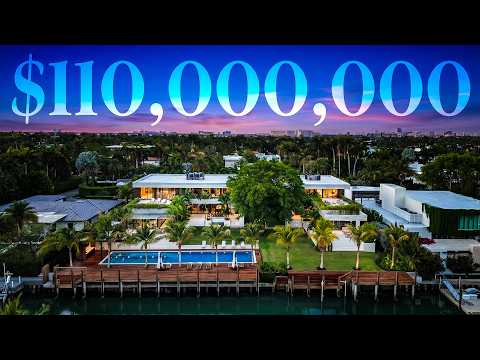
California’s waterfront mansions in 2026 command some of the highest premiums in the global luxury market, driven by finite ocean frontage and regulatory constraints that make new coastal development virtually impossible. In La Jolla, a newly listed $108 million sand castle-inspired mansion competes with a $135 million newly constructed home featuring a jazz bar, demonstrating how ocean proximity and lifestyle amenities converge to create nine-figure valuations.
Beyond La Jolla, Riviera’s only Howard Backen-designed residence—constructed in 2016 on a single lot—showcases board-formed concrete, soaring wooden ceilings, steel-frame windows, and disappearing glass walls, operating nearly off-grid with geothermal and solar energy. According to Branden Williams of Beverly Hills Estates, who co-lists the property with Rayni Williams and Sandro Dazzan of The Agency, “It’s entirely private with sunset views extending to the Santa Monica Mountains, overlooking the Riviera. To me, this is a work of art that you can inhabit.”
In Southern California’s Laguna Niguel, a Mediterranean estate behind the guarded gates of Bear Brand Ranch emerges as one of the most compelling offerings at $17.988 million, blending architectural sophistication with resort-style amenities across a 1.41-acre parcel. Originally constructed to capture the essence of coastal luxury living, this property exemplifies how guarded communities and ocean views continue to attract high-net-worth buyers seeking privacy alongside lifestyle exclusivity.
Market Dynamics: AI Wealth, Tax Friction, and the “California Wealth Flight”
California’s luxury market in 2026 operates under a complex set of new rules driven by policy and tax friction. Measure ULA, the “mansion tax” in Los Angeles, has fundamentally altered negotiation dynamics at the $5 million and $10 million thresholds, forcing sellers in Beverly Hills and Malibu to rethink asset allocation and equity retention strategies. This policy, combined with proposed state-level wealth taxes, has accelerated a “California Wealth Flight,” where high-net-worth buyers and sellers increasingly look to jurisdictions like Texas, Nevada, and Florida for better long-term value preservation.
The economic implications are significant. When high earners leave, California potentially loses state income taxes, capital gains taxes, business taxes, sales taxes, property tax growth, luxury spending, investment capital, and even philanthropic contributions. Yet critics argue that the state’s approach is misguided: California has $8.14 trillion in land value sitting right under its feet—roughly eight times the billionaire wealth the state can still realistically tax through proposed wealth taxes. Los Angeles County’s land alone is worth more than the entire billionaire base the wealth tax is chasing, and the Bay Area’s is close behind.
Despite these headwinds, the market remains resilient in specific pockets. The average luxury home sale price climbed from $2.48 million in 2024 to $2.65 million in 2025—a nearly 7% increase that outpaces the broader market. This resilience is largely fueled by equity-driven wealth from the tech and AI sectors, which continues to support demand for trophy assets even as inventory sits longer and price reductions become more common in the $5 million to $20 million range.
Positive Contributions: Economic Multipliers, Job Creation, and Design Innovation
The construction and sale of these luxury estates drive substantial economic activity. High-end projects employ architects, engineers, landscape designers, interior decorators, smart-home integrators, and skilled tradespeople—from electricians to marble artisans—creating ripple effects throughout local economies. In Beverly Hills, where 63% of sales exceed $2 million, luxury transactions generate significant ancillary revenue: title insurance, escrow services, private banking, wealth management, art logistics, and concierge relocation firms all benefit from high-value deals.
Architecturally, California’s luxury estates serve as testing grounds for innovation. Features like whole-home air filtration, solar-plus-storage systems, water-recycling landscapes, and biophilic interiors set new industry standards that eventually trickle down to mid-market developments. The presence of ultra-luxury listings also elevates property values in surrounding neighborhoods, increasing municipal tax bases that fund public services—from schools to parks to emergency response.
Moreover, luxury real estate transactions generate celebrity-driven media attention that boosts tourism, hospitality, and local branding. When a $135 million newly constructed home or an $87.5 million waterfront estate hits the market, it draws global eyeballs to these communities, reinforcing their status as cultural capitals and attracting visitors who spend on dining, shopping, and entertainment.
Negative Externalities: Affordability Crises, Speculative Bubbles, and Community Fracture
Despite their economic benefits, these mansions embody deep structural inequities. While the statewide median home price is forecast to reach $905,000 in 2026 (+3.6%), affordability remains dire—with only 18% of households able to afford a median-priced home. In coastal enclaves where estates trade for tens of millions, service workers face displacement pressures and commutes exceeding two hours daily.
Socially, the concentration of ultra-wealth fosters geographic segregation. The rise of “giga-mansions” in Beverly Hills and Bel Air has sparked neighborhood feuds, with residents complaining about blocked views, lost privacy, and the erosion of community character. Additionally, climate vulnerability remains a critical issue; rising insurance costs and wildfire risk have made even billionaire-owned compounds financially precarious, with some homeowners facing annual premiums exceeding $100,000.
Critics also note that policies like Measure ULA may inadvertently worsen supply constraints by discouraging multifamily development and incentivizing off-market, all-cash deals—reducing transparency and limiting opportunities for middle-income buyers. Strategic pricing just below the $5.3 million threshold distorts market signals and fragments inventory, creating inefficiencies that harm both buyers and sellers.
Sector-by-Sector Value Assessment: Who Benefits, Who Bears the Cost?
Construction & Trades: High-end builds generate premium wages and specialized employment but often rely on subcontracted labor with limited benefits or job security.
Municipal Finance: Property taxes from luxury estates bolster city budgets, yet climate-related depreciation and tax friction introduce long-term fiscal uncertainty.
Tech & Finance Sectors: Equity-driven wealth fuels luxury demand, tying housing markets to stock performance and introducing volatility unrelated to local fundamentals.
Tourism & Hospitality: Celebrity listings and architectural marvels boost local branding and visitor spending—but also normalize extreme wealth concentration.
Environment & Planning: Luxury developments adopt green technologies but intensify coastal infrastructure strain, habitat loss, and wildfire exposure.
Housing Policy: Measures like ULA generate revenue for affordable initiatives but may suppress multifamily supply, creating net-neutral or even negative effects on overall housing availability.
The Path Forward: Balancing Innovation, Inclusion, and Resilience
California’s top luxury houses in 2026 are undeniably awe-inspiring—architectural feats that merge art, technology, and nature into lived experiences few will ever know. Yet their existence cannot be divorced from the societal tensions they amplify: between aspiration and exclusion, innovation and inequality, private splendor and public need.
The path forward requires nuanced policy—not punitive taxation that stifles supply, nor unfettered speculation that ignores community impact. Reforms like incentivizing affordable housing construction, streamlining permitting for middle-income developments, and investing in climate-resilient infrastructure represent pragmatic steps toward balancing private wealth with public good.
Ultimately, California’s architectural masterpieces and waterfront mansions can coexist with broader social progress—if stakeholders prioritize inclusive growth, transparent governance, and architectural responsibility alongside aesthetic ambition. The question is not whether these homes should exist, but how their value can be harnessed to uplift—not just enrich—the communities that surround them.