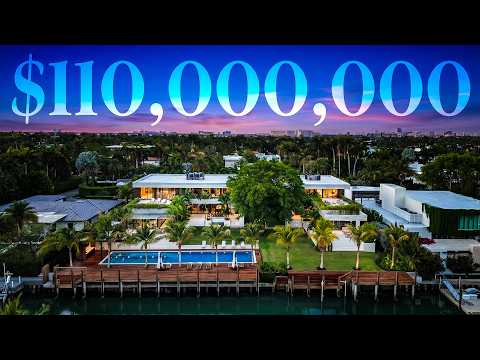
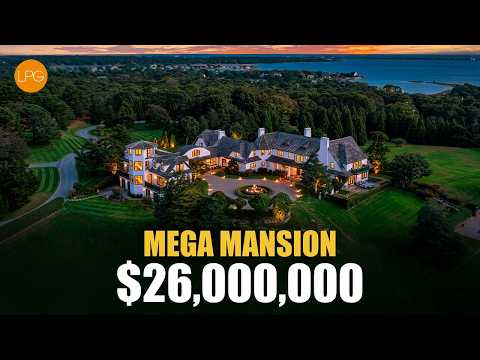
Most Expensive Beautiful Homes in California: Hidden Gems in Malibu, Napa & Beverly Hills
California’s most expensive beautiful homes in 2026 extend far beyond the headline-grabbing mega-mansions, revealing a landscape of hidden gems where architectural rarity, land scarcity, and lifestyle exclusivity converge to create values that defy conventional real estate logic. From Malibu’s guarded beachfront compounds and Napa’s sprawling vineyard estates to Beverly Hills’ post-office district masterpieces, these properties represent the ultimate expression of California luxury—blending privacy, prestige, and provenance into assets that command global attention while reshaping local economies and sparking intense debate over wealth, housing policy, and social equity.
Beverly Hills: The Post-Office Prize and Beverly Park’s Italian Village
In Beverly Hills, the crown jewel of 2026’s hidden gems is a $160 million authentic Italian village estate at 67 Beverly Park Court, encompassing the largest land assemblage in the exclusive Beverly Park community. This property, described as one of the finest estates ever offered in Beverly Hills, features palatial architecture inspired by Tuscany’s greatest villas, complete with hand-carved limestone facades, formal gardens, and resort-style amenities that rival five-star hotels.
Just blocks away, the Beverly Hills Post Office area boasts a $135 million Ed Tuttle-designed contemporary compound with 27 bathrooms, a bowling alley, and a full wellness center—a property that represents the apex of modern architectural minimalism married to old-world privacy. Another standout is the $119 million listing at 1011 North Beverly Drive, courtesy of The Agency, which showcases how Beverly Hills continues to set the global benchmark for ultra-luxury living through a combination of location, design pedigree, and unmatched amenities.
These estates are not merely homes but cultural artifacts that attract international buyers, from tech billionaires to Middle Eastern royalty, seeking the prestige of a 90210 address alongside the privacy and security that only gated enclaves can provide.
Malibu: Oceanfront Rarity and the $210 Million Record Breaker
Malibu’s luxury market in 2026 is defined by oceanfront scarcity and celebrity provenance, with properties commanding premiums that reflect their irreplaceable coastal positioning. At the pinnacle sits the record-breaking $210 million sale of a Malibu mansion by Oakley founder James Jannard—the most expensive house ever sold in California history—setting a new benchmark for what coastal land can command when paired with architectural distinction and absolute privacy.
Beyond the headline sale, Malibu’s hidden gems include a $125 million beachfront residence at 27560 Pacific Coast Highway, featuring 256 feet of direct beach frontage on 2.9 acres with a guardhouse, guesthouse, pool, and panoramic ocean vistas. Another standout is the $115 million compound at 27930 Pacific Coast Highway, courtesy of Sotheby’s International, which exemplifies Malibu’s unique appeal: a blend of laid-back surf culture and ultra-high-net-worth seclusion.
For buyers seeking architectural pedigree, the $96 million Point Dume “Triangle House”—originally designed by Edward R. Niles and once owned by Johnny Carson—remains one of Malibu’s most iconic listings, offering 327 feet of ocean frontage, an indoor arboretum, and a championship tennis complex that cannot be replicated under today’s coastal regulations.
Napa Valley: Vineyard Estates and Agricultural Luxury
While Beverly Hills and Malibu dominate headlines, Napa Valley’s luxury market offers a different kind of hidden gem: sprawling vineyard estates where land, lifestyle, and legacy intersect. Properties in Napa’s premium districts—such as St. Helena, Calistoga, and Yountville—routinely trade between $20 million and $80 million, featuring producing vineyards, custom wineries, and estate homes designed by renowned architects.
The appeal of Napa luxury real estate lies in its dual identity: part working agricultural enterprise, part private retreat. Estates like the “iconic” 124-acre Hummingbird Ranch—recently listed for $78 million with olive groves, vineyards, and 57 bedrooms—demonstrate how land scale and agricultural potential can command values comparable to coastal trophy assets. These properties attract buyers seeking not just a home but a legacy asset—one that produces wine, hosts events, and offers a self-sustaining lifestyle insulated from urban volatility.
Market Dynamics: AI Wealth, Tax Friction, and the “Hidden” Premium
California’s luxury market in 2026 is increasingly shaped by a narrow slice of AI-driven and aerospace wealth, with the SpaceX IPO and tech sector gains fueling demand for trophy assets even as broader affordability crises deepen. The average luxury home sale price climbed from $2.48 million in 2024 to $2.65 million in 2025—a nearly 7% increase that outpaces the statewide average.
Yet policy headwinds persist. Measure ULA, Los Angeles’ “mansion tax,” has altered negotiation dynamics at the $5 million and $10 million thresholds, while proposed state-level wealth taxes have accelerated a “California Wealth Flight” among high-net-worth sellers. In this environment, “hidden gem” properties—those with unique provenance, land scale, or architectural distinction—command premiums precisely because they are irreplaceable, insulating them from broader market corrections.
Positive Contributions: Economic Multipliers, Job Creation, and Design Leadership
The construction and sale of these luxury estates drive substantial economic activity. High-end projects employ architects, engineers, landscape designers, interior decorators, smart-home integrators, and skilled tradespeople—from electricians to marble artisans—creating ripple effects throughout local economies. In Beverly Hills, where 63% of sales exceed $2 million, luxury transactions generate significant ancillary revenue: title insurance, escrow services, private banking, wealth management, art logistics, and concierge relocation firms all benefit from high-value deals.
Architecturally, California’s luxury estates push boundaries in sustainable design, seismic resilience, and wellness integration. Features like whole-home air filtration, solar-plus-storage systems, water-recycling landscapes, and biophilic interiors set new industry standards that eventually trickle down to mid-market developments. The presence of ultra-luxury listings also elevates property values in surrounding neighborhoods, increasing municipal tax bases that fund public services—from schools to parks to emergency response.
Moreover, luxury real estate transactions generate celebrity-driven media attention that boosts tourism, hospitality, and local branding. When a $160 million Beverly Hills estate or a $210 million Malibu compound hits the market, it draws global eyeballs to these communities, reinforcing their status as cultural capitals and attracting visitors who spend on dining, shopping, and entertainment.
Negative Externalities: Affordability Crises, Speculative Bubbles, and Community Fracture
Despite their economic contributions, these mansions embody deep structural inequities. While the statewide median home price is forecast to reach $905,000 in 2026 (+3.6%), affordability remains dire—with only 18% of households able to afford a median-priced home. In Beverly Hills, where the median hits $3.7 million, and Malibu, where oceanfront estates trade for tens of millions, service workers face displacement pressures and commutes exceeding two hours daily.
Socially, the concentration of ultra-wealth fosters geographic segregation. The rise of “giga-mansions” in Beverly Hills and Bel Air has sparked neighborhood feuds, with residents complaining about blocked views, lost privacy, and the erosion of community character. In Napa, the conversion of agricultural land into luxury estates raises questions about long-term sustainability and the preservation of the region’s working-winery identity.
Additionally, climate vulnerability remains a critical issue. Rising insurance costs and wildfire risk have made even billionaire-owned compounds financially precarious, with some homeowners facing annual premiums exceeding $100,000. In Malibu, where coastal erosion and wildfire risk converge, the long-term viability of some oceanfront estates is increasingly uncertain—raising questions about whether these properties represent sound investments or speculative bubbles.
Sector-by-Sector Value Assessment: Who Benefits, Who Bears the Cost?
Construction & Trades: High-end builds generate premium wages and specialized employment but often rely on subcontracted labor with limited benefits or job security.
Municipal Finance: Property taxes from luxury estates bolster city budgets, yet climate-related depreciation and tax friction introduce long-term fiscal uncertainty.
Tech & Finance Sectors: Equity-driven wealth fuels luxury demand, tying housing markets to stock performance and introducing volatility unrelated to local fundamentals.
Tourism & Hospitality: Celebrity listings and architectural marvels boost local branding and visitor spending—but also normalize extreme wealth concentration.
Environment & Planning: Luxury developments increasingly adopt green technologies, yet coastal and hillside construction intensifies wildfire exposure, habitat loss, and infrastructure strain.
Agriculture & Legacy: Napa vineyard estates preserve agricultural land but also transform working farms into luxury amenities, raising questions aboutauthenticity and long-term land use.
The Path Forward: Balancing Innovation, Inclusion, and Resilience
California’s most expensive beautiful homes in 2026 are undeniably awe-inspiring—architectural feats that merge art, technology, and nature into lived experiences few will ever know. Yet their existence cannot be divorced from the societal tensions they amplify: between aspiration and exclusion, innovation and inequality, private splendor and public need.
The path forward requires nuanced policy—not punitive taxation that stifles supply, nor unfettered speculation that ignores community impact. Reforms like incentivizing affordable housing construction, streamlining permitting for middle-income developments, and investing in climate-resilient infrastructure represent pragmatic steps toward balancing private wealth with public good.
Ultimately, California’s hidden gems in Malibu, Napa, and Beverly Hills can coexist with broader social progress—if stakeholders prioritize inclusive growth, transparent governance, and architectural responsibility alongside aesthetic ambition. The question is not whether these homes should exist, but how their value can be harnessed to uplift—not just enrich—the communities that surround them.
Sources: Realtor.com, NY Post, Wald Real Estate, Solomon Property Group, Luxury Houses Network, JamesEdition, LA Times, Forum Nadlan USA, YouTube market analyses.