Best Luxury Homes in California 2026: Most Beautiful Mansions & Estates
California’s luxury home market in 2026 remains one of the most dynamic and influential real estate ecosystems in the world, blending architectural innovation, celebrity provenance, and coastal scarcity into trophy assets that command global attention. From Johnny Carson’s $110 million “Triangle House” in Malibu to palace-inspired estates in Beverly Hills and tech-fueled compounds in Silicon Valley, these homes are not just residences—they are cultural landmarks, economic engines, and flashpoints in debates over wealth, housing policy, and social responsibility.
Iconic Listings Defining 2026’s Ultra-Luxury Tier
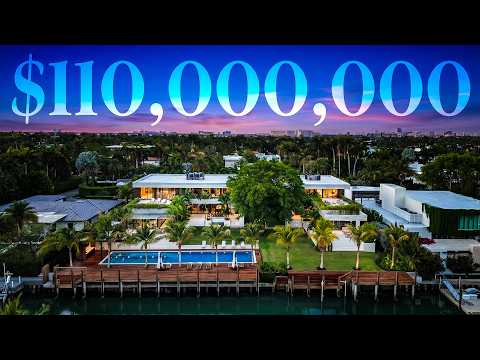
At the top of California’s 2026 luxury ladder sits Johnny Carson’s former Point Dume estate in Malibu, listed at $110 million—a geometric modernist masterpiece spanning 4.1 acres with 327 feet of ocean frontage, an indoor arboretum under a 30-foot glass ceiling, and a championship tennis complex with guest pavilion. Designed by architect Edward R. Niles, the “Triangle House” is less about price per square foot and more about irreplaceable land scale, bluff positioning, and celebrity history converging into a once-in-a-generation asset.
Other headline listings include palace-inspired compounds in Beverly Hills and Holmby Hills featuring private cinemas, 10-car garages, rooftop terraces, and smart-home ecosystems that rival small nations’ tech infrastructures. In Santa Monica’s North of Montana district, single-family homes trade between $5 million and $20 million, with rare estates exceeding $25 million and new construction commanding up to $3,500 per square foot. Oceanfront properties in Malibu carry premiums of 40% to 75% over inland comparables, while unobstructed views and direct beach access push values even higher—despite wildfire risk and regulatory hurdles.
Market Dynamics: Resilience, Recalibration, and Regional Divergence
California’s luxury housing market in 2026 reflects a fundamental shift from pandemic-era frenzy to strategic, privacy-driven transactions shaped by environmental recalibration and elevated buyer standards. Post-wildfire dynamics created divergent outcomes: Pacific Palisades saw median prices jump 32% to $2.90 million despite 56% fewer sales, while adjacent neighborhoods like Brentwood experienced 23% sales increases from displacement demand.
In Los Angeles County, the median home price reached approximately $1.0 million in Q1 2026, with condos averaging $740,000 and affordability hovering at 16%. Luxury properties above $2 million experienced the most robust price growth at 9.8%, driven by high-net-worth buyers less sensitive to interest rate fluctuations. Meanwhile, San Francisco’s luxury tier still sits $695,000 below its February 2020 baseline as of early 2026—the most extreme reversal of any major U.S. market tracked—reflecting tech-sector volatility and remote-work migration patterns.
All-cash transactions dominate the ultra-luxury tier: 56.7% of buyers paid cash for homes exceeding $10 million, insulating the upper end from broader financing volatility. Turnkey properties with integrated technology, wellness amenities, and defensible space now set baseline requirements rather than premium features—with professionally staged listings selling three to 30 times faster than unstaged competition.
The Mansion Tax Debate: Measure ULA’s Tangible Impact on Housing and Society
No discussion of California’s luxury homes in 2026 is complete without addressing Measure ULA—the so-called “mansion tax” approved by Los Angeles voters in 2022 that levies a 4% transfer tax on property sales above $5.3 million and 5.5% on sales over $10.6 million. Through December 2025, the measure raised over $1.03 billion, funding eight programs focused on affordable housing construction, tenant protections, eviction defense, and homeownership assistance.
As of mid-2026, the Los Angeles City Council approved a $544.3 million spending plan for Measure ULA funds—the largest allocation to date—including $381 million for affordable housing initiatives and $163.3 million for homelessness prevention. To date, the city has used ULA funding to build 1,409 affordable housing units, preserve 183 affordable units, provide 39 homeownership loans, offer eviction defense for 14,258 households, and deliver rental assistance to 4,488 households.
Yet critics argue the tax has backfired: data from the Rand Corporation shows Measure ULA cut high-value real estate deals by 31% and reduced production of large multifamily developments by 30%. Multifamily and commercial transactions fell more than 46% since the tax’s 2023 inception, with developers citing ULA as a primary reason for halting new projects in Los Angeles. Revenue generated—$1.19 billion through mid-2026—is less than half the $2.7 billion proponents initially projected, raising questions about efficiency and unintended consequences.
Positive Contributions: Economic Multipliers, Job Creation, and Architectural Innovation
Luxury home development in California drives substantial economic activity across multiple sectors. High-end construction projects employ architects, engineers, landscape designers, interior decorators, smart-home integrators, and skilled tradespeople—from electricians to marble artisans—creating ripple effects throughout local economies. In regions like Silicon Beach, stock-based compensation from companies like Google and Snap drives an estimated 40% of luxury transactions in premium districts like Santa Monica’s North of Montana, linking tech wealth directly to real estate vitality.
Architecturally, California’s luxury estates push boundaries in sustainable design, seismic resilience, and wellness integration. Features like whole-home air filtration, solar-plus-storage systems, water-recycling landscapes, and biophilic interiors set new industry standards that eventually trickle down to mid-market developments. The presence of ultra-luxury listings also elevates property values in surrounding neighborhoods, increasing municipal tax bases that fund public services—from schools to parks to emergency response.
Moreover, luxury real estate transactions generate significant ancillary revenue: title insurance, escrow services, private banking, wealth management, art logistics, and concierge relocation firms all benefit from high-value deals. In 2026, with median days on market down to 28 statewide and luxury inventory up 31% in prime LA neighborhoods, this segment remains a critical stabilizer amid broader market moderation.
Negative Externalities: Affordability Crises, Speculative Bubbles, and Social Fragmentation
Despite their economic contributions, California’s luxury mansions also embody deep structural inequities. While the median home price statewide is forecast to reach $905,000 in 2026 (+3.6%), affordability remains dire—with only 18% of households able to afford a median-priced home. In Los Angeles County, where the median hits $1.0 million, affordability drops to 16%, exacerbating displacement pressures and long commutes for service workers who sustain theseVery communities.
Measure ULA’s well-intentioned redistribution has arguably worsened supply constraints: by discouraging multifamily development and incentivizing off-market, all-cash deals, it reduces transparency and limits opportunities for middle-income buyers. Strategic pricing just below the $5.3 million threshold—seen in listings like Shaun White’s former home at $4.99 million—distorts market signals and fragments inventory.
Socially, the concentration of ultra-wealth in enclaves like Bel Air, Malibu, and Holmby Hills fosters geographic segregation, where gated compounds exist alongside unhoused encampments—a visual and moral contradiction that fuels political polarization. Critics note that while ULA funds flow to advocacy groups and tenant services, actual housing construction lags, with bureaucratic overhead consuming resources that could directly build units.
Sector-by-Sector Value Assessment: Who Benefits, Who Bears the Cost?
Construction & Trades: High-end builds generate premium wages and specialized employment but often rely on subcontracted labor with limited benefits or job security.
Municipal Finance: Property taxes from luxury estates bolster city budgets, yet Measure ULA’s transfer tax reduces transaction volume, potentially offsetting long-term revenue gains.
Affordable Housing Advocates: ULA has funded over 1,400 affordable units and protected thousands from eviction—but at the cost of suppressing new multifamily supply, creating a net-neutral or even negative effect on overall housing availability.
Tech & Finance Sectors: Equity-driven wealth fuels luxury demand, tying housing markets to stock performance and introducing volatility unrelated to local fundamentals.
Environment & Planning: Luxury developments increasingly adopt green technologies, yet coastal construction intensifies wildfire exposure, habitat loss, and infrastructure strain—raising questions about long-term sustainability.
Conclusion: Beauty, Burden, and the Path Forward
Modern luxury house
California’s most beautiful mansions in 2026 are undeniably awe-inspiring—architectural feats that merge art, technology, and nature into lived experiences few will ever know. Yet their existence cannot be divorced from the societal tensions they amplify: between aspiration and exclusion, innovation and inequality, private splendor and public need.
The path forward requires nuanced policy—not punitive taxation that stifles supply, nor unfettered speculation that ignores community impact. Reforms like exempting new multifamily sales from Measure ULA within 10 years of construction represent pragmatic steps toward balancing revenue generation with housing production. Ultimately, California’s luxury homes can coexist with broader social progress—if stakeholders prioritize inclusive growth, transparent governance, and architectural responsibility alongside aesthetic ambition.
Sources: Realtor.com, LA Times, Rand Corporation, California Association of Realtors, Elite Residence International, Commercial Observer, Washington Post, NY Post, Robb Report.