A Handful of Firms, A Global Infrastructure
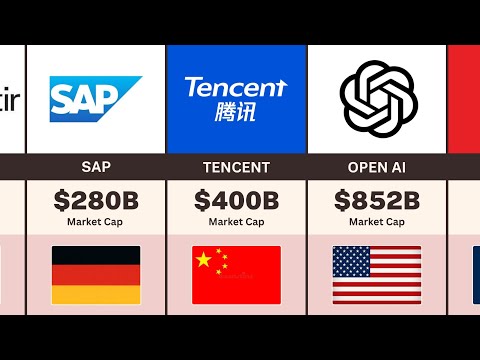
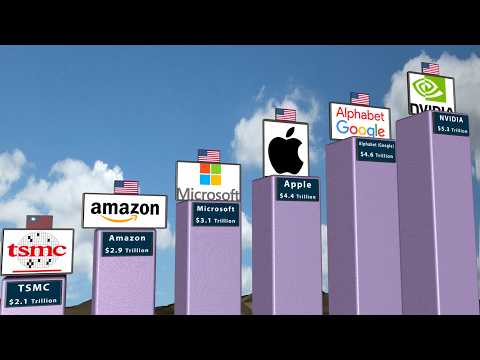
In 2026, a small group of companies—NVIDIA, Alphabet (Google), Apple, Microsoft, Amazon, Meta, TSMC, Broadcom and Tesla—effectively operate as the core infrastructure of the digital and AI economy. Rankings of the world’s biggest tech firms show them clustered in the multi‑trillion‑dollar range, with NVIDIA now the largest by market capitalization and Alphabet, Apple and Microsoft not far behind.
These firms are “building the future” by investing heavily in AI chips, cloud platforms, smart devices and data‑driven ecosystems, but their power raises difficult questions about competition, labor, privacy, democracy and environmental impact.
Who the Giants Are in 2026
Early‑2026 analyses of global market value place NVIDIA at roughly 4.5 trillion dollars, ahead of Alphabet at about 3.9 trillion, Apple at 3.84 trillion and Microsoft at 3.55 trillion, with Amazon, TSMC, Meta, Broadcom and Tesla following. At the same time, policy and research papers continue to use “Big Tech” to refer to the core group of Microsoft, Apple, Alphabet, Amazon and Meta because of their control over consumer platforms and data.
A widely cited “Best Companies for the Future 2026” ranking is dominated by these names, with NVIDIA first, followed by Alphabet, Microsoft, Meta and Cisco, underscoring how central they are to expectations about the next decade.
Building the Future Through AI Infrastructure
AI chips and compute
NVIDIA, TSMC and Broadcom sit at the heart of the new industrial layer: AI compute. Commentaries describe NVIDIA as holding the top position in AI accelerators, with estimates of very high market share for the GPUs used to train and deploy generative models, while TSMC fabricates many of the most advanced chips.
This hardware powers:
Large language models (LLMs) and multimodal systems used by Google, Microsoft, OpenAI, Anthropic and others.
AI‑driven robotics, autonomous vehicles and smart‑city infrastructure.
Positive: This layer enables breakthroughs in drug discovery, climate modeling, logistics optimization and industrial automation, compressing years of computation into days and making advanced AI accessible as a service.
Critical: A handful of companies controlling high‑end compute introduces systemic vulnerabilities—supply‑chain fragility, geopolitical pressure around chip exports and the risk that access to advanced AI is effectively mediated by a few commercial players.
Cloud and Platforms: Turning Compute into Services
Alphabet, Microsoft and Amazon are transforming raw compute into cloud and AI services that other organizations plug into. Analyses of “Big Tech in 2026” emphasize that these firms now shape economies and governments through AI‑enabled cloud infrastructure, not just consumer apps.
They are building the future by:
Offering managed AI platforms that handle data ingestion, model training, deployment and monitoring, effectively providing AI “utilities” that companies can rent instead of building themselves.
Embedding generative AI into productivity suites, developer tools and enterprise applications—Microsoft’s copilots, Google’s Gemini‑powered services and Amazon’s AWS AI stack—changing how work is organized and decisions are made.
Positive scenarios: Small and mid‑sized businesses, hospitals, public agencies and NGOs can access sophisticated AI capabilities without heavy upfront investment, boosting productivity and innovation in many sectors.
Negative scenarios: Heavy dependence on these clouds creates vendor lock‑in and shifts control over critical public and economic functions to private entities, which can change prices, terms or access at their discretion.
Devices and Smart Ecosystems: Apple and Beyond
Apple, Samsung and other device makers are building highly integrated ecosystems where phones, PCs, wearables, vehicles and home devices are increasingly “AI‑native.” Apple remains one of the most valuable and influential companies, sitting in the inner circle of global tech leaders in AI and innovation.
They shape the future by:
Designing custom chips (such as Apple’s A‑ and M‑series) and software optimized for on‑device AI, enabling private, low‑latency processing of language, images and sensor data.
Creating ecosystems where identity, health data, payments, entertainment and productivity tools are tightly integrated across devices, often with subscription models.
Positive contributions include improved accessibility, more secure devices and richer user experiences for communication, education and health monitoring.
Critical concerns revolve around ecosystem lock‑in, app‑store control, e‑waste and the concentration of behavioral data, which can be exploited for commercial targeting and, potentially, social manipulation.
Data, Social Platforms and AI: Meta and Google
Alphabet (through Google and YouTube) and Meta (through Facebook, Instagram and WhatsApp) define the future of social and informational spaces. Human‑rights analyses point out that they “wield extraordinary influence over the infrastructure, services, and norms that shape our online lives.”
They are building the future by:
Using AI for recommendation, ranking and content moderation, which determines what billions of users see, share and believe.
Deploying generative AI tools to help creators, advertisers and everyday users produce text, images and videos more quickly.
Positive impacts include low‑cost communication, global reach for small businesses and creators, and new creative tools that can democratize content production.
Negative impacts documented by journalists and researchers include privacy erosion, algorithmic discrimination, mental‑health issues, the spread of misinformation and the undermining of democratic processes when engagement‑driven algorithms amplify extreme or misleading content.
Work and Labor: Automation, Copilots and Layoffs
The same companies that build AI platforms are also using AI to change their own workforces. Reporting from 2026 notes tens of thousands of tech layoffs as companies streamline operations and, in many cases, quietly adopt their own AI tools as partial substitutes for human labor.
At the same time, policy and consulting reports highlight that AI can:
Raise productivity in knowledge work by 12–40%, especially when used as a complement rather than a replacement.
Increase demand for skills such as judgment, creativity, leadership and complex problem‑solving even as routine tasks are automated.
Positive: When deployed responsibly, AI can free workers from repetitive tasks, enable more flexible work arrangements and open new roles in AI operations, safety and governance.
Negative: Without serious investment in reskilling, social protection and worker voice, AI adoption can deepen inequality, create “surplus” workers in certain roles and fuel anxiety and social backlash against technology.
Governments, Regulation and the Push for Accountability
Research and opinion pieces argue that by 2026 Big Tech’s influence remains “largely unchecked,” even after years of complaints about privacy, competition and content harms. Yet pressure is mounting:
Economic research on “Big Tech’s AI empire” warns that excessive control of the AI supply chain by a few firms threatens competition, innovation, operational resilience and even financial stability.
Human‑rights organizations call for structural interventions—stronger antitrust enforcement, data rights, and possibly breaking up tightly integrated business units—to reduce dependency on a few platforms.
Responsible‑AI frameworks stress transparency, fairness, and auditability of AI systems, pushing companies toward more rigorous governance and external oversight.
The future Big Tech is building will be shaped not only by their own visions, but also by how governments and societies respond with regulation, standards and public‑interest investment.
Real Contribution to Societal Progress: Net Gains or Net Risks?
Taken together, the largest tech companies in 2026 contribute to progress in several concrete ways:
They fund massive R&D and infrastructure projects that make AI, cloud computing and advanced connectivity widely available.
They support startup ecosystems and digital entrepreneurship through app stores, cloud credits, marketplaces and developer platforms.
They enable measurable productivity gains and new capabilities in sectors such as healthcare, manufacturing, logistics, education and public administration.
Yet critical work warns that without strong guardrails, their growing power can:
Exacerbate economic inequality and regional gaps by concentrating data, talent and infrastructure in a few firms and hubs.
Undermine democratic accountability when the same platforms that host public discourse also control visibility, monetization and the underlying algorithms.
Create systemic vulnerabilities in finance, cybersecurity and infrastructure because so many critical services depend on a small number of providers.
Professional Perspective: Co‑Designing the Future with, Not Under, Big Tech
In 2026, the world’s largest tech companies are undeniably building key parts of our shared future: AI infrastructure, communication platforms, smart devices, cloud services and data ecosystems that other organizations rely upon. Their innovations are real and often beneficial, but so are the structural risks they introduce.
A professional, balanced view is to treat these firms as powerful partners that must be governed—not as neutral utilities or inevitable overlords. That means:
Encouraging their investment in AI, infrastructure and open innovation that genuinely benefits broad segments of society.
Imposing clear, enforceable rules on competition, data use, transparency and AI safety, so that their visions for the future align with democratic values, human rights and long‑term social resilience.
Only under those conditions will the future that Big Tech is building in 2026 be not just technologically advanced, but also fair, sustainable and broadly shared.