By mid‑2026, a small group of U.S.‑ and Asia‑based tech firms effectively form the operating layer of the global digital economy. Their chips power AI models, their clouds host business data, their platforms mediate communication and commerce, and their devices sit in billions of pockets and offices.
This guide explains who these giants are, how big they really are, what they build, and how their dominance creates both immense benefits and serious risks for societies and labor markets.
Who the “Largest Tech Companies” Are in 2026
Multiple 2026 rankings converge on a similar top tier of tech by market capitalization, revenue and ecosystem influence.
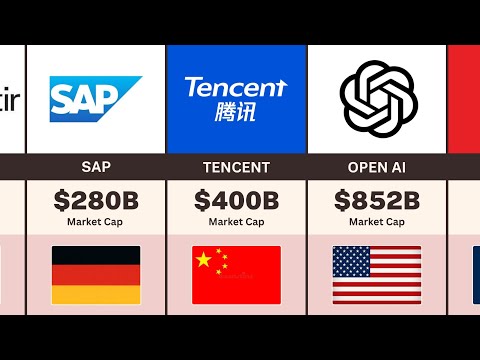
Analyses from early 2026 estimate approximate market caps as:
NVIDIA – around 4.5–4.6 trillion dollars, the most valuable tech company, driven by AI chips and data‑center products.
Microsoft – roughly 4.1–4.2 trillion dollars, anchored in cloud and enterprise software.
Apple – about 3.8–4.0 trillion dollars, dominating premium devices and services.
Alphabet (Google) – around 3.7–4.0 trillion dollars, leading in search, ads and AI platforms.
Amazon – roughly 3.0–3.1 trillion dollars, combining AWS cloud with e‑commerce and logistics.
Meta Platforms – around 2.2 trillion dollars, focused on social platforms and AI‑driven advertising.
TSMC – roughly 1.9 trillion dollars, the world’s key advanced chip manufacturer.
Tesla – about 1.7 trillion dollars, mixing EVs, energy tech and autonomous systems.
Broadcom – around 1.5 trillion dollars, critical in networking and AI silicon.
Samsung / SMIC cluster – around 1.5 trillion combined in some rankings, as leading semiconductor and device makers in Asia.
These numbers vary slightly across sources, but all agree this group defines the global tech landscape in 2026.
NVIDIA: AI’s New Kingmaker
NVIDIA has moved from gaming graphics into the center of AI and data‑center computing, selling GPUs and accelerators that most frontier models run on. Rankings place it at or near the top of all global tech companies, with estimates around 4.5–4.6 trillion dollars in market value.
Positive contribution: NVIDIA’s hardware enables breakthroughs in generative AI, drug discovery, climate simulations and robotics, making it possible to train models that were computationally out of reach a decade ago. Negative side: this concentration of compute power introduces systemic risk—supply constraints, high prices, and geopolitical leverage around advanced chips that can deepen divides between countries and firms with and without access.
Microsoft: The Enterprise AI and Cloud Fabric
Microsoft remains a pillar of the digital economy, with about 4.1–4.2 trillion dollars in value built on Azure cloud, Office 365, Windows, GitHub and AI copilots integrated across its stack. It has become a default enterprise AI provider, thanks in part to its close partnership with OpenAI and its integration of generative AI into mainstream productivity tools.
On the positive side, Microsoft gives governments, corporations and SMEs a relatively coherent way to adopt AI at scale, potentially boosting productivity and enabling new services in sectors from healthcare to public administration. On the critical side, its dominance in software plus cloud plus AI raises concerns about vendor lock‑in, surveillance capabilities in the workplace, and a further tilt of power toward a single enterprise platform.
Apple: Hardware Ecosystem and Services Powerhouse
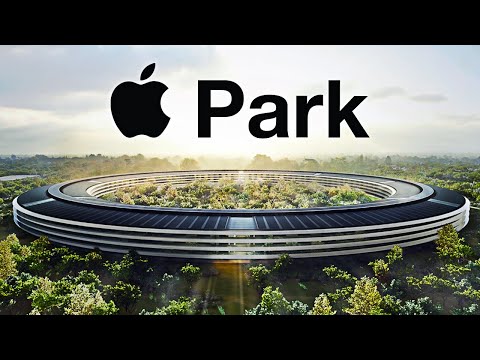
Apple remains one of the world’s most valuable companies, typically estimated between 3.8 and 4.0 trillion dollars in 2026 rankings. It controls a vast consumer hardware ecosystem (iPhone, Mac, iPad, Watch), proprietary silicon (A‑series and M‑series chips) and an expanding services portfolio that includes cloud storage, media, payments and health data.
Apple’s positive contribution lies in raising the bar for usability, security and privacy, including heavy use of on‑device processing and encryption that limits data leakage. However, critics highlight its tight platform control, App Store fees and restrictions, and the environmental impact of frequent device refresh cycles, pointing to antitrust and sustainability challenges.
Alphabet (Google): The Attention and Knowledge Gatekeeper
Alphabet, valued around 3.7–4.0 trillion dollars, dominates search, online advertising, Android, YouTube and now large‑scale AI models integrated through its Gemini line. Google Cloud has become a major player in AI hosting and tooling, making Alphabet central both to consumer information access and enterprise AI adoption.
Positively, Alphabet has democratized access to information and tools, from Maps to Gmail to open‑source AI research, empowering individuals and small firms worldwide. Negatively, its ad‑driven model depends on intensive data collection and engagement optimization, raising concerns about privacy, filter bubbles, misinformation and outsized influence on elections and public discourse.
Amazon: Cloud, Commerce and Data at Planetary Scale
Amazon, with a market value in the low‑to‑mid 3‑trillion‑dollar range, is uniquely hybrid: one of the largest retailers and logistics operators in history, and a dominant cloud provider through AWS. AI is woven through its operations, from recommendation systems and warehouse robotics to AWS AI services used by startups and multinationals.
On the plus side, Amazon’s innovations in logistics and cloud computing have reduced friction and costs for consumers and businesses, enabling a long tail of digital entrepreneurship. Yet its scale and labor practices attract intense criticism: warehouse conditions, anti‑union tactics, and the environmental impact of just‑in‑time delivery networks and massive data centers are frequent points of concern.
Meta: AI‑Driven Social Platforms and Mixed Reality
Meta Platforms, around 2.2 trillion dollars in market cap, runs some of the most widely used social apps (Facebook, Instagram, WhatsApp) and invests heavily in AI for ranking, moderation and generative features, as well as AR/VR hardware and software.
Meta’s positive impact includes enabling low‑cost communication, marketing and community building at global scale, especially for small businesses and NGOs. However, its algorithms have been repeatedly implicated in amplifying misinformation, polarizing content and addictive engagement, and its metaverse push raises questions about mental health, data extraction and the future of social interaction.
TSMC, Broadcom, Samsung and the Semiconductor Backbone
Beyond U.S. platform giants, advanced semiconductor companies such as TSMC, Broadcom and Samsung are essential to global tech dominance:
TSMC, valued around 1.9 trillion dollars, manufactures cutting‑edge chips for NVIDIA, Apple and others, making it a crucial strategic asset in global supply chains and geopolitical tensions.
Broadcom, at about 1.5 trillion, designs chips for networking, storage and AI infrastructure, underpinning data‑center performance.
Samsung (and in some lists SMIC) combines semiconductor capability with consumer devices and components, playing a key role in phones, displays and memory.
These firms make the physical substrate of digital power; their positive impact is enabling performance improvements and energy efficiency across the stack, while their concentration in a few regions creates geopolitical risk and vulnerability to shocks.
Innovation, R&D and the Promise of Progress
Across these giants, innovation metrics and “tech innovation scores” in 2026 place NVIDIA, Apple, Microsoft, Tesla, Meta and Amazon among the top performers globally. They invest tens of billions annually in R&D, focusing on:
AI chips, large models and automation.
Cloud and edge infrastructure, 5G/6G and networking.
New device categories (AR/VR, wearables, autonomous vehicles, robotics).
These investments enable: more accurate medical diagnostics, more efficient energy use, smarter logistics, real‑time translation, and new tools for learning and creativity, with clear benefits for sectors like healthcare, education, manufacturing, finance and humanitarian response.
Market Dominance and Systemic Risks
At the same time, 2026 commentary stresses that “market dominance” now means more than size; it is about controlling critical chokepoints in the digital economy.
Key risks include:
Concentration of power: A few firms set de facto standards for AI behavior, data access, app distribution and payment rails, which can crowd out competition and innovation from smaller players.
Regulatory mismatch: These companies scale faster than regulations; they operate across borders and sectors in ways that traditional competition, labor and media rules struggle to address.
Democratic influence: Platforms like Google, Meta and Amazon increasingly mediate political speech, campaign ads and news distribution, especially around elections, raising questions about transparency, accountability and national sovereignty.
Opinion pieces in 2026 argue that Big Tech “sits between” businesses and customers, speakers and audiences, labor and wages, controlling access and visibility rather than just prices—making traditional market checks less effective.
Impact on Work and Inequality
AI‑driven innovation from these giants is reshaping labor markets “like a tsunami,” according to one early‑2026 analysis, with employee anxiety about AI‑related layoffs rising sharply.
Research and consulting reports highlight that:
Over 90% of global businesses are expected to use AI in at least one core function by 2026, up from about 30% in 2022.
Experts are much more optimistic than the general public about AI’s positive impact on jobs; surveys show a large perception gap between AI insiders and the broader workforce.
Without careful design, AI can exacerbate algorithmic bias, erode transparency in hiring and lending, and displace routine cognitive work, increasing grievances and legal claims.
At the same time, AI also creates new roles in engineering, data governance, change management and human‑AI collaboration, and can augment existing jobs when deployed with thoughtful training and safeguards.
Ethics, Governance and the Demand for Responsible Tech
By 2026, ethics commentary has shifted from “whether” to use AI to “how” to use it responsibly. Analysts and ethicists identify recurring challenges:
Data privacy and security in a world of pervasive tracking and cloud services.
Algorithmic bias and discrimination in AI systems that decide who gets hired, insured, approved or heard.
Transparency and explainability, especially in high‑stakes contexts like healthcare and criminal justice.
Accessibility and inclusion, ensuring that benefits reach marginalized communities and the Global South, not only wealthy users and markets.
Ethics‑focused frameworks recommend concrete steps for large tech firms: independent oversight, impact assessments, bias audits, clear user communication, and meaningful avenues for redress. Some of the largest companies are building internal governance structures and publishing AI principles, but critics argue implementation is uneven and often subordinate to growth pressures.
Professional Perspective: Using Dominance for Shared Progress
In 2026, the world’s largest tech companies are both engines of innovation and sources of structural risk. They:
Provide essential infrastructure and tools that enable economic growth, scientific advances and new forms of collaboration.
Concentrate economic, informational and political power in ways that can undermine competition, strain labor markets and challenge democratic institutions if left unchecked.
A professional, balanced view treats these giants as critical partners that must be actively governed—not as neutral utilities or inevitable monopolies. For governments, businesses and civil society, the real task is to harness their innovation capacity while building robust rules around competition, labor, privacy, and AI ethics so that the benefits of this dominance are broadly shared, not narrowly captured.