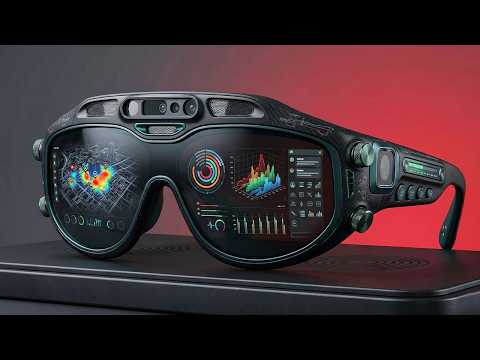
2026 stands out as the year when luxury smart glasses move from niche experiment to credible mainstream product, especially in the premium segment that blends high fashion, AI, and advanced AR displays. A combination of maturing hardware (micro‑displays and waveguides), AI‑first designs, and partnerships between big tech and designer eyewear brands is pushing smart glasses into the same cultural space that smartphones and smartwatches occupied in their breakthrough years.
From Niche to Mainstream: What Changed in 2026
Several structural changes in 2025–2026 set up 2026 as a tipping point:
Explosive growth in AI glasses sales
Market research cited by Google notes that AI glasses sales grew more than 250% in the first half of 2025, driven largely by Meta’s products and similar devices from smaller companies.
Shipments of AI smart glasses are projected to surpass 10 million units in 2025, establishing a real base of users before 2026 luxury models arrive.
Tech giants re‑entering and doubling down
Google announced a return to smart glasses with two AI‑powered models launching in 2026, one audio/assistant‑only and one with an integrated display, marking a fresh push after its earlier Glass failure.
Meta’s success with its smart eyewear line (two million units sold by early 2025) validated the category and pushed rivals to respond.
Analyst consensus on a pivot year
An IDC analysis of CES 2026 concluded that smart glasses are “moving toward mass adoption” thanks to serious innovation, big partnerships, and compelling use cases showcased at the event.
Fashion and retail analysts describe 2026 as a “breakthrough year” where eyewear trends, lower prices, and tech advances align to accelerate smart eyewear adoption.
Together, these data points show that by 2026, smart glasses finally have both supply (mature tech, multiple players) and demand (millions of early adopters and growing interest) in place.
Luxury + Tech: High-End Partnerships Redefine Smart Glasses
One of the main reasons 2026 is special is the deep integration between fashion houses and tech companies:
Designer collaborations
Google is working with designer eyewear brands to make its upcoming AI glasses sleeker and more user‑friendly, embedding advanced features into compact, stylish frames rather than obvious gadgets.
Industry observers highlight that fashion trends in eyewear and tech advances are converging in 2026, with smart eyewear expected to grow as part of broader fashion cycles.
Luxury positioning
Bank of America’s research notes that AI glasses became a key driver of the smart eyewear industry after 2024 and that AR glasses are on track to mature by 2027 and potentially surpass AI glasses in volume by 2030, creating room for premium, long‑term brands to emerge.
Business of Fashion reports that lower consumer prices, improved aesthetics, and recognizable brands are propelling smart eyewear into aspirational but attainable luxury, similar to high‑end sneakers or designer headphones.
Positive dimension:
Luxury partnerships make smart glasses socially acceptable and aesthetically desirable, encouraging professionals and style‑conscious users to wear them daily rather than just in tech demos.
Critical dimension:
At the same time, high‑end branding risks turning early smart glasses into status symbols, widening gaps between those who can afford ambient AI on their face and those who cannot.
Hardware Breakthroughs: Displays, Waveguides, and Comfort
CES 2026 showed that the hardware has finally caught up with the vision:
Next‑gen AR optics
IDC’s CES report highlights “next‑gen waveguides” and micro‑displays that make AR overlays thinner, brighter, and more practical for daily wear, signaling a shift from bulky prototypes to polished consumer devices.
Bank of America emphasizes that AR glasses now use waveguides and micro‑displays to overlay digital content onto the real world, promising richer experiences as devices mature toward 2027.
Lightweight designs and better ergonomics
Industry watchers describe multiple CES 2026 models as thin, lightweight glasses rather than headsets, which is crucial for luxury adoption; comfort and subtlety are now design priorities.
As supply chains for these components mature, manufacturers can combine premium materials (acetate, titanium) with advanced optics, pushing smart glasses closer to traditional luxury eyewear.
Price–performance improvements
Business of Fashion notes that lower consumer prices for smart eyewear in 2026 are key to accelerating adoption, even in the premium segment; luxury models still cost more, but the overall category is coming within reach of upper‑middle income buyers.
Positive dimension:
These improvements mean luxury smart glasses can finally offer crystal‑clear visuals and all‑day comfort, making them viable tools for professionals rather than just futuristic toys.
Critical dimension:
AR devices remain heavier and more expensive than AI‑only audio glasses, and analysts expect them to mature only around 2027; early luxury AR glasses in 2026 will still be imperfect and targeted at early adopters.
AI as the Core Experience: From Gimmick to Everyday Utility
Another key reason 2026 is a breakthrough year is that AI has become the central, practical use case, not an add‑on:
AI glasses drive current demand
Bank of America’s research finds that AI glasses (audio and minimal visual) have driven smart eyewear growth since early 2024, with shipments expected to exceed 10 million units in 2025.
These devices provide audio and visual capabilities, from voice assistants and phone control to basic visual capture, becoming familiar to mainstream users.
Smarter assistants and proactive behavior
IDC notes that at CES 2026, AI assistants on smart glasses moved beyond Q&A to “actively listening and interjecting with relevant information when needed,” making them more like proactive digital concierges.
Use cases demonstrated include navigation, translation, real‑time captioning, workout coaching, and contextual prompts, all delivered through glasses rather than phones.
Payments, fitness, health, and beyond
CES demos included mobile payments through glasses, hinting at a future where wallets and phones are less necessary in everyday transactions.
Brands like Amazfit and Meta showed fitness integrations, letting users see workout stats in real time, effectively turning luxury smart glasses into personal trainers.
Even Realities’ G2 glasses, integrated with a ring, demonstrated health metric tracking, connecting smart eyewear to wellness ecosystems.
Positive dimension:
This AI‑first approach means that luxury smart glasses now deliver concrete daily value—hands‑free navigation, translation, payments, and health feedback—rather than just novelty features.
Critical dimension:
More capable AI assistants also mean greater data collection and continuous listening, raising concerns about privacy, surveillance, and who controls the context‑rich data produced by always‑on eyewear.
Market Momentum: Strong Growth and Clear Roadmaps
Analysts see 2026 as a critical transition point in the broader smart glasses market:
Rapid market growth
A market report puts the smart glass market at around USD 7.5 billion in 2026, growing from USD 6.8 billion in 2025, with long‑term projections to reach around USD 18 billion by 2035.
Another industry report projects the smart glasses segment to grow from about USD 2.46 billion in 2025 to roughly USD 14.38 billion by 2033, implying an annual growth rate of over 24% starting in 2026.
AI vs AR dynamics
Bank of America highlights that AI glasses currently lead the market in volume, but AR glasses are expected to mature by 2027 and may surpass AI glasses by 2030.
This suggests that 2026 is a bridge year: AI‑centric luxury glasses normalize the category, while AR‑heavy luxury devices begin to appear and improve.
Industry consensus on 2026 as a “blockbuster year”
Commentators describe 2026 as a “blockbuster year for smart glasses,” with Google’s entry, multiple AI/AR models dropping, and a new extended reality ecosystem forming around them.
Fashion and tech analysts agree that 2026–2028 will be pivotal for establishing smart glasses as complementary accessories to smartphones, much like smartwatches a decade earlier.
Real Contribution to Work and Professional Sectors
Benefits for professionals
Hands‑free productivity
For knowledge workers, AI glasses support hands‑free calls, notifications, and quick information retrieval, reducing the need to constantly handle phones.
AR‑enabled glasses help field workers, technicians, and logistics staff by overlaying instructions, checklists, and real‑time guidance directly in their line of sight.
Training and efficiency
In industrial and healthcare contexts, smart glasses support remote expert assistance and standardized workflows, which can reduce errors and accelerate training.
For high‑end professionals—consultants, pilots, engineers—luxury smart glasses offer portable, secure displays for data that cannot be easily shown on laptops in public spaces.
Societal progress
Accessibility and inclusion
AI glasses with real‑time captioning and translation can help people with hearing impairments or those navigating foreign languages, lowering communication barriers.
Health‑integrated models show potential for early detection and continuous monitoring, contributing to preventative healthcare.
Cultural integration
As smart glasses adopt familiar luxury aesthetics, they start to blend into everyday life, making advanced computing less intimidating and more human‑centric.
Risks, Ethics, and Negative Scenarios
Despite the excitement, 2026 also amplifies several risks:
Privacy and surveillance
Always‑on AI and hidden cameras can turn luxury smart glasses into stealth recording devices, raising questions about consent in workplaces, schools, and public spaces.
Combined with powerful AI, these devices can conduct real‑time analysis and profiling, potentially being misused for monitoring employees or customers.
Inequality and digital divide
Luxury technological smart glasses will initially be expensive, accessible primarily to affluent individuals and well‑resourced organizations.
If core services—navigation, translation, secure payments—are optimized for smart glasses users, non‑users may experience subtle disadvantages.
Dependence on ecosystems
Many luxury smart glasses are deeply integrated with a single company’s AI and app ecosystem, creating strong lock‑in and dependence on that provider’s policies and business model.
Changes in terms of service, subscription models, or data policies can directly affect how people access essential functions.
Behavioral and social impacts
Persistent AR overlays and AI prompts may blur the line between reality and curation, shifting how people perceive social interactions and physical spaces.
Overreliance on real‑time guidance can degrade users’ own spatial awareness, memory, and language skills over time.
Why 2026 Matters—and What Comes Next
2026 is the breakthrough year for luxury technological smart glasses because critical pieces finally align:
Mature enough hardware (micro‑displays, waveguides, lighter frames).
Proven demand and growth in AI eyewear.
Strong commitments from major tech firms like Google and Meta, plus fashion and eyewear leaders.
A shift from prototype hype to clear, everyday use cases—payments, fitness, health, navigation, translation, and professional productivity.
If companies and regulators manage privacy, interoperability, and affordability responsibly, luxury smart glasses launched in 2026 could pave the way for widespread, socially beneficial AR and AI eyewear by the end of the decade. If not, they risk becoming expensive surveillance accessories and status objects, remembered more for their controversies than their contributions.