In 2026, the “largest and most technological” phones are split between giant ultra‑flagship slabs (around 6.8–6.9 inches) and advanced foldables/tri‑folds that unfold to 7.6–10.2 inches, pairing huge OLED displays with cutting‑edge processors, big batteries, and camera systems that rival dedicated cameras. These devices are expensive halo products, but they set the direction for design, features, and user expectations across the entire smartphone market.
1. What Counts as “Largest and Most Technological” in 2026?
In 2026, phones in this category tend to share four traits:
Large displays:
Slab flagships: around 6.7–6.9 inches with LTPO OLED and 120 Hz or higher refresh.
Foldables: inner screens around 7.6–8 inches (Galaxy Z Fold‑class), or up to 10.2 inches on tri‑folds like Huawei Mate XT.
Top‑tier chipsets: Latest Snapdragon “Elite”‑class, Exynos 2 nm, or Huawei Kirin flagships, with at least 12–16 GB RAM on ultra models.
Advanced cameras: Multi‑sensor arrays with large main sensors, high‑res periscope zoom, and strongly tuned computational photography.
Fast batteries and charging: 5,000–7,200 mAh cells on slabs and rugged phones, often with 80–100 W wired and 50–80 W wireless charging on some Chinese flagships.
These phones are also where brands deploy their best AI features, security, and connectivity, including satellite messaging on some models.
2. Giant Ultra Flagships: Specs, Pros & Cons
2.1 Samsung Galaxy S25 / S26 Ultra
A 2026 guide to the “biggest and most powerful smartphones” places Galaxy S25 Ultra at the top with a 6.9‑inch OLED display, high peak brightness, LTPO adaptive refresh, and minimal bezels.
Key specs (class profile):
Display: ~6.9‑inch LTPO AMOLED, QHD‑class, 120 Hz.
Chipset: Snapdragon or Exynos 2 nm depending on region.
RAM/Storage: Up to 12–16 GB RAM, 1 TB storage.
Battery: ~5,000 mAh with all‑day endurance “even with heavy screen usage”.
Cameras: Multi‑lens system with high‑MP main and telephoto, tuned for consistent performance.
Pros:
Excellent for productivity, gaming, and media thanks to a huge, bright panel and strong battery life.
Long‑term software support and performance headroom make it a safe long‑term investment for power users.
Strong ecosystem (tablets, wearables, PCs) and features like DeX and S Pen support on Ultra models.
Cons:
Size and weight make genuine one‑hand use difficult; users with smaller hands may struggle.
Expensive to buy and repair; the large OLED and multiple cameras raise repair costs significantly.
2.2 Apple iPhone 17 Pro Max
Flagship round‑ups for 2026 consistently list iPhone 17 Pro Max among the top “super‑phones,” emphasizing performance, display quality, and camera consistency.
Typical profile:
Display: ~6.7–6.9‑inch OLED with 120 Hz ProMotion.
Chipset: Apple A‑series (e.g., A19 Pro) with strong CPU/GPU and AI performance.
Battery: Predictable all‑day life, heavily optimized around iOS.
Cameras: Triple‑camera system with strong video and computational photography.
Pros:
Extremely stable performance, tight software/hardware integration, and outstanding app ecosystem—critical for professionals and creators.
Long support window and high resale value.
Cons:
Closed ecosystem, limited customization vs Android, and no foldable form factor yet in the mainstream line as of early 2026.
Price at the very top of the slab phone market.
2.3 Google Pixel 10 Pro / 10 Pro XL & Xiaomi Ultras
The same 2026 “biggest and most powerful” list includes Pixel 10 Pro XL and Xiaomi 15/17 Ultra as large‑screen flagships designed for advanced users.
Pixel 10 Pro / XL:
Strong AI features for photography, transcription, translation, and call handling.
Clean Android with long‑term update promises.
Xiaomi 17 Ultra (example from MWC 2026 coverage):
6.9‑inch AMOLED, Snapdragon 8 Elite Gen 5, 16 GB RAM.
6,000 mAh battery with 90 W wired and 50 W wireless charging and IP69 protection—extreme durability plus high performance.
Pros:
Pixel: excellent AI‑first experience; Xiaomi Ultra: extreme hardware value (big battery, super‑fast charging, top sensors) for the price.
Cons:
Pixel focuses more on software than raw battery/cooling; not always the best for marathon gaming compared to gaming‑centric devices.
Xiaomi’s ultra‑fast charging and software stack may vary by region in terms of support and update cadence.
3. Foldables and Tri-Fold Beasts: Specs, Pros & Cons
3.1 Book-Style Foldables (e.g., Galaxy Z Fold 6/7, others)
Best‑foldable lists for 2026 highlight book‑style foldables (Samsung Galaxy Z Fold‑class, Pixel Fold‑class) as the most important category.
Typical profile (Galaxy Z Fold 6 example):
Inner display: ~7.6‑inch foldable OLED, 120 Hz.
Outer display: ~6.2–6.4 inches, tall and narrow.
Weight: around 239 g; folded thickness ~12.1 mm.
RAM: ~12 GB or more; flagship SoC.
Pros:
Excellent for multitasking, reading, and media—essentially a tablet that folds into a phone.
Mature software on leading models, with app continuity and multi‑window support.
Cons:
More fragile and expensive than slabs; hinge and flexible display are failure points.
Not all apps optimize well for the inner aspect ratio; some UI issues remain.
3.2 Huawei Mate XT Tri-Fold (10.2-Inch)
Huawei’s Mate XT tri‑fold series stands out as the largest smartphone‑class display you can actually carry: a tri‑fold panel that reaches 10.2 inches unfolded.
Key hardware traits (Mate XT series):
Single flexible OLED that folds in three; unfolded size 10.2 inches.
Folded thickness: about 12.8 mm—only slightly thicker than Galaxy Z Fold 6’s 12.1 mm despite having three segments.
Weight: around 298 g, with 5,600 mAh battery and 66 W wired, 50 W wireless charging.
Pros:
Unmatched screen real estate in a pocket device—ideal for document work, multitasking, design previews, and media.
Powerful hardware and fast charging for heavy users.
Cons:
Extremely expensive and region‑limited; early estimates put launch prices near or above 2,800 USD equivalent, restricting access.
HarmonyOS‑based with no native Google services in many markets; app availability and global integration are constrained.
Complexity of a tri‑fold mechanism raises repair costs and long‑term durability questions.
4. Other Extreme High-Tech Phones Showcased at MWC 2026
A “Best phones of MWC 2026” article highlights several spec monsters that show where high‑end hardware is going:
Honor Magic 8 Pro: 6.71‑inch OLED, Snapdragon 8 Elite Gen 5, 7,100 mAh battery, 100 W wired and 80 W wireless charging, and 350 MP worth of cameras (including a 200 MP periscope module).
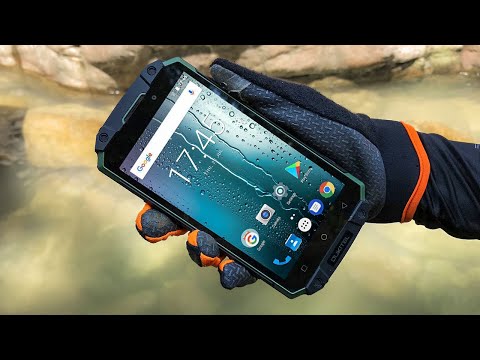
Gaming‑oriented and rugged phones: Up to 6.85–6.9‑inch AMOLED with 144 Hz refresh, 7,200 mAh+ batteries, MIL‑STD‑810 and IP69K durability.
These devices underline how battery capacity and charging speed are becoming major selling points alongside screen and camera tech.
5. Pros: How These Phones Push Work and Society Forward
5.1 Productivity and Hybrid Work
Large slabs and foldables act as portable workstations, letting professionals handle email, docs, dashboards, and video calls without opening a laptop.
Tri‑folds and foldables in particular support genuine multi‑window workflows, bridging the gap between phones and tablets for remote and field workers.
5.2 Creativity and Media
Advanced camera systems (large sensors, high‑MP periscopes, strong computational photography) and big, accurate screens enable capture, edit, and publish workflows entirely on‑device.
For YouTubers, streamers, and social creators, these phones can function as primary production tools, especially in regions with limited PC access.
5.3 Innovation Trickle-Down
High‑end experiments—foldable glass, multi‑hinge designs, big batteries, rugged IP69 chassis—often filter into mid‑range devices over time, benefiting a broader user base.
Technologies developed for foldables (flexible OLED yields, hinge engineering, fold‑aware UIs) also inform advances in laptops, tablets, and wearables.
6. Cons: Cost, Inequality, and Sustainability
6.1 Price and Access
Flagship slabs and foldables generally cost well over $1,000, while tri‑folds and a potential folding iPhone are estimated at $2,400+, placing them far beyond mainstream budgets.
Analysts expect foldables to represent over 10% of smartphone market value but a much smaller share of unit volume, underscoring how they concentrate revenue among affluent buyers.
6.2 Repairability and E-Waste
Complex multi‑panel designs and premium materials make these devices hard and expensive to repair, especially displays and hinges.
If users replace rather than repair after breaks, this accelerates e‑waste and resource consumption, particularly given the rare materials in high‑end OLEDs and camera modules.
6.3 Ecosystem Fragmentation
HarmonyOS‑based tri‑folds (Huawei) and non‑Google ecosystems can create compatibility gaps for global collaboration, while premium features increasingly cluster in high‑tier ecosystems.
Meanwhile, surveys indicate many mainstream users are not convinced to upgrade for foldables or huge slabs, suggesting a risk that innovation focuses on a small elite while mid‑range devices stagnate.
7. How to Choose Among These Giants in 2026
When evaluating the largest and most technological phones, consider:
Form factor:
Need maximum screen and multitasking? Tri‑fold like Huawei Mate XT or book‑style foldables (Galaxy Z Fold class) make sense.
Prefer balance and simplicity? Large slabs like Galaxy S25/S26 Ultra, iPhone 17 Pro Max, Pixel 10 Pro XL, or Xiaomi 17 Ultra are safer bets.
Use case:
Heavy productivity and document work → foldables/tri‑folds.
Mixed use (camera, gaming, daily carry) → Ultra slabs.
Rugged field work → big, durable phones with IP69/MIL‑STD and big batteries.
Ecosystem and region:
Apple and Samsung are strongest in global app and support ecosystems.
Huawei and some Xiaomi models shine in hardware but may be constrained by availability and app compatibility outside key regions.
Budget and ROI:
Treat these devices as multi‑year tools; their value depends on how much they actually replace and how central they are to your work and creative output.
In 2026, the largest and most technological phones—6.9‑inch ultra‑slabs, 7.6‑inch book‑style foldables, and 10.2‑inch tri‑folds—represent the cutting edge of personal computing in your pocket. They bring genuine advances in productivity and creativity, but they also magnify debates about who gets access to the best tools and how sustainable our appetite for ever more complex, resource‑intensive devices really is