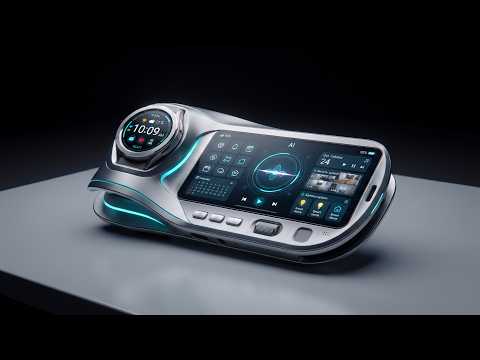
In 2026, ultimate luxury large AI gadgets are defined by rare materials, custom craftsmanship, and deeply embedded AI that personalizes every interaction—from home assistants and smart mirrors to high‑end vehicles and immersive displays. These devices are less about raw specs and more about turning AI into a curated lifestyle layer, tailored to wealthy consumers who expect technology to look as refined as a mechanical watch or a bespoke interior.
What Makes an AI Gadget “Luxury” in 2026
Luxury AI gadgets in 2026 combine three elements:
Premium materials and design: Polished metals, stone, leather, and handcrafted finishes that feel closer to jewelry or furniture than electronics.
Deep personalization: AI systems that build detailed profiles of preferences, routines, and tastes to customize experiences across devices and spaces.
Experiential focus: Devices that anchor immersive environments and services—private salons, digital worlds, and concierge-style assistance—rather than just performing single tasks.
Analysts of the luxury sector note that by 2026, brands that blend craft heritage with AI-driven personalization and immersive experiences dominate the high‑end market.
Example: Aurum AI Assistant and Bespoke Home AI Objects
Reports on luxury AI gadgets describe concept devices like the Aurum AI Assistant, a voice‑activated home concierge crafted from polished brass and ethically sourced obsidian.
Functions as a centerpiece object in living rooms or offices, blending sculpture with AI assistant capabilities (scheduling, climate, media, and home control).
Emphasizes tactile and visual presence as much as functionality—contrasting with plastic smart speakers targeted at mass markets.
Positive aspects:
Shows how AI can be integrated into aesthetic interior design, making technology feel less intrusive and more harmonious with luxury spaces.
Acts as a personal concierge, remembering preferences for lighting, music, travel, and hospitality, and coordinating with other connected systems.
Negative aspects:
Strongly reinforces status signaling; the intelligence isn’t necessarily better than mainstream AI assistants, but the materials and exclusivity drastically raise prices.
Encourages concentration of advanced AI experiences in the hands of a small, wealthy segment, highlighting the inequality of AI access.
Luxury Smart Mirrors, Wearables, and Home Experiences
Luxury-focused guides highlight a range of AI devices designed as personalized lifestyle companions:
AI smart mirrors:
Offer personal styling advice, health metrics, and AR-based outfit previews, wrapped in premium frames and glass.
Integrate with luxury fashion and wellness brands to recommend looks, treatments, and services.
High-end AI wearables and timepieces:
Luxury watches and jewelry with embedded AI for discreet notifications, health data, and concierge access, maintaining classic aesthetics.
Focus on longevity and repairability, with luxury houses offering in-house refurbishment and certified pre‑owned programs.
Immersive home environments:
AI orchestrates lighting, scent, sound, and content to create tailored atmospheres—dining experiences, relaxation scenes, or creative sessions—often controlled through large displays and high‑end audio.
Positive scenarios:
Enhances well-being and comfort by aligning environment and services with individual needs and moods, especially in high-stress lifestyles.
Supports sustainable luxury when combined with repair, refurbishment, and traceability (e.g., Digital Product Passports and blockchain-enabled provenance).
Critical negatives:
Normalizes constant AI mediation of daily life, potentially undermining autonomy and spontaneity as every choice is curated by algorithms.
Raises ethical concerns about data collection on intimate habits—sleep, health, social behaviors—particularly when combined with luxury loyalty ecosystems.
Luxury Vehicles, Displays, and Large-Scale AI Experiences
Luxury AI gadgets also appear in vehicles, mega-screens, and hybrid physical–digital environments:
High-end vehicles and in-car AI:
Top-tier cars integrate AI for personalized driving profiles, in-cabin experiences, and predictive maintenance, with interiors designed as mobile lounges or offices.
Large in-car displays and heads-up systems provide concierge, route optimization, and content tailored to the passenger’s profile.
Luxury large displays and home cinemas:
MicroLED walls and large AI TVs packaged with bespoke installation, acoustic design, and curated content subscriptions.
AI adjusts picture, sound, and recommended content based on household behavior and mood.
Experiential luxury:
Brands invest in AI-enhanced salons and digital worlds: private showrooms, VR/AR experiences, and multi-sensory events where AI personalizes storytelling and product configuration.
Upside:
Aligns with a shift toward experiential luxury, where customers value memorable, unique experiences over purely material goods.
AI can make these experiences more sustainable and targeted, reducing waste from overproduction by accurately predicting demand and tailoring offerings.
Downside:
Risk of hyper-personalized echo chambers, where wealthy consumers inhabit highly tailored AI “bubbles” that insulate them from broader social realities.
Environmental impact of large AI infrastructures (data centers, massive displays, connected fleets) can clash with sustainability narratives if not managed responsibly.
AI and the Business of Luxury: Market and Strategy
Reports on the luxury market in 2026 highlight several structural trends driven by AI:
Stabilization and discipline:
After post-pandemic surges, luxury brands are focusing on pricing power, high-margin services, and durable value, not just volume.
AI supports supply chain intelligence, demand prediction, and inventory optimization to protect margins.
Personalization as a core expectation:
Over 57% of luxury customers expect tailored communication and products, with AI-powered customer data platforms orchestrating “one-to-one” engagement.
In-store clienteling apps, real-time inventory, and AI recommendations become standard tools for sales associates.
ESG and circularity:
Around 10% of executives prioritize ESG and circularity investments, and AI helps track materials, emissions, and lifecycle data.
Second-hand and certified pre-owned markets grow rapidly, with AI assisting in authentication, pricing, and refurbishment logistics.
Positive implications:
AI improves operational efficiency and customer alignment, reducing overstock and enhancing long-term customer relationships.
Luxury becomes a testbed for innovative, potentially more sustainable business models that later filter down to mainstream markets.
Risks and dilemmas:
Luxury executives must navigate GenAI hallucinations, IP questions, and data ownership, ensuring brand integrity and trust.
Over-automation threatens to dilute the human craftsmanship and storytelling that define luxury if AI is used carelessly.
Societal Impact: Symbol of Progress or Excess?
Luxury AI gadgets sit at a tension point between innovation and inequality:
Symbol of future tech:
High-end gadgets often act as early prototypes for technologies that later become mainstream, from AI personalization to circular design and repair services.
They can fund R&D that benefits broader society once features diffuse to cheaper products.
Symbol of excess:
At the same time, they can embody resource-intensive consumption, where immense compute and materials serve small elites rather than broad needs.
As AI becomes “everyone’s luxury,” research shows most consumers expect AI to enrich their lives, making it problematic if the best experiences remain paywalled.
The net societal impact depends on whether luxury AI ecosystems are designed to pioneer responsible innovation—including sustainability, privacy, and fair access—or simply to maximize exclusivity.
How to Think Critically About Luxury Large AI Gadgets in 2026
For consumers, creators, or brands evaluating these devices:
Ask what’s truly unique:
Is the value in design, materials, service, or AI capability—and does that justify the premium over high-end but non-luxury devices?
Check data and ethics:
Understand how data is collected, stored, and used across connected luxury ecosystems; transparency and user control are crucial.
Consider long-term value:
Evaluate repairability, support, and circular programs (refurbish, resale) to ensure the device is more than a short-lived status symbol.
Balance inspiration and inclusion:
Luxury can lead in craft, sustainability, and human-centric AI, but should avoid becoming a showcase of what only a few can access.
In 2026, Ultimate Luxury Large AI Gadgets showcase how premium design and cutting-edge intelligence can merge into seamless, personalized experiences. They set aesthetic and technological benchmarks—but they also force hard questions about who benefits from AI’s most advanced forms, how they’re powered, and whether they elevate human life in ways that go beyond spectacle and status.