By 2026, the phrase “large smartphone” has stretched far beyond 6.9‑inch slabs. We now have 7.9‑inch book‑style foldables and extreme 10.2‑inch tri‑fold devices that blur the line between phone, tablet and even small laptop. These products are showcase pieces for display, hinge and battery technology, but they also raise real questions about ergonomics, durability, cost and social impact.
Below is a structured look at the world’s largest smartphones in 2026—from 7.9‑inch foldables to 10.2‑inch tri‑fold monsters—what they actually offer, and how much they really contribute to productivity and progress versus just pushing specs to the limit.
10.2‑Inch Tri‑Fold Monsters: Huawei Mate XT / Mate XTs and Samsung TriFold
The most extreme devices are tri‑fold smartphones: phones that unfold not once but twice, revealing a screen size that would have been considered a full‑size tablet a few years ago.
Huawei’s tri‑fold line is the most concrete example. The Mate XT family is described as offering three configurations:
6.4 inches when fully folded (a tall “phone” mode)
7.9 inches when partially unfolded (book‑style mode)
10.2 inches when fully opened into a flat, tri‑panel canvas
These devices are explicitly marketed as “the world’s largest foldable smartphone,” with a 10.2‑inch 3K OLED panel that can act as a tablet but still fold down to something closer to phone size. They target high‑end users in markets where Huawei is strong, especially China, and are pitched as all‑in‑one devices for media, work and creative tasks.
Samsung, for its part, has introduced its own three‑panel foldable concept—often referred to in 2025–2026 coverage as a “Galaxy Z TriFold” type device—offering roughly a 10‑inch unfolded display and promising “cinematic viewing” when fully opened. The idea is similar: take the Galaxy Z Fold style and add another panel, giving you near‑tablet diagonal while maintaining phone aesthetics when closed.
Positive aspects:
A 10.2‑inch canvas allows true multi‑window computing: multiple full‑sized apps side‑by‑side, serious document editing, complex dashboards, and more comfortable reading of PDFs and technical material.
For field workers, students, and creatives, having one device that can be a phone, notepad and tablet reduces the need to carry multiple gadgets.
Critical aspects:
Complexity: two hinges and three display segments multiply potential failure points. Hinge wear, panel creases and dust ingress are serious long‑term concerns.
Weight and thickness: even with clever engineering, tri‑folds are noticeably heavier and thicker than normal phones, challenging pockets, hands and long‑term comfort.
Cost: tri‑folds sit at the extreme top of the price spectrum, accessible mainly to wealthy individuals or corporate deployments, which limits their egalitarian impact.
7.9–8.0‑Inch Foldables: The Core of “Largest Smartphones”
Below the tri‑fold tier, 7.9–8.0‑inch foldables are the main category for “world’s largest smartphones” in 2026. These devices open like books into a small tablet, but still fold down to something close to a conventional smartphone footprint.
Key examples include:
Huawei Mate XT in dual‑panel mode at 7.9 inches (the intermediate configuration before fully unfolding).
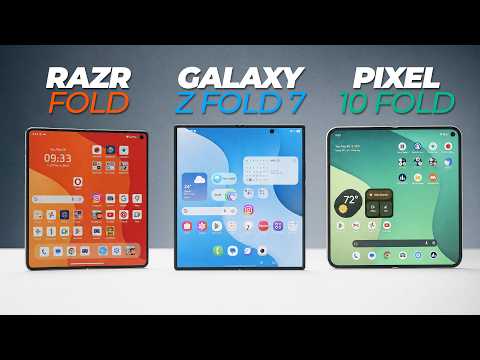
Xiaomi and Samsung book‑style foldables in the 7.6–8.0‑inch class, such as Xiaomi’s Mix Fold series and Samsung’s Z Fold line, which typically unfold to around 7.6–8 inches and offer 6.2–6.6‑inch cover screens.
Honor and other Chinese brands with 7.9‑inch “Magic V”‑style devices that provide nearly square aspect ratios when open.
In comparisons between Samsung and Xiaomi foldables, Xiaomi’s Mix Fold generation has been cited with a roughly 7.98‑inch inner screen, while Samsung’s contemporary Fold models sit at around 7.6 inches—both clearly in mini‑tablet territory.
Positive aspects:
These sizes are arguably the sweet spot for productivity: large enough for split‑screen work yet small enough to still fit in a jacket pocket.
They are far more mature than early foldables, with better hinge design, brighter LTPO OLED panels at 120 Hz and improved crease management.
For travel, remote work and education, an 8‑inch foldable can realistically replace a separate tablet for many users.
Critical aspects:
Despite improvements, they are still more fragile than traditional slabs; internal screens are softer, and hinge damage remains a risk.
Repair costs are high, and in many markets, parts and authorized service centers are limited.
App optimization across the Android ecosystem is still inconsistent; some apps handle large, almost‑square displays well, others feel awkward or stretched.
The Last Generation of “Giant Slabs”: 6.9–7.0‑Inch Non‑Foldables
Although the headline of “largest smartphones” now belongs to foldables and tri‑folds, very large, non‑foldable phones remain important. These typically top out around 6.9–7.0 inches.
Flagship “Ultra” models—such as Samsung’s Galaxy S26 Ultra, Apple’s biggest iPhones and various Xiaomi and OnePlus top‑end devices—sit in this range. They use tall aspect ratios and extremely thin bezels to maximize usable area without becoming physically absurd.
Positive aspects:
They offer much of the productivity value of a big display—comfortable reading, better keyboard, more content on screen—without the complexity and fragility of folding designs.
Their designs are structurally simpler, which usually means better durability, easier case compatibility and somewhat more predictable repair options.
Critical aspects:
Their size and weight still pose ergonomic challenges: they are hard to use one‑handed, don’t fit all pockets, and can be fatiguing for prolonged use.
In 2026, they are no longer “truly largest,” so users who absolutely want tablet‑level workspace will be pushed toward foldables or tri‑folds.
What These Giant Phones Enable in Practice
Productivity and Workflows
On the positive side, the jump from ~6.7 inches to ~8–10 inches radically changes what you can reasonably do on a phone:
Multi‑app work: Full email client next to a browser and a notes app; or chat on one side and a document on the other. This supports mobile knowledge work, consulting, support, and education.
Content creation: Larger screens make timeline‑based video editing, multi‑track audio editing, and complex photo adjustments more manageable directly on the device.
Field work and data collection: Maps, schematics, forms and dashboards are easier to view and interact with on a larger canvas, helping engineers, surveyors, logistics operators and healthcare workers.
These devices can legitimately reduce dependence on laptops in situations where connectivity and battery life are the main constraints, not raw CPU power. For many people in emerging markets, a large foldable might be their only “PC‑class” screen.
Media, Gaming and Accessibility
Media and gaming: Big, high‑refresh‑rate OLEDs with HDR support make movies and games far more immersive. This is not just entertainment; for game developers, streamers and digital artists, it’s a better platform for both consuming and testing content.
Accessibility: Users with low vision can zoom interfaces and text without constantly scrolling, and multi‑column layouts can be made readability‑friendly. Larger touch targets and optional stylus support can help people with motor difficulties.
These aspects reflect a genuine improvement in how inclusive and flexible mobile computing can be.
Critical View: Cost, Fragility and Sustainability
Cost and Inequality
The world’s largest smartphones are, almost by definition, the most expensive. Tri‑folds and top‑tier foldables often cost more than high‑end laptops. This has several consequences:
They become status symbols as much as tools, with ownership heavily skewed toward affluent users, tech enthusiasts and corporate elites.
Their productivity benefits—better work tools, better interfaces—are unequally distributed, potentially widening the gap between those who can afford high‑end hardware and those stuck on smaller, older devices.
Market‑share reports for 2026 show that while the total value of the smartphone market can grow due to expensive devices, total shipments are under pressure, meaning high‑end innovation is not automatically lifting all boats.
Durability and Repairability
From a critical perspective, tri‑folds and large foldables represent a worst‑case combination for durability:
Multiple hinges and panels mean more mechanical failure points.
Complex multilayer flexible displays are difficult and costly to replace; in practice, a major failure often leads to replacement rather than repair.
Drop and impact resistance is weaker than on ruggedized slabs; even with good cases, the risk of damage is higher.
This runs counter to increasing calls for right‑to‑repair, longer device lifespans and reduced e‑waste. Without strong repair programs and fair pricing for parts, the environmental footprint of these devices is disproportionately large compared to how many people can actually use them.
Energy and Materials
Larger, brighter OLED panels at 120 Hz draw substantial power. Although chipset and display efficiency has improved, an always‑on 10‑inch screen is inherently more energy‑intensive than a 6‑inch one. On top of that:
Bigger batteries mean more materials.
Fast‑charging ecosystems encourage energy‑dense chargers and heavy daily use cycles, which can shorten battery life and increase replacement frequency.
Sustainability discussions around tech increasingly highlight that pushing screen sizes and refresh rates without parallel innovations in repairability and recycling is not a balanced approach.
Social and Cultural Impact
Beyond individual use, these “insane” devices influence how we think about technology and work:
Normalization of “always‑on work”: Carrying a 10.2‑inch tri‑fold in your pocket makes it easier for workplaces to expect full desktop‑class responsiveness anywhere, anytime, potentially undermining healthy work–life boundaries.
Changing expectations of media and communication: High‑resolution, HDR, large‑screen video becomes the norm, raising bandwidth demands and shifting how people tell stories and share experiences.
Innovation pressure on mid‑range devices: Many UI ideas and AI features first appear on these hero devices, then slowly move down the price tiers, which can eventually benefit the broader population—but often with a multi‑year lag.
The challenge is ensuring that these ultra‑high‑end experiments serve as testbeds for features that eventually reach affordable devices, rather than remaining locked behind luxury price tags.
Professional Perspective: Are These Huge Phones Worth It?
From a professional standpoint, the world’s largest smartphones in 2026 can be incredibly useful—but only for certain users and scenarios:
If your work revolves around multi‑document workflows, visual content, field data or frequent travel, a well‑designed 7.9–10.2‑inch foldable can replace a tablet and sometimes even a laptop in practice.
If you mainly do single‑app tasks, messaging, quick email and occasional media, a 6.7–6.9‑inch slab may offer 80–90% of the benefit at far lower cost and complexity.
Strategically, the real value of these extreme devices lies not just in their spectacles of size, but in the innovations they drive—better multitasking, more efficient displays, smarter software—which should be carried down into more affordable tiers. For society, the key question is whether manufacturers and policymakers will pair this high‑end experimentation with commitments to longer support, better repairability and broader access, so that “world’s largest smartphone” is more than just a headline spec for a tiny slice of the market.