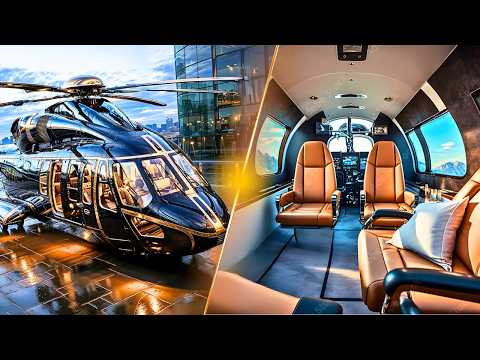
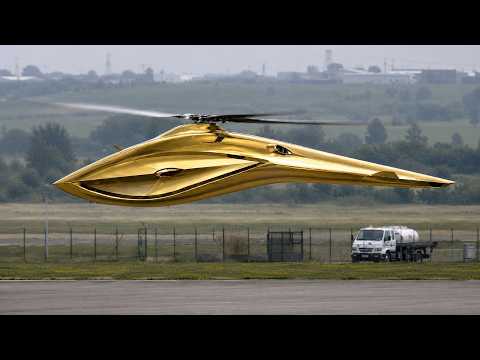
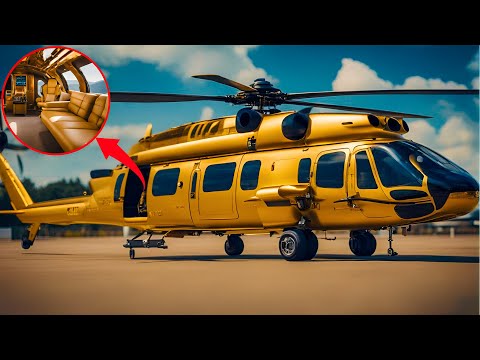
In 2026, the top tier of luxury helicopters runs from roughly 15 million dollars for high‑end corporate models up past 30–40 million dollars for large, highly customized VIP machines and tiltrotors. These aircraft blend business‑jet‑style comfort with vertical takeoff and landing, targeting billionaires, CEOs, heads of state, and energy companies that need fast access to offshore platforms or remote sites.
They sit at a crossroads: on one hand they support critical missions, innovation, and jobs; on the other, they are increasingly criticized as noisy, carbon‑intensive symbols of inequality when used primarily as “rich people’s taxis.”
Sikorsky S‑76D – Around $15 Million
The Sikorsky S‑76D, long a corporate and celebrity favorite, is cited around 15 million dollars in high‑end VIP configurations. It seats up to 8–12 passengers depending on layout, pairing twin turboshaft engines with a refined, relatively spacious cabin often fitted with leather club seating, worktables, and upgraded sound insulation.
Positively, the S‑76 family has a strong safety and reliability record and is widely used for executive transport, EMS, and offshore operations, making it a versatile platform that supports multiple sectors. Negatively, its adoption as a status symbol for short urban hops reinforces the perception of helicopters as noisy, intrusive “rich man’s toys,” especially in dense cities where overflight and landing disturb residents and raise environmental justice concerns.
Airbus H160 / ACH160 – Roughly $15–20 Million
Airbus’s H160, in ACH160 luxury guise, typically falls in the mid‑teens to around 20 million dollars depending on options. It features a sleek design, Blue Edge rotor blades for reduced noise and vibration, twin Safran engines delivering a cruise speed around 160 knots and a range of about 850 kilometers, and a high‑tech glass cockpit.
In VIP configuration, the ACH160 offers modular seating, premium materials, and advanced soundproofing, pitched as a “business jet alternative” for 4–10 passengers. Positively, it brings next‑generation efficiency and noise reduction into medium‑class helicopters, benefitting not only VIP clients but also medical and utility operators using the same platform. Negatively, when deployed mainly for luxury shuttles, its environmental and noise footprint contributes to community pushback against heliports and raises questions about who benefits from such engineering advances.
Airbus ACH145 Mercedes‑Benz Edition – About $12–15 Million
The ACH145 Mercedes‑Benz Edition, based on the five‑blade Airbus H145, is priced roughly between 12 and 15 million dollars, edging into the lower bound of this “most expensive” list. It combines a twin‑engine, five‑blade rotor system—offering reduced noise, increased payload, a cruise speed around 130–137 knots, and about four hours’ endurance—with an interior styled like a Maybach‑grade lounge: wood floors, sculpted leather seats, configurable seating, and ambient lighting.
Positively, the ACH145 platform supports missions from EMS and law enforcement to VIP transport, and the Mercedes‑Benz edition showcases how automotive design and aviation can cross‑pollinate in ergonomics and comfort. Negatively, its marketing as a flying luxury lounge for a handful of passengers accentuates the divide between high‑end users and communities concerned about noise and low‑altitude overflight.
Bell 525 Relentless – Around $20 Million
The Bell 525 Relentless is widely reported around 20 million dollars in VIP and corporate configurations. Positioned as a “business jet of helicopters,” it features a large cabin, advanced fly‑by‑wire flight controls, and a design optimized for offshore energy work, SAR, and high‑end corporate transport.
Its VIP interior can include club seating, conference layouts, and sophisticated infotainment, emphasizing comfort and productivity during flights. Positively, the 525 brings digital flight control technology into the rotorcraft market, potentially improving safety and efficiency across segments beyond luxury. Negatively, its high cost and prestige positioning mean the first beneficiaries are elite clients, while noise, emissions, and visual impact are borne by the wider public.
Leonardo AW609 Tiltrotor – $20–30 Million
The Leonardo AW609 tiltrotor, often quoted between 20 and 30 million dollars in VIP form, offers vertical takeoff like a helicopter and airplane‑like speeds and ranges. It can cruise around 275 knots with a range of roughly 700–1,000 nautical miles, dramatically extending the reach of vertical flight compared to conventional helicopters.
Positively, the AW609’s hybrid capabilities could transform point‑to‑point connectivity for offshore operations, disaster response, and remote medical access, demonstrating how innovation in luxury and government markets can seed broader applications. Negatively, given its cost and certification path, early production is expected to serve primarily corporate and governmental elites, leaving questions about how quickly such tech can benefit wider society.
Sikorsky S‑92 Executive – $27–30+ Million
The Sikorsky S‑92 in executive/VIP trim is widely cited as one of the most expensive private helicopters, with prices around 27 million dollars and fully customized examples exceeding 30 million. Originally designed for offshore oil and gas and search‑and‑rescue, the S‑92’s VIP cabins can include club seating, conference tables, divans, and high‑spec materials, often configured for heads of state.
On the positive side, the S‑92’s robust design and safety record make it a credible and versatile platform, and VIP variants help sustain the broader production line that also supports critical rescue and offshore missions. On the negative side, when S‑92s are used exclusively as short‑hop luxury shuttles, they exemplify high‑carbon, high‑noise travel for very few passengers, heightening public scrutiny of helicopter operations over cities and coasts.
VIP H225 / “Super Puma” Conversions – Up to $30–50 Million
Custom H225 (Super Puma) VIP helicopters, especially those with heavily tailored interiors and mission systems, can reach price tags cited between 30 and 50 million dollars. These large twin‑engine machines offer significant range and payload, originally targeting offshore and heavy‑lift roles, with VIP conversions focused on heads of state and ultra‑wealthy clients needing both range and capacity.
Positively, VIP H225s show how heavy utility platforms can be adapted for high‑security executive transport, ensuring commonality with fleets used in rescue and industrial roles. Negatively, they sit at the extreme high end of rotorcraft emissions and noise, and their operation over populated areas magnifies concerns about environmental impact and perceived misuse of such capable platforms for lifestyle instead of public benefit.
Airbus ACH175 & Leonardo AW189 – High‑Teen to Mid‑20s Millions
Airbus ACH175 and Leonardo AW189 VIP configurations typically fall in the high‑teens to mid‑20s million‑dollar range, depending on interior and avionics. Both are medium‑lift, twin‑engine helicopters with strong offshore and utility pedigrees; in VIP trim, they offer wide cabins, multi‑zone layouts, and advanced noise and vibration control.
Positively, these models bridge industrial and executive markets, meaning investment driven by luxury often co‑funds improvements that benefit offshore workers, search‑and‑rescue crews, and medical teams. Negatively, their adoption as personal air taxis for the ultra‑rich reinforces a pattern where premium segments enjoy the first access to safer, quieter tech, while the broader public faces slower trickle‑down and continued exposure to noise and emissions.
Economic and Industrial Contributions
Luxury helicopter programs are deeply enmeshed in the broader aviation economy. Business and private aviation overall generate hundreds of billions of dollars in output; a 2025 study highlighted that U.S. private aviation alone contributes about 339 billion dollars to the economy and supports around 1.3 million jobs when manufacturing, operations, and tourism effects are included. Helicopter production and support form a significant part of this ecosystem, especially in Europe and North America.
Moreover, innovation in high‑end rotorcraft—such as fly‑by‑wire controls, noise‑reducing rotors, hybrid powertrains, and advanced safety systems—feeds into wider aviation R&D and can inform future urban air mobility and eVTOL designs. In this sense, the spending of a small elite on ultra‑expensive helicopters indirectly funds technology that may later benefit emergency services, commercial operators, and new mobility solutions.
Environmental, Social and Urban Impacts
The downside is significant. Private aviation, including helicopters, is increasingly recognized as a growing contributor to climate change, with private flights emitting multiple times more CO₂ per passenger than commercial airlines and vastly more than ground transport. Helicopters add localized issues: noise, low‑altitude overflight, and perceived invasion of privacy in residential areas.
Sociologically, investigations note that many residents see private helicopters primarily as “rich man’s toys,” symbols of inequality and disregard for local quality of life. This perception fuels calls for stricter regulation, curfews, noise charges, or outright bans on non‑essential helicopter traffic in urban corridors, aligning with broader debates over taxing “dirty luxuries” such as private jets and yachts to support climate and public‑transport investments.
Net Assessment: Strategic Tools or Flying Status Symbols?
Viewed critically, 2026’s most expensive luxury helicopters occupy a dual role. They are strategic tools for certain sectors—offshore energy, emergency response, governmental transport—and their high prices bankroll innovation and high‑value jobs across the aviation value chain. At the same time, when used primarily for short, personal hops by billionaires and corporate elites, they become powerful symbols of a mobility system where access, safety, and comfort are stratified by wealth.
For a professional audience, the key is not to romanticize these machines uncritically nor to dismiss them outright. Instead, they should be understood as test cases for how advanced technology, economic value, and social legitimacy can be aligned—or misaligned—in the next decade of aviation. Whether luxury helicopters remain niche status symbols or evolve into platforms that also serve broader social goals will depend heavily on regulation, taxation, and how industry responds to mounting environmental and social pressure.