In 2026, three names dominate conversations about the largest high‑profile armored cars: the U.S. presidential state car known as “The Beast,” the Mercedes‑Maybach (S‑Class) Guard, and fully armored Cadillac Escalade SUVs. Together they illustrate three philosophies of protection: a near‑custom state vehicle built as a rolling bunker; a factory‑engineered ultra‑luxury sedan with top‑tier ballistic certification; and a large civilian SUV armored by specialized firms for VIP and corporate use.
Although precise classified details of The Beast are not public, open sources, industry reports and 2026 coverage of the S680 Guard and Escalade platforms allow a clear, critical comparison of their size, power, protection, role and wider societal impact.
The Beast: U.S. Presidential Armored State Car
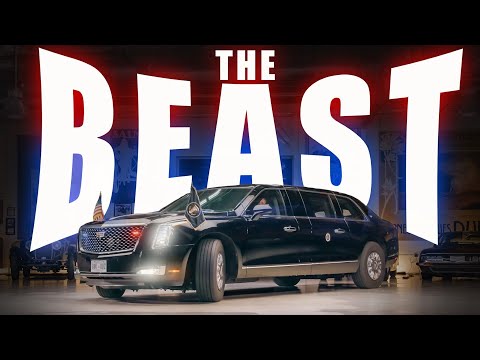
“The Beast” is the nickname for the U.S. presidential limousine, a heavily armored state car built on a specialized chassis and operated by the Secret Service. Technical data remain classified, but consistent public reporting over the last decade describes a massively reinforced, multi‑ton vehicle designed to withstand small‑arms fire, some armor‑piercing rounds, and significant explosive threats.
The Beast is believed to combine:
A thick armored shell around the passenger cell, with heavy steel and composite materials and highly specialized ballistic glass.
Run‑flat tires, protected fuel tanks and possibly limited NBC (nuclear, biological, chemical) protection and on‑board life‑support for key occupants.
A chassis derived from heavy‑duty truck technology, explaining its extreme weight and imposing size, often described as closer to a medium‑duty truck than a conventional sedan.
In functional terms, The Beast is less a “car” and more a strategic asset: it is purpose‑built to protect the sitting President in worst‑case scenarios, with cost, fuel consumption and driving dynamics treated as secondary issues.
Mercedes‑Maybach / S‑Class Guard: VR10 Luxury Fortress
The Mercedes‑Benz S‑Class Guard, including Maybach‑grade variants, represents the world’s highest‑rated series‑production armored limousine in 2026. A recent report on the S680 Guard notes that:
It uses a twin‑turbo 6.0‑liter V12 producing about 603 horsepower and 612 lb‑ft (around 830 Nm) of torque.
The car weighs roughly 4.2 metric tons (about 9,259 lb) and has all‑wheel drive, with an electronically limited top speed near 190 km/h (118 mph).
It is certified to VR10 ballistic protection, which Mercedes claims makes it the only series‑production sedan to provide VR10 protection for both glass and opaque body areas.
This level of certification means the Guard can withstand extremely powerful rifle and armor‑piercing ammunition beyond typical BR6/VR6 VIP vehicles. The armor is integrated at the factory into the car’s structure: reinforced body panels, specially designed glass and upgraded suspension and brakes to keep the car drivable despite the weight. Pricing for the outgoing model started around €547,000 in Germany, and newer, facelifted versions are expected to cost well above that—easily into the high six‑figure range in dollars.
Unlike The Beast, the S‑Class/Maybach Guard is a catalog product (though extremely rare and made to order), purchased by governments, embassies and very high‑risk private clients, and supported by Mercedes’ engineering and warranty infrastructure.
Armored Cadillac Escalade: Giant Civilian SUV Turned Fortress
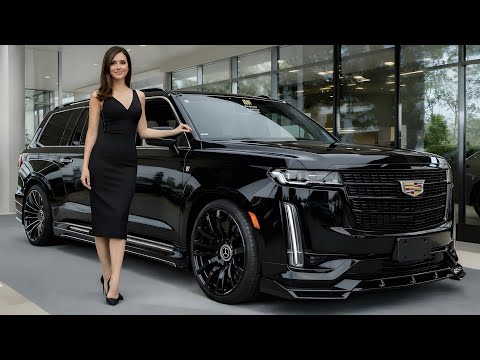
The Cadillac Escalade—especially in long‑wheelbase ESV or new IQL form—serves as one of the most popular bases for civilian and para‑official armored SUVs by 2026. Reviews of the 2026 Escalade ESV describe:
A standard 6.2‑liter V8 with about 420 hp and 460 lb‑ft of torque, plus an available supercharged 6.2‑liter V8 with around 682 hp in the Escalade‑V.
A curb weight approaching 6,000 lb in unarmored form, 0–60 mph in around 6.0 seconds with the standard V8, and a price starting near the high‑$80,000s, rising well into six figures for higher trims.
When armoring specialists convert an Escalade to BR6/BR7 level, they:
Add a full 360° armored capsule with ballistic steel/composite and multi‑layer bullet‑resistant glass.
Reinforce suspension, brakes and structure to handle several hundred to over a thousand kilograms of additional mass.
Integrate discrete security tech—run‑flat tires, sirens, intercoms and sometimes surveillance or communication systems—while trying to preserve a stock exterior appearance.
Industry cost analyses of North American vehicle armor note that armoring a full‑size SUV to B6/B7 can add roughly $80,000–$250,000 over the base MSRP, depending on materials, complexity and certification level. Fully loaded, high‑end armored Escalades can easily reach $400,000–$800,000 or more, especially with bespoke interiors and advanced security packages.
Size and Presence: Who Is “Largest”?
In a literal dimensional sense:
The Beast likely has the heaviest curb weight and the most extreme armoring, but its exact figures are classified; open‑source estimates place it far above standard sedans and SUVs, closer to a small armored truck.
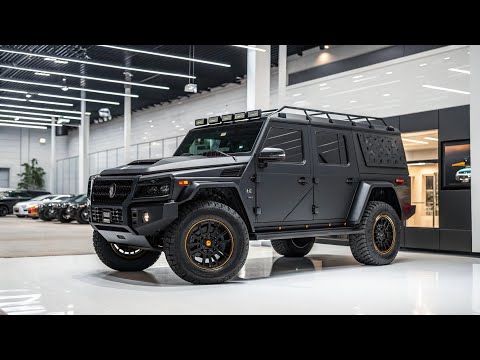
The Escalade ESV/IQL platform is one of the physically longest and widest SUVs sold by a major OEM, especially in long‑wheelbase variants, making armored versions extremely imposing in length, height and road footprint.
The S‑Class/Maybach Guard is a very long, heavy sedan at about 4.2 tons, but its geometry is more limousine‑like and lower than the SUV and state car, prioritizing discreet profile and executive comfort.
From a road‑presence perspective, an armored Escalade is usually the most visually dominant in everyday traffic, The Beast the most intimidating in a motorcade, and the S‑Class Guard the most discreet despite its mass.
Protection and Role: How They Differ in Mission
The Beast
Designed for maximum survivability of a single, uniquely important principal: the President of the United States.
Combines heavy armor, redundant life‑support and secure comms, but is used in tight, controlled convoys with heavy escort and advance security measures.
Not for sale; it is a national asset, built and maintained under classified specifications.
Mercedes‑Maybach / S‑Class Guard
Optimized for heads of state, diplomats and high‑risk VIPs in urban and highway environments.
Offers the highest openly certified ballistic protection (VR10) of any series‑production sedan, with a balance between survivability, comfort and drivability.
Purchased by states and select private buyers; supported by a known OEM engineering and testing process.
Armored Escalade
Versatile platform used for government convoys, corporate security, high‑risk families and often as a “workhorse” VIP transport in regions where big SUVs blend in.
Protection typically in the BR6/BR7 range, tailored to client needs and builder capabilities; quality and certification vary by armoring company.
Available broadly to private buyers, subject to local law, and often used in combination with other security measures and vehicles.
Cost and Economics: What Each Represents
The Beast’s cost is not public, but given its bespoke nature, multi‑vehicle fleets, secure logistics and constant updates, total program cost is measured in tens or hundreds of millions of dollars over time.
The S‑Class Guard, at around €547,000 or more for older models and higher for updated versions, more than doubles the price of a regular Maybach S‑Class; total cost of ownership includes specialized maintenance and trained drivers.
Armored Escalades span a wide cost range: base SUV plus $80,000–$250,000 for B6/B7 armoring is typical; fully bespoke builds with high‑end interiors and advanced systems can push well past half a million dollars.
At market level, bulletproof and armored civilian vehicles form a growing segment; 2026 research points to a bulletproof vehicle market in the tens of billions globally, with key opportunities in lightweight materials, modular armor and smart sensors.
Positive Contributions: Security, Stability and Innovation
Viewed positively, these vehicles:
Protect the lives of people whose safety has outsized impact—heads of state, critical negotiators, judges, journalists and executives—helping maintain political continuity, corporate governance and social stability in unstable contexts.
Enable continued diplomatic, economic and humanitarian activity in high‑risk environments: armored motorcades can move key personnel through regions where unprotected travel would be untenable.
Drive innovation in armor materials, vehicle integration and safety systems; lessons from integrating armor into S‑Class platforms or full‑size SUVs influence broader armoring best practices and even some civilian safety technologies.
For suppliers, they sustain a specialized industrial base of engineers, material scientists, integrators and testers, particularly in North America and Europe, where vehicle armor markets support federal, state, diplomatic and private clients.
Critical Perspective: Inequality, Militarization and Environmental Costs
Despite their benefits, these “largest armored cars” raise serious criticisms.
Symbol of Two‑Tier Security
Visible fleets of armored limousines and SUVs highlight a world where:
A small group can buy or command near‑military levels of security, while the broader public depends on often under‑resourced policing and infrastructure.
The presence of The Beast or strings of armored Escalades in cities sends a signal that violence is expected and that protection is individualized rather than rooted in collective security and justice.
This can deepen perceptions of inequality and erode trust, especially in societies already struggling with social divides.
Militarization of Civilian Space
When armored Escalades and similar SUVs—sometimes styled as “luxury tanks”—become status symbols, they normalize militarized aesthetics and defeat‑oriented mindsets in civilian life. Combined with state use of heavily armored vehicles in domestic contexts, this blurs the line between wartime and peacetime, policing and warfare.
Environmental and Infrastructure Impact
All three vehicles are heavy and inefficient:
Their weight demands powerful engines and results in high fuel consumption and emissions compared with standard vehicles.
They increase road wear and can make crashes more severe due to greater kinetic energy and mass, particularly when colliding with lighter vehicles or pedestrians.
In an era where governments and companies tout climate goals and sustainable urban mobility, widespread reliance on multi‑ton armored SUVs and limousines for daily movement pushes in the opposite direction.
Professional Assessment: Which “Wins” the 2026 Battle?
There is no single “winner,” because each vehicle is built for a distinct mission:
The Beast is unmatched for one task: keeping a sitting U.S. President alive in worst‑case scenarios. In that sense, it “wins” on absolute protection and symbolic power, but it is effectively a one‑off tool, not a general‑purpose car.
Mercedes‑Maybach / S‑Class Guard offers the highest certified ballistic protection on a series‑production sedan, with a unique balance of VR10 survivability, comfort and OEM integration. It is the most refined and engineering‑cohesive solution for heads of state and high‑risk VIPs who need a limousine, not an SUV.
Armored Escalade wins in versatility and usable internal volume: it moves more people and gear, blends into many environments, and can be configured across a broad spectrum of cost, protection and luxury levels. For private buyers and many government fleets, it is the most flexible and available option.
From a broader societal perspective, all three are both necessary and problematic. They are necessary where credible, serious threats exist and where protecting key individuals supports institutions, diplomacy and economic activity. They are problematic when they become symbols of separation and when investments in armor outpace investments in the justice, governance and social systems that reduce violence in the first place.
Used sparingly and strategically—with clear justification and in parallel with broader security reforms—The Beast, the Mercedes‑Maybach Guard and armored Escalades can be seen as tools that protect lives and support stability. Used uncritically or primarily as status symbols, they risk becoming heavy, armored mirrors reflecting and amplifying inequality, fear and environmental cost in the world of 2026.